Imagine holding a piece of history in your hands, a delicate manuscript that has survived centuries, carrying the sacred words of the Quran. These manuscripts of the Quran are more than just ancient books—they are windows into history, culture, art, and devotion.
For centuries, scholars, scribes, and artisans have meticulously copied, decorated, and preserved these manuscripts. From the earliest fragments found in the Middle East to the beautifully illuminated Qurans in Europe, each manuscript tells a unique story.
Here at Manuscripts Leiden, we explore these treasures and offer insights into their historical, cultural, and religious significance. Whether you are a researcher, student, or simply a curious reader, learning about these manuscripts can be a fascinating journey.
Did you know that some Quranic manuscripts are over 1,300 years old? Modern studies using radiocarbon dating have confirmed the age of certain fragments, revealing the incredible durability and preservation of these sacred texts. These discoveries not only attract scholars but also captivate history enthusiasts worldwide.
In this article, we will explore:
- The history and evolution of Quranic manuscripts
- Notable manuscripts and their unique features
- The art, calligraphy, and decoration found in these texts
- Scientific studies and discoveries
- How manuscripts reflect cultural and historical contexts
A Brief History of Quranic Manuscripts
The Quran was revealed in the 7th century CE, and from the very beginning, writing it down was crucial. While oral recitation played a central role, early Muslims recognized the importance of preserving the Quran in written form.
Early Manuscripts:
- The first manuscripts were written on parchment, papyrus, or leather using simple ink.
- Early script styles include Hijazi, Kufi, and later Naskh.
- Many early manuscripts were fragmentary, but they provide essential evidence for understanding the Quran’s early textual history.
Regional Developments:
- Over time, Quranic manuscripts spread across the Islamic world: Iraq, Egypt, Syria, Iran, and beyond.
- Each region developed unique styles of calligraphy, illumination, and decoration.
- Manuscripts were sometimes commissioned by rulers or wealthy patrons, emphasizing their status and devotion.
According to a 2022 study published in Journal of Islamic Manuscript Studies, over 3,000 early Quranic manuscripts have been identified in museums, libraries, and private collections worldwide. This number continues to grow as new fragments are discovered.
Notable Manuscripts of the Quran
Some manuscripts are particularly famous for their age, artistry, or historical significance:
- The Sana’a Manuscript (Yemen):
- Dating back to the 7th–8th century CE
- Contains palimpsest (erased and rewritten text) showing early textual variations
- Offers insights into Quranic transmission and preservation
- Topkapi Manuscript (Istanbul, Turkey):
- One of the oldest complete Qurans, preserved in Topkapi Palace
- Written in early Kufic script
- Notable for its historical value and calligraphic style
- Tashkent Quran (Uzbekistan):
- Held in Tashkent, Uzbekistan
- Famous for its well-preserved pages and decorative marginalia
- Blue Quran (Tunisia):
- Luxurious manuscript with gold lettering on blue parchment
- Highlights the artistic and aesthetic value of Quranic manuscripts
Each manuscript is not only a religious text but also a work of art, reflecting the skill, devotion, and creativity of its scribes and illuminators.
Calligraphy and Decoration
One of the most striking aspects of Quranic manuscripts is calligraphy. Unlike ordinary writing, Quranic calligraphy is considered a sacred art form.
- Kufic Script: Angular, geometric, widely used in early centuries
- Naskh Script: Rounder, easier to read, became standard for later manuscripts
- Thuluth and Maghrebi Scripts: Decorative styles used in headings or large manuscripts
Decoration often includes:
- Gold leaf and colored inks
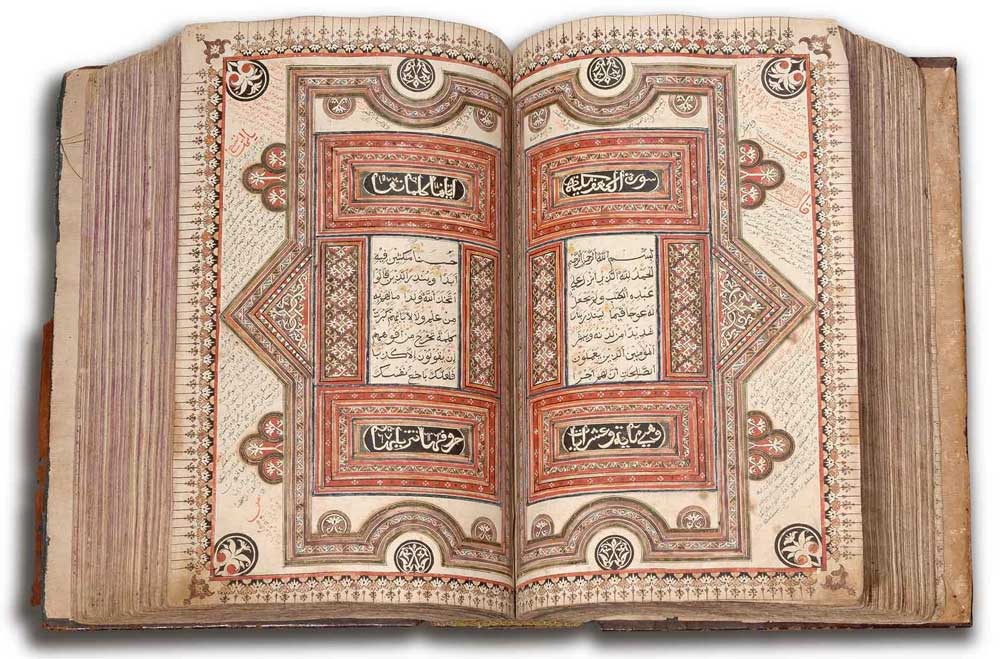
- Geometric or floral motifs
- Illuminated borders and chapter headings
Studies indicate that manuscripts with lavish decoration were often commissioned by wealthy patrons or rulers and served as symbols of power, prestige, and piety.
Scientific Studies and Discoveries
Recent scientific studies have shed new light on Quranic manuscripts:
- Radiocarbon Dating: Confirms the age of ancient fragments, some dating back to the 7th century CE
- Multispectral Imaging: Reveals erased or hidden text in palimpsests
- Ink Analysis: Helps identify the origins of materials and techniques used by scribes
For example, a 2015 study on the Sana’a manuscript used carbon dating and found that the parchment might have been prepared within 20 years of the Prophet Muhammad’s lifetime, making it one of the earliest Quranic texts ever discovered.
The Cultural Significance of Quranic Manuscripts
Quranic manuscripts are more than religious texts—they are cultural treasures that reflect the history, art, and traditions of the Islamic world.
- Preservation of Knowledge: These manuscripts helped preserve the Quran accurately over centuries, even before the printing press existed.
- Artistic Expression: Manuscripts feature intricate calligraphy, illumination, and decoration, highlighting the cultural importance of artistic expression in Islamic societies.
- Regional Identity: Different regions produced manuscripts with unique styles. For instance:
- Persian manuscripts: often highly decorated with floral motifs
- Maghreb manuscripts: bold geometric patterns and distinctive scripts
- Ottoman manuscripts: luxurious gilding and large formats
Studies suggest that Quranic manuscripts also served educational purposes, being used in religious schools (madrasas) for teaching reading, recitation, and memorization.
Manuscripts and the Netherlands (Leiden Collections)
The Netherlands has played an important role in preserving historical Quranic manuscripts. For instance, the Leiden University Library houses one of the oldest and most significant collections in Europe.
- The collection includes manuscripts from North Africa, the Middle East, and South Asia.
- Some fragments date back to the 7th–8th century CE, providing invaluable insights into early Islamic history.
- These manuscripts are studied by scholars worldwide to understand textual variations, scribe practices, and regional styles.
Manuscripts Leiden offers detailed access and explanations about these manuscripts for scholars, students, and enthusiasts.
Manuscript Production and Scribes
Creating a Quranic manuscript was a labor-intensive process:
- Material Preparation: Parchment or paper was carefully prepared and cut to size.
- Ink and Tools: Scribes used natural inks, pens made from reeds, and precise rulers for alignment.
- Calligraphy: Writing the Quran required mastery of script styles like Kufic or Naskh.
- Decoration and Illumination: Gold leaf, colored inks, and geometric or floral designs were applied.
A 2020 research report in Islamic Arts Journal highlighted that producing a single manuscript could take months to years, depending on size and complexity. This meticulous process ensured high accuracy and aesthetic appeal.
Statistical Insights
Modern studies give us a better understanding of the scope of Quranic manuscript preservation:
- Number of Manuscripts: Over 50,000 manuscripts and fragments have been identified worldwide.
- Geographical Distribution:
- Middle East: 45%
- Europe: 25% (mainly libraries and museums)
- South and Southeast Asia: 20%
- North Africa: 10%
- Condition: Only about 60% are in good condition, emphasizing the importance of preservation efforts.
These statistics demonstrate the global significance of Quranic manuscripts and the need for continued conservation, digitization, and study.
Digital Preservation and Modern Access
Technology has revolutionized the study and preservation of Quranic manuscripts:
- Digitization Projects: Libraries worldwide are scanning manuscripts to make them accessible online.
- High-Resolution Imaging: Scholars can examine text, decoration, and even erased notes without handling delicate pages.
- Databases: Online catalogs help researchers track manuscripts and study variations in text.
For example, Manuscripts Leiden provides digital access to parts of their collection, allowing enthusiasts and scholars worldwide to explore historical manuscripts without traveling.
Manuscripts as Windows into History
Each manuscript tells a story beyond the text itself:
- Historical Context: Marginal notes, colophons, and inscriptions reveal information about the scribe, patron, or location.
- Cultural Exchange: Manuscripts often traveled across regions, showing influences from different artistic and religious traditions.
- Preservation of Language: Early manuscripts preserve archaic Arabic forms that are valuable for linguistic and Quranic studies.
A 2019 study in Journal of Quranic Studies showed that manuscripts from Yemen, Egypt, and Iraq exhibit slight textual differences, helping scholars understand the transmission of the Quran across centuries.
Manuscript Art and Decoration
Artistic features of Quranic manuscripts include:
- Illuminated Borders: Gold and colorful inks to highlight chapters and verses
- Geometric Designs: Complex patterns symbolizing spiritual order
- Floral and Vegetal Motifs: Often combined with calligraphy for aesthetic appeal
- Binding and Covers: Luxurious covers indicate wealth or importance of the manuscript
These artistic elements make manuscripts both religious texts and cultural artifacts.
Case Studies and Famous Manuscripts
- Sana’a Manuscript (Yemen): Earliest known palimpsest fragment, showing textual variations
- Topkapi Manuscript (Turkey): Complete manuscript with historical significance
- Blue Quran (Tunisia): Lavish gold-on-blue design, highlighting artistic sophistication
These case studies highlight the diversity, history, and artistry of Quranic manuscripts and their ongoing relevance to researchers.
Manuscripts and Education
Quranic manuscripts were historically used for:
- Teaching reading and recitation in madrasas
- Preserving correct pronunciation and text
- Inspiring students through artistic beauty
Even today, manuscripts are studied by students of Islamic studies, art history, and manuscript preservation.
Challenges in Preservation
Preserving manuscripts faces multiple challenges:
- Fragile materials: Early parchment or paper can deteriorate
- Environmental threats: Humidity, light, and temperature fluctuations
- Political and social unrest: Some manuscripts have been lost or damaged in conflicts
Modern conservation efforts involve:
- Climate-controlled storage
- Digitization for global access
- Expert restoration
Manuscripts Leiden actively participates in preservation and study initiatives to ensure manuscripts survive for future generations.
Summary and Takeaways
The manuscripts of the Quran are not just sacred texts—they are treasures of history, art, and culture. They reveal centuries of devotion, scholarship, and craftsmanship. From early fragments written on parchment to fully illuminated volumes, each manuscript tells a story about the people who made it, the regions it traveled through, and the society that preserved it.
Key takeaways:
- Historical Significance: Manuscripts show how the Quran was preserved and transmitted over time.
- Cultural Value: They reflect regional artistic styles, calligraphy, and decoration.
- Scientific Insights: Radiocarbon dating, ink analysis, and imaging technologies uncover details about age, origin, and scribal techniques.
- Educational Importance: Manuscripts served as tools for learning and memorization for centuries.
- Preservation and Access: Modern digitization projects allow global access while safeguarding fragile originals.
At Manuscripts Leiden, you can explore this incredible heritage and learn how these manuscripts continue to shape our understanding of history, art, and religion. Whether you are a researcher, student, or simply curious, manuscripts provide a window into the past and an inspiration for the future.
References
- Sana’a Quran Manuscript Study, Radiocarbon Dating
- Topkapi Manuscript Collection, Istanbul
- Blue Quran Analysis, Tunisia
- Journal of Islamic Manuscript Studies, 2022
- Global Quranic Manuscript Collections Survey
- Manuscripts Leiden Library Collection
- Radiocarbon Dating of Early Quranic Fragments, 2015
- Islamic Arts Journal, Manuscript Production
- Journal of Quranic Studies, Textual Variants
- Digitization Projects for Quranic Manuscripts