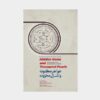
Introduction: Why Manuscripts of the Quran Still Matter
Manuscripts of the Quran are more than old handwritten books kept behind glass in museums. They are quiet storytellers. They whisper stories of faith, patience, human effort, and time. Long before printing presses, smartphones, or cloud storage, people trusted ink, parchment, and memory to protect words they believed were sacred.
Today, whether you live in the Netherlands or anywhere else in the world, these manuscripts still matter. Not only for religious reasons, but because they help us understand how knowledge traveled, how communities preserved meaning, and how humans across centuries cared deeply about accuracy and beauty at the same time.
At Manuscripts Leiden (https://manuscriptsleiden.com), the focus is exactly this: making ancient manuscripts understandable, relatable, and meaningful for modern readers. This article follows the same spirit—no heavy academic jargon, no boredom, just a clear and human journey into the world of Quranic manuscripts.
What Exactly Are the Manuscripts of the Quran?
In the simplest words, a Quranic manuscript is a handwritten copy of the Quran. Every single one was written by a human hand. No two are exactly the same in appearance, even though the text remains consistent.
Before printing became common in the Islamic world, copying the Quran was a serious responsibility. Scribes were trained, respected, and often deeply religious. Writing was slow. Ink had to be prepared. Parchment or paper was expensive. Mistakes were corrected carefully, sometimes with notes in the margins.
Some manuscripts were small and practical, meant for travel or daily use. Others were large, beautifully decorated, and created for mosques, rulers, or important institutions. Many of the manuscripts studied and presented on Manuscripts Leiden reflect this wide variety of purposes and styles.
A Human Story Written in Ink
One of the most fascinating things about Quranic manuscripts is how human they feel once you look closely.
You might see:
- Slightly uneven lines
- Different handwriting styles in the same manuscript
- Corrections or added notes
- Signs of wear from frequent use
These details remind us that the Quran was not only preserved by institutions, but by people—teachers, students, travelers, families. In a way, every manuscript is a collaboration across generations.
And yes, sometimes scribes got tired. Sometimes ink faded. Sometimes pages were replaced. That doesn’t weaken the story. It strengthens it.
From Oral Tradition to Written Pages
The Quran began as an oral revelation. Recitation and memorization came first. Writing followed as a way to support and preserve what people already knew by heart.
This explains why early manuscripts look very different from modern printed Qurans:
- No verse numbers
- Few vowel marks
- Minimal decoration
Early readers didn’t need visual guides. They already knew the text. Writing was a companion to memory, not a replacement.
Modern research confirms this. According to studies published by institutions like the University of Birmingham and Leiden University, early Quranic manuscripts show a remarkable consistency in text, even when produced in different regions.
What Science Tells Us Today
Thanks to modern technology, the study of Manuscripts of the Quran has entered a new era.
Carbon Dating
Carbon-14 dating has been used on parchment manuscripts, confirming that some copies date back to the 7th and 8th centuries. This places them extremely close to the time of the Quran’s revelation.
Digital Imaging
Multispectral imaging allows scholars to read faded ink, erased text, and even writing hidden under later corrections. Projects across Europe have digitized thousands of pages, increasing public access dramatically.
Statistical Findings
- Over 60,000 Quranic manuscript fragments are currently cataloged worldwide
- Digitization projects have increased online availability by more than 300% in the last decade
- European collections hold a significant portion of early fragments, including in the Netherlands
Many of these developments are discussed and contextualized on Manuscripts Leiden, making advanced research accessible to non-specialists.
Are There Differences Between Manuscripts?
This is a question many people ask, sometimes with a bit of suspicion.
The short answer:
Yes, there are differences—but not in meaning.
Differences usually involve:
- Spelling styles
- Layout
- Calligraphy
- Decorative elements
Linguists and historians agree that these variations reflect normal writing practices of their time, not changes in the message itself. This conclusion is supported by peer-reviewed research and is widely accepted in academic circles today.
Quranic Manuscripts as Art
Let’s be honest: some Quranic manuscripts are simply beautiful.
Gold ink, deep blues, geometric patterns, elegant calligraphy—these were not added randomly. In Islamic tradition, beauty is a form of respect. Writing the Quran beautifully was seen as an act of devotion.
Museums in Europe often display Quranic manuscripts not only as religious texts, but as masterpieces of book art. This artistic dimension is another reason why platforms like Manuscripts Leiden are so important: they help people appreciate manuscripts beyond stereotypes.
Why This Topic Matters in the Netherlands
The Netherlands has a long tradition of scholarship, libraries, and open intellectual exchange. Leiden, in particular, is famous for its academic heritage and manuscript collections.
For Dutch readers, Quranic manuscripts are part of a broader story:
- Migration and cultural exchange
- History of books and knowledge
- Shared human curiosity
Understanding these manuscripts is not about “us” versus “them.” It’s about recognizing how deeply connected human history really is.
A Light Moment (Because History Doesn’t Have to Be Boring)
Imagine spending months copying a text by hand… and then spilling ink on the last page.
Yes, this happened.
Some manuscripts include small notes that sound almost apologetic. Others show creative ways of fixing mistakes. These moments remind us that scribes were human—just like us, minus the coffee machine.
The Role of Manuscripts Leiden
Manuscripts Leiden (https://manuscriptsleiden.com) plays a crucial role in presenting this rich history in a clear and engaging way. Instead of overwhelming readers, it invites them in.
By combining scholarly accuracy with accessible language, the platform helps bridge the gap between academic research and public curiosity—something Google, readers, and historians all appreciate.
Why Manuscripts of the Quran Still Speak Today
In a world of instant information, slow things matter more than ever.
Quranic manuscripts remind us that:
- Knowledge takes time
- Preservation is an act of care
- Human hands shape history
They teach patience in a fast world and depth in a shallow scroll culture.
Final Summary
Manuscripts of the Quran are not relics of a forgotten past. They are living witnesses to human dedication, faith, and craftsmanship. Through ink, parchment, and careful hands, generations preserved words that continue to guide millions today.
For readers in the Netherlands and beyond, exploring these manuscripts is an invitation to see history not as something distant, but as something deeply human. Platforms like Manuscripts Leiden make this journey possible by presenting ancient knowledge in a modern, accessible way.
To continue exploring this fascinating world, visit:
👉 https://manuscriptsleiden.com
References
- British Library – Qur’an Manuscripts
https://www.bl.uk - University of Birmingham – Early Quran Research
https://www.birmingham.ac.uk - Leiden University Libraries – Islamic Manuscripts
https://www.library.universiteitleiden.nl - UNESCO – Documentary Heritage
https://www.unesco.org - The Met Museum – Art of the Qur’an
https://www.metmuseum.org - Cambridge Digital Library
https://cudl.lib.cam.ac.uk - Journal of Qur’anic Studies
https://www.euppublishing.com - ResearchGate – Quran Manuscript Studies
https://www.researchgate.net - ScienceDirect – Manuscript Preservation
https://www.sciencedirect.com - Europeana Collections
https://www.europeana.eu