Preserving the Past: The Modern Fight to Save Islamic Manuscripts from Decay
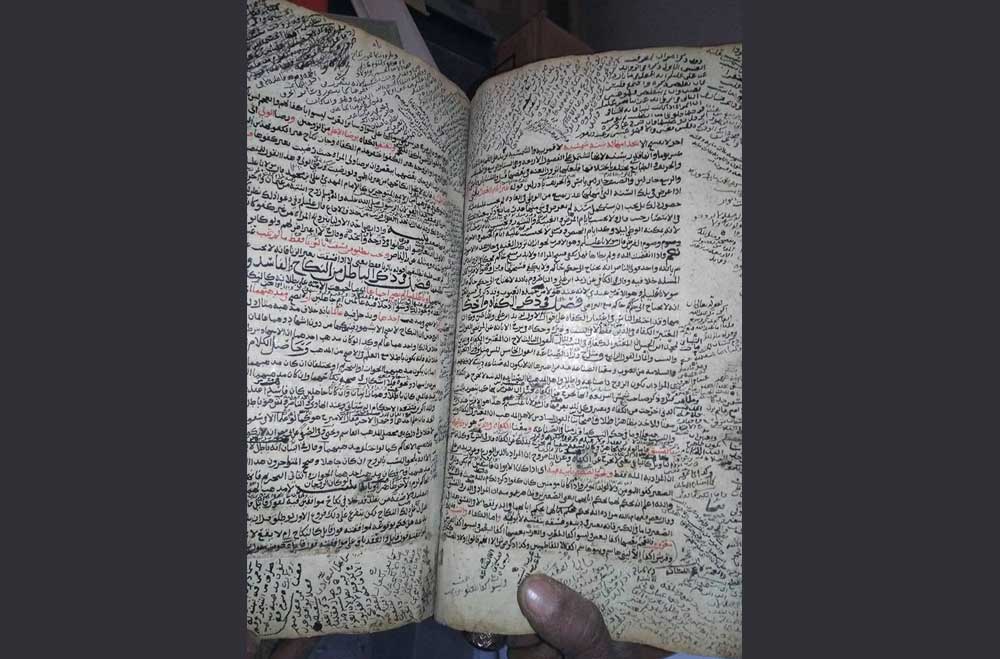
Imagine holding a book that is 800 years old. The pages feel different—maybe like soft cloth or thin leather. The ink has faded from a rich black to a warm brown. In the margins, you see tiny notes in a different handwriting, a scholar from centuries ago arguing with the main text. This object is a time machine. But with every touch, every breath of humid air, every ray of sunlight, this bridge to the past grows weaker. It is silently fighting a battle against time, and it is losing.
This is the daily reality for millions of Islamic manuscripts held in libraries, museums, and private collections across the globe. They are not just old books; they are the primary sources of history, science, art, and faith for one of the world’s great civilizations. Yet, they face an invisible enemy: decay. The fight to save them is a modern crusade that combines ancient crafts with cutting-edge science, a race against time that is as much about preserving knowledge as it is about preserving light, color, and human touch.
Here at The Islamic Manuscripts Press of Leiden (IMPL), we are on the front lines of this fight. Based in a city with a centuries-old tradition of studying the Islamic world, we see firsthand both the profound fragility and the immense value of these texts. This article isn’t just about problems; it’s about the heroes—the conservators, scientists, and librarians—and the ingenious, often painstaking methods they use to give these treasures a future. It’s a story of rescue, happening right now in labs and workshops around the world.
The Enemy Within: Understanding What Makes Manuscripts Decay
To win the fight, you must know your enemy. Manuscripts are complex objects, and their decay is a multi-front war.
The Materials: A Built-In Expiry Date
A typical Islamic manuscript is a sandwich of organic materials, each with its own vulnerabilities:
- Paper: Introduced from China, Islamic paper was often made from linen or cotton rags. While more durable than wood-pulp paper, it is still cellulose—a favorite food for mold and susceptible to acidification, which makes it brittle and brown.
- Ink: Iron gall ink, common for text, is corrosive. Over centuries, it can literally eat through the page, creating “lacing” where letters become holes.
- Pigments and Dyes: The stunning blues (from lapis lazuli), reds (from vermilion), and gold leaf are bound with organic mediums like gum arabic. These can flake, fade, or darken.
- Binding: Leather bindings are attacked by pests and rot. The sewing threads holding the book together can weaken and break.
The Environmental Assault
Even if the materials were perfect, the environment is relentless:
- Light: Especially ultraviolet light, is like bleach for inks and pigments. It fades colors and weakens paper fibers.
- Humidity: The arch-nemesis. High humidity invites mold growth, causes inks to run, and makes pages stick together. Low humidity makes parchment and paper brittle.
- Temperature: Heat accelerates every chemical reaction that leads to decay.
- Pollution: Modern airborne pollutants create acids that slowly destroy paper and parchment.
- Pests: Silverfish, bookworms, and cockroaches literally devour the past, leaving trails of holes and dust.
The Human Factor
Sometimes, the greatest threat is the love we show them. Poor handling, misguided past “repairs” with acidic tape or glue, and even the oils from our fingers contribute to the damage. A manuscript can survive centuries in a stable chest only to be endangered in a few decades of modern display or study.
The Conservator’s Toolkit: Ancient Crafts Meet Modern Science
Preservation is not one job; it’s a spectrum of interventions, from creating a safe home to performing delicate “surgery” on a single page. The modern conservator is part historian, part chemist, and part artisan.
Step 1: Prevention – The First and Best Medicine
The mantra of modern preservation is: “Do no harm, and prevent harm from happening.” This means creating the perfect environment before a single manuscript is treated.
- The Fortress: Specialized Housing: Manuscripts are moved from dusty wooden shelves to archival-quality, acid-free boxes and folders. Libraries build secure, climate-controlled vaults where temperature and humidity are kept in a narrow, safe range (often around 18°C and 50% relative humidity).
- The Rules of Engagement: Readers in reading rooms are given foam book cradles, weights to hold pages gently, and instructed in careful handling. The goal is to minimize stress on the binding and pages.
At IMPL, ensuring the long-term preservation of the physical objects we study is a foundational ethic that informs all our work, from how we handle a manuscript during research to the standards we advocate for in our publications and collaborations.
Step 2: Investigation – The Science of Seeing
Before any treatment, conservators become detectives. They use non-invasive tools to understand the enemy’s position:
- Multispectral Imaging: Using different wavelengths of light (including ultraviolet and infrared) to see underdrawings, detect mold, or read text obscured by stains or corrosion.
- X-ray Fluorescence (XRF): A handheld scanner that can identify the exact chemical elements in an ink or pigment without taking a sample. Is this blue real lapis lazuli or a cheaper substitute? XRF can tell.
- Digital Microscopy: Zooming in to see the structure of paper fibers, the layering of pigments, or the early signs of insect damage.
This forensic analysis creates a “medical chart” for the manuscript and ensures the treatment is tailored and safe.
Step 3: Intervention – The Delicate Art of Repair
When physical repair is necessary, it is a minimalist art. The goal is to stabilize and make the object usable for research, not to make it look “new.”
- Paper and Parchment Repair: Tears are mended with ultra-thin, long-fibered Japanese paper and wheat starch paste—reversible, stable adhesives. Brittle pages might be strengthened through a process called leaf-casting, where a slurry of paper fibers is used to fill losses in a water bath.
- Ink and Pigment Consolidation: Using tiny brushes and microscopes, conservators apply minute amounts of adhesive to secure flaking ink or gold leaf back to the page.
- Binding Rehousing: Often, the original, damaged binding is preserved as-is in a custom box, and the text block is given a new, protective “conservation binding” that allows safe handling.
One of the most dramatic procedures is washing. Yes, washing a 500-year-old book. Submerging a page in a carefully calibrated deacidification bath can neutralize acids, remove damaging degradation products, and actually strengthen the paper fibers. It’s a terrifying but transformative process reserved for the most at-risk items.
The Digital Vault: Preservation Through Pixels
In the last two decades, a revolutionary new preservation tool has emerged: the digital surrogate. High-resolution digitization is not a replacement for physical conservation, but a powerful ally.
- Creating an Access Copy: A perfect digital photograph allows unlimited study by scholars worldwide without the original ever being handled.
- A Record Against Catastrophe: If disaster strikes—fire, flood, war—the digital record can preserve the intellectual content of a manuscript even if the physical object is lost.
- Revealing Hidden Secrets: As mentioned, digital processing of images can reveal text and details invisible to the naked eye.
Major projects like the Qatar Digital Library and the Bibliotheca Alexandrina’s manuscript initiative are building vast online repositories, creating a new kind of global, indestructible library. This digital safeguard is a cornerstone of 21st-century preservation strategy.
The Front Lines in Perilous Places: A Race Against Time
The challenge is not evenly distributed. While institutions in Europe and North America often have resources, the situation is critical in regions that hold the largest and most significant collections.
- The Timbuktu Miracle: In 2012, as extremist groups occupied Timbuktu, Mali, librarians and volunteers executed a daring operation. They smuggled over 350,000 medieval Islamic manuscripts out of the city in chests and suitcases, saving them from probable destruction. The subsequent conservation effort, often in rudimentary conditions, continues to this day.
- Yemen’s Cultural Catastrophe: The ongoing war has devastated libraries and museums. Manuscripts are threatened by bombings, looting, and a total collapse of environmental control. Remote training for local librarians and emergency digitization projects are among the few lifelines.
- Climate as a Threat: In places like Bangladesh and coastal regions, increasing floods and extreme humidity pose a massive, growing threat to manuscript collections.
These crises highlight that preservation is not just a technical task; it is an act of cultural resilience and defiance.
The Living Tradition: Training the Next Generation
The fight cannot be won without people. There is a global shortage of conservators specialized in Islamic manuscript materials. Training programs, like those at The Islamic Manuscripts Association (TIMA) or the Thesaurus Islamicus Foundation, are vital. They teach not only Western conservation ethics but also respect for the Islamic codex as a sacred and artistic object, ensuring repairs are sympathetic to its original craftsmanship.
Why Does This Fight Matter? More Than Just Old Paper
It’s easy to see this as a niche concern for historians. It is not. Saving these manuscripts is:
- Saving Diversity of Thought: They contain alternative paths in science, medicine, and philosophy that can inspire new solutions today.
- Protecting Cultural Identity: For millions, these manuscripts are a tangible link to their heritage, a proof of intellectual and artistic achievement.
- Honoring Human Legacy: They are among humanity’s most universal treasures. Their loss would be a loss for all of us, impoverishing our shared understanding of human creativity and intellect.
Every manuscript saved from decay is a victory. It means another poem can be read, another medical idea can be studied, another beautiful page can inspire. It keeps the conversation with the past alive.
The work is slow, expensive, and often unsung. But in quiet labs and libraries, a global community of conservators, scientists, and librarians is winning battles every day. They are the guardians of the light, ensuring that the wisdom and beauty of the Islamic manuscript tradition will not fade into darkness, but will continue to illuminate our world for centuries to come.
The Islamic Manuscripts Press of Leiden is committed to supporting this vital work through research, advocacy, and publication. To learn more about the challenges and triumphs of manuscript preservation, and to support the cause, we invite you to explore our mission and resources on our homepage.
References & Further Reading
- The Islamic Manuscript Association (TIMA) – Resources on Conservation: https://www.islamicmanuscript.org/conservation/
- The British Library – “Collection Care” Department: https://www.bl.uk/conservation
- The Warburg Institute – “Ars Artium: Essays in Honour of Prof. Dr. J. J. Witkam” (Includes conservation studies): https://warburg.sas.ac.uk/publications/occasional-papers/ars-artium
- Qatar National Library – Conservation and Preservation: https://www.qnl.qa/en/conservation-preservation
- The Hill Museum & Manuscript Library (HMML) – Preservation through Digitization: https://www.hmml.org/preservation/
- UNESCO – “Memory of the World” Programme for Documentary Heritage: https://en.unesco.org/programme/mow
- The American Institute for Conservation (AIC) – Ethics and Guidelines: https://www.culturalheritage.org/about-conservation
- “Saving Timbuktu’s Manuscripts” (BBC Documentary Feature): https://www.bbc.com/news/magazine-35754671
- The Bibliotheca Alexandrina – Manuscript Center & Conservation Lab: https://www.bibalex.org/en/center/description/manuscripts
- Journal of the Institute of Conservation (Taylor & Francis): https://www.tandfonline.com/toc/rcon20/current