Medicine, Astronomy, and Algebra: Islamic Manuscripts that Shaped Modern Science
Let’s play a word association game. I say “Renaissance.” You probably think of Leonardo da Vinci, Michelangelo, and a glorious rebirth of art and science in Europe. But what if I told you that rebirth had a prequel—a massive, centuries-long, multilingual project that literally saved the script? And what if the key to that story isn’t in a famous painting, but in thousands of handwritten manuscripts, filled with complex diagrams, star charts, and medical recipes?
This is the untold story of how Islamic manuscripts became the indispensable bridge between ancient knowledge and the modern world. For roughly 500 years, from the 8th to the 13th centuries and beyond, scientists, doctors, and mathematicians across the Islamic world didn’t just preserve Greek, Persian, and Indian knowledge. They did their homework. They tested old theories, corrected ancient mistakes, and made spectacular breakthroughs of their own. And they wrote it all down.
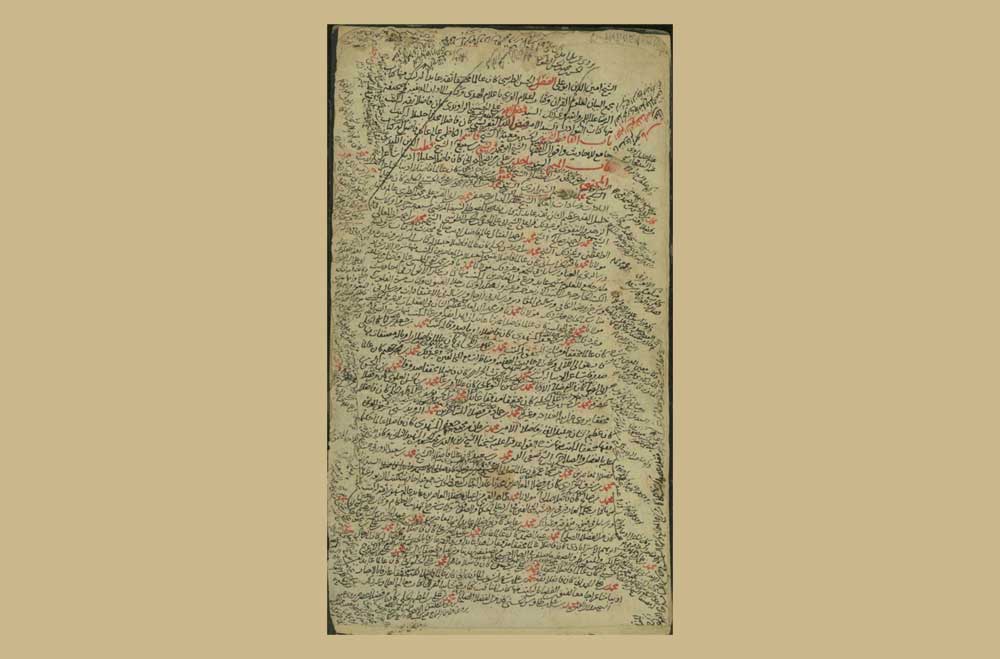
These manuscripts are the original lab notebooks of a global scientific revolution. They contain the first accurate maps of the stars, the first systematic medical encyclopedias, and the very foundations of algebra. At The Islamic Manuscripts Press of Leiden (IMPL), we work with these texts every day. We see them not as dusty old books, but as dynamic records of a time when Baghdad, Cairo, and Samarkand were the Silicon Valleys of their day. This article is your backstage pass. We’re going to open these manuscripts and meet the geniuses who wrote them, whose ideas—transmitted on paper and parchment—fundamentally shaped the science you rely on today.
The Starter Pack: The Great Translation Movement
Before there could be innovation, there had to be preservation. Imagine the ancient Library of Alexandria slowly crumbling, its knowledge fading. Enter the Abbasid Caliphs in Baghdad, particularly Caliph al-Ma’mun (d. 833). He didn’t just build a library; he built an idea factory called the House of Wisdom (Bayt al-Hikma).
His project was shockingly ambitious: find and translate every major work of science and philosophy in the known world into Arabic. Teams of Christian, Jewish, Muslim, and Sabian scholars got to work:
- From Greek: The works of Aristotle, Plato, Ptolemy (astronomy), Galen (medicine), and Euclid (geometry).
- From Persian: Texts on statecraft, literature, and astronomy.
- From Sanskrit: Mathematical treatises, most importantly the decimal number system including the concept of zero.
This wasn’t a passive act of hoarding. It was an active, state-funded project to create a universal database of human knowledge. For the first time, a scholar in Cordoba could be working from the same core text as a scholar in Baghdad. Arabic became the language of global science. This translation movement, meticulously recorded in thousands of manuscripts, saved Aristotle from oblivion and gave Newton a foundation to stand on.
Chapter 1: The Astronomers – Remapping the Heavens
Ancient astronomers like Ptolemy had a model: Earth at the center, with planets moving in complex loops called epicycles. Islamic astronomers looked at the data, looked at the model, and said, “This doesn’t add up.” Their manuscripts show a relentless pursuit of precision.
The Manuscript: al-Zīj al-Ṣābī (The Sabian Tables) by al-Battani (c. 858-929)
Al-Battani, working in modern-day Turkey, wasn’t satisfied with Greek data. His zīj (astronomical handbook with tables) was a game-changer.
- What’s in the Manuscript: Precise tables for calculating planetary positions, solar eclipses, and the length of the solar year.
- The Breakthrough: He calculated the solar year to within 2 minutes of the modern value. He proved the Sun’s position changes over time (the concept of the “precession of the equinoxes”) more accurately than Ptolemy. His data was so good it was used by Copernicus 600 years later, who credited “Albategnius” (al-Battani’s Latinized name) in his own revolutionary work, De revolutionibus.
The Manuscript: The Book of Fixed Stars by Abd al-Rahman al-Sufi (903-986)
This stunning manuscript is a beautiful fusion of science and art.
- What’s in the Manuscript: A star catalogue with two illustrations for each constellation: one as seen from Earth, and one as seen on a celestial globe. It corrected many of Ptolemy’s star positions.
- The Legacy: It was the definitive star atlas for centuries. Its illustrations set a standard and its data guided later astronomers. The manuscript itself, a masterpiece of scientific illustration, shows how knowledge was communicated visually.
The Peak: The Maragha and Samarkand Observatories
The work moved from individual genius to massive, state-funded teamwork. At the Maragha Observatory (13th century, Persia) and Ulugh Beg’s Observatory in Samarkand (15th century), teams of astronomers produced even more precise tables. Their manuscripts, like the Zīj-i Ilkhani and the Zīj-i Sulṭāni, represent the peak of pre-telescopic astronomy. They proved that careful, sustained observation could challenge even the most revered ancient authorities.
Chapter 2: The Physicians – The First Systematic Medical Revolution
While Europe was in the early Middle Ages, Islamic doctors were building hospitals, pioneering pharmacology, and writing textbooks that would define medicine for 600 years. Their manuscripts are detailed, practical, and revolutionary.
The Manuscript: al-Ḥāwī fī al-ṭibb (The Comprehensive Book on Medicine) by al-Razi (c. 854–925)
Known in the West as Rhazes, he was a brilliant clinician and skeptic. His al-Ḥāwī is a monumental 23-volume compendium.
- What’s in the Manuscript: It’s a giant casebook. He recorded diseases, treatments, and his own clinical observations, differentiating between smallpox and measles for the first time.
- The Scientific Mindset: He valued empirical observation over blind faith in Galen. In one famous passage, he explains how to test medical claims with control groups—a cornerstone of the modern scientific method.
The Masterpiece: al-Qānūn fī al-ṭibb (The Canon of Medicine) by Ibn Sina (980-1037)
If there was one textbook that ruled the world, it was the Canon. Known as Avicenna in the West, Ibn Sina wrote this million-word encyclopedia.
- What’s in the Manuscript: It systematized all medical knowledge. Five books covering: 1) general principles, 2) medicinal substances, 3) diseases by organ, 4) diseases not specific to an organ, and 5) compound drugs.
- The Unrivaled Legacy: For over six centuries, the Canon was the primary medical textbook from Seville to Delhi, and in European universities like Montpellier and Leuven. It was printed in Latin more than 60 times after the invention of the printing press. Its manuscript copies are legion, often beautifully illuminated, showing its immense value.
The Surgeon: al-Taṣrīf (The Method) by al-Zahrawi (c. 936–1013)
Abulcasis, as he was known in Europe, was the father of surgery. His manuscript is brutally practical.
- What’s in the Manuscript: The final, 30th volume of al-Taṣrīf is dedicated to surgery. It contains detailed, labeled illustrations of over 200 surgical instruments—forceps, scalpels, bone saws, speculums. Many are recognizable to modern surgeons.
- The Impact: He described procedures for cataract removal, setting broken bones, and amputations. This manuscript translated into Latin, became the surgical bible of medieval Europe, ending the era when barbers doubled as surgeons.
Chapter 3: The Mathematicians – Inventing the Language of Science
Our modern world runs on algorithms and solves problems with algebra. We owe those words—and the concepts—to mathematicians whose work spread through manuscripts.
The Foundational Text: al-Kitāb al-mukhtaṣar fī ḥisāb al-jabr wa’l-muqābalah by al-Khwarizmi (c. 780–850)
The title itself is history. Al-jabr (“completion” or “restoration”) gives us algebra. Al-Khwarizmi’s name gives us algorithm.
- What’s in the Manuscript: This isn’t a book of theory; it’s a practical manual for solving real-world problems of inheritance, land division, and trade. He presents systematic solutions for linear and quadratic equations.
- The Revolution: He established algebra as an independent discipline, separate from geometry. He also played a key role in transmitting the Indian decimal number system (0-9) to the Islamic world and then to Europe. His manuscripts were translated into Latin with the thrilling title Dixit Algorizmi (“Thus spake Al-Khwarizmi”).
The Geometry of Light: Kitāb al-Manāẓir (The Book of Optics) by Ibn al-Haytham (c. 965–1040)
Known as Alhazen in the West, he revolutionized how we understand light and vision. His seven-volume masterpiece is a model of experimental science.
- What’s in the Manuscript: Detailed accounts of experiments with lenses, mirrors, and a dark chamber (the camera obscura). He used geometry to explain how light travels in straight lines and how we see.
- The Breakthrough: He conclusively disproved the ancient Greek “emission theory” (that eyes emit light). He proved that light enters the eye, laying the foundation for modern optics. His experimental method directly influenced Roger Bacon and later European scientists.
The Polynomial Pioneer: al-Kitāb al-mukhtaṣar fī ḥisāb al-jabr wa’l-muqābalah by Omar Khayyam (1048–1131)
Yes, the famous poet was also a brilliant mathematician. He wrote a seminal algebra manuscript that went beyond al-Khwarizmi.
- What’s in the Manuscript: He classified and solved cubic equations using geometric methods, venturing into territory al-Khwarizmi hadn’t tackled.
- The Legacy: His work represented the cutting-edge of algebraic thought for its time and influenced later Persian and Islamic mathematicians.
The Delivery System: How These Ideas Traveled to Europe
So, how did these ideas locked in Arabic manuscripts get to Europe? Through three main channels:
- Translations in Spain (Toledo): After Toledo was reconquered in 1085, it became a translation hub. Scholars like Gerard of Cremona (d. 1187) learned Arabic and translated dozens of foundational texts—including the Canon of Ibn Sina and the Algebra of al-Khwarizmi—directly into Latin.
- Translations in Sicily and Italy: The multicultural court of Norman Sicily was another gateway. The works of al-Idrisi (geography) and others flowed north.
- The Crusades: As fraught as they were, the Crusades created contact. European scholars encountered advanced Arab medicine and science firsthand.
By the 12th and 13th centuries, the “new” curriculum in European universities was largely based on these Arabic-Latin translations. Universities in Bologna, Paris, and Oxford were teaching from the Canon and debating the ideas of al-Razi and Ibn Sina. The Renaissance didn’t emerge from a vacuum; it was built on this massive, manuscript-borne infusion of knowledge.
The Modern Legacy: Reading Between the Lines Today
Today, the study of these manuscripts is more alive than ever, thanks to technology.
- Digital Repatriation: Projects like the Qatar Digital Library are putting high-resolution images of these manuscripts online, allowing global study.
- Scientific Analysis: At IMPL and other centers, scientists use multispectral imaging to read erased notes in manuscripts, uncovering earlier drafts and marginal debates between scholars. X-ray fluorescence can identify the exact pigments in diagrams, telling us about historical trade routes.
- Recovering Lost Knowledge: Scholars are constantly re-examining these texts, finding forgotten medical remedies, astronomical insights, or mathematical approaches that were overlooked.
These manuscripts are not dead history. They are active participants in modern scholarship, still teaching us about a time when the pursuit of knowledge was a luminous, borderless, and profoundly human endeavor.
They remind us that science is a collaborative story written across centuries and cultures. The next time you look at a star chart, take medicine, or use a computer algorithm, remember the long chain of scribes, translators, and curious minds who passed that knowledge down, one precious manuscript at a time.
The Islamic Manuscripts Press of Leiden is dedicated to unlocking the continuing relevance of these scientific masterworks. Explore our publications and research to dive deeper into the stories they tell.
References & Further Reading
- 1001 Inventions (Educational Foundation on Islamic Science): https://www.1001inventions.com/
- The British Library – “Discovering Science in Medieval Manuscripts”: https://www.bl.uk/science-manuscripts
- The Morgan Library – “Islamic Science and Medicine”: https://www.themorgan.org/collection/islamic-science-and-medicine
- University of Oklahoma – History of Science Collections (Islamic): https://libraries.ou.edu/history-science-collections
- “The House of Wisdom: How Arabic Science Saved Ancient Knowledge” by Jim al-Khalili: https://www.penguin.co.uk/books/312/312766/the-house-of-wisdom/9780141040288.html
- “Avicenna’s Medicine: A New Translation” by Mones Abu-Asab et al.: https://www.inner-traditions.com/books/avicenna-s-medicine
- “The Algebra of Omar Khayyam” by Omar Khayyam (translated): https://www.gutenberg.org/ebooks/38982
- “Al-Khwarizmi: The Beginnings of Algebra” by Roshdi Rashed: https://www.saqibooks.com/books/english/mathematics/1467-al-khwarizmi-the-beginnings-of-algebra.html
- Journal of the International Society for the History of Islamic Medicine (JISHIM): http://www.ishim.net/ishimj/
- Smithsonian Institution – “Science in the Islamic World”: https://www.si.edu/spotlight/islamic-world-science