Imagine a world without the internet, where a single question could take a lifetime to answer. Now, imagine you’re a scholar in the year 1000. You want to study astronomy, master Greek philosophy, or understand a new surgical technique. Where do you go? Your destination wasn’t a website, but a library. And not just any library, but a legendary center of learning that could house hundreds of thousands of books in an age when a single manuscript was a priceless treasure.
This is the story of the Great Libraries of the Islamic World. It’s a tale not just of books on shelves, but of institutions that were the internet, the university, and the research lab of their day. From the sun-baked alleys of Cairo to the bustling crossroads of Samarkand, these libraries were the beating hearts of the Islamic Golden Age, powering a thousand-year renaissance of science, art, and philosophy.
Forget the quiet, dusty stereotypes. These were vibrant hubs of intellectual fire. They were founded by caliphs and sultans who believed knowledge was the ultimate form of power and piety. They employed armies of librarians, translators, and copyists. And they didn’t just collect knowledge; they actively created it through debate, experimentation, and the meticulous copying of texts that would have otherwise been lost forever.
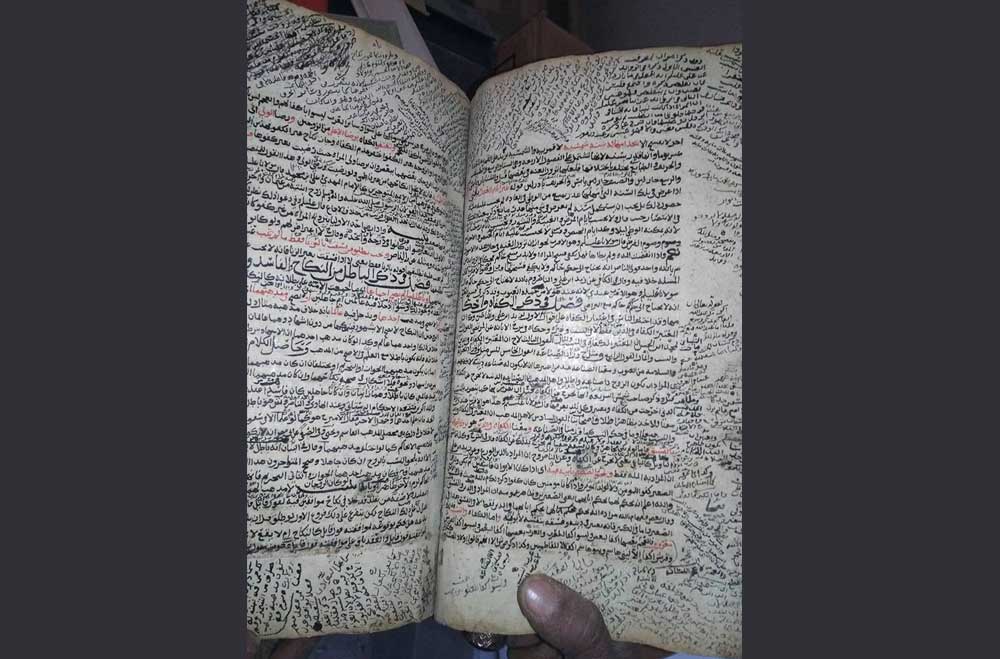
At The Islamic Manuscripts Press of Leiden (IMPL), we see ourselves as inheritors of this tradition. In the university city of Leiden, which has been a center for studying the Islamic world for centuries, our work revolves around the very manuscripts these great libraries once curated. We trace their journeys, decode their annotations, and help preserve their legacy for the digital age. This journey from Cairo to Samarkand is, in many ways, the story of how human knowledge was gathered, organized, and transmitted—a story that directly leads to the books and studies we work with today.
Why Build a Library? The Philosophy of Knowledge in Islam
To understand these libraries, you must first understand the culture that built them. From the very beginning, the Islamic tradition placed a supreme value on knowledge (‘ilm). The very first word revealed in the Quran was “Iqra” — “Read.”
This divine command sparked a civilization-wide passion for learning. The Prophet Muhammad famously said, “Seek knowledge from the cradle to the grave,” and “The ink of the scholar is more sacred than the blood of the martyr.” Knowledge was a form of worship, a path to understanding God’s creation.
This created a powerful incentive for rulers. Building a magnificent library (maktaba or khizānat al-kutub, “treasury of books”) was a way to:
- Demonstrate Piety and Legitimacy: Showing yourself as a patron of knowledge was a powerful political and religious statement.
- Attract the Best Minds: Scholars, scientists, and poets would flock to a city with a great library, bringing prestige and innovation.
- Drive Administrative and Scientific Progress: A well-run empire needed experts in law, astronomy (for calendars and navigation), engineering, and medicine. Libraries trained these experts.
- Preserve and Synthesize World Knowledge: There was a conscious, ambitious project to gather all human knowledge—from Greece, Rome, Persia, India, and China—translate it into Arabic, critique it, and build upon it.
With this driving philosophy, let’s embark on our journey to four iconic centers of learning.
The House of Wisdom (Bayt al-Hikma) – Baghdad, 9th Century: The Mother of All Libraries
Our first stop is the most famous, and in many ways, the most foundational: the House of Wisdom in Baghdad. Founded by the Abbasid Caliph Harun al-Rashid and supercharged by his son, Caliph al-Ma’mun, in the early 800s, this was more than a library. It was an entire academic campus—a translation bureau, an observatory, and a salon for scholars of all faiths.
What Made it Revolutionary?
- The Translation Project: This was its core mission. Al-Ma’mun reportedly had a dream where Aristotle appeared to him, sparking a massive, state-funded effort to find and translate every great work of science and philosophy. Christian, Jewish, and Muslim scholars worked side-by-side translating Greek, Syriac, Persian, and Sanskrit texts into Arabic. Think of it as the world’s first open-source knowledge project.
- A Research Powerhouse: It wasn’t just about collecting old books. Scholars like the mathematician al-Khwarizmi (whose name gives us “algorithm”) and the philosopher al-Kindi worked here, using the translated texts as a springboard for original breakthroughs in algebra, astronomy, and optics.
- Scale and Scope: While its exact size is debated, contemporary accounts describe a library of staggering scale, perhaps housing hundreds of thousands of volumes at its peak. It set the template for all libraries that followed.
The House of Wisdom’s legacy is incalculable. It saved the works of Aristotle, Plato, Ptolemy, Galen, and countless others from being lost in the turmoil of late antiquity. It created a common scientific language (Arabic) that allowed knowledge to flow from Spain to India. Its destruction during the Mongol siege of Baghdad in 1258 is often cited as a catastrophic blow to world knowledge, but its seeds had already been scattered far and wide.
The Fatimid Palaces and al-Azhar – Cairo, 10th-12th Centuries: The Shi’i Scholarly Empire
As Baghdad’s star began to wane, a new powerhouse arose in North Africa. The Fatimid Caliphs, who founded Cairo in 969, were Isma’ili Shi’a Muslims with a deep commitment to esoteric knowledge and philosophical inquiry. Their libraries were legendary.
The Palace Libraries (Khizānat al-Kutub):
The Fatimid caliphs were voracious collectors. Their palace complex in Cairo contained several grand libraries, one of which, the “House of Knowledge” (Dār al-‘Ilm), was said to contain 1.6 million volumes. While this number is likely exaggerated, it speaks to its awe-inspiring reputation. These libraries were filled not only with religious texts but with works on astronomy, alchemy, philosophy, and logic. Access was granted to trusted court scholars and initiates.
Al-Azhar Library – The Living Legacy:
Founded in 970 as a mosque and university, al-Azhar is the world’s oldest continuously operating degree-granting university. Its library grew alongside it. While the original Fatimid collections were dispersed after the dynasty’s fall, al-Azhar’s role as a guardian of Islamic scholarship never ceased. Today, its modern library preserves over 100,000 manuscripts, many of which are unique copies of essential theological, legal, and literary works. It represents the unbroken chain of Islamic learning.
The Umayyad Library of Cordoba – Al-Andalus, 10th Century: The Light of the West
Now we travel to the western edge of the Islamic world: al-Andalus (Islamic Spain). At its height, the Umayyad Caliphate of Cordoba was a rival to Baghdad in splendor and sophistication. Caliph al-Hakam II (r. 961-976) was a genuine bibliophile.
The Caliph Who Loved Books:
Al-Hakam II sent agents across the Muslim world with blank checks to buy, copy, or borrow any valuable book. His palace library in Cordoba became the greatest in Europe, housing an estimated 400,000 to 600,000 volumes. For context, the largest library in Christian Europe at the time probably held a few hundred manuscripts.
A Cultural Bridge:
The Cordoba library was a crucial bridge. It preserved Eastern knowledge and generated new scholarship in the West. More importantly, its existence—and the vibrant, multi-faith society of al-Andalus—allowed this knowledge to filter into Christian Europe through translators working in cities like Toledo. The works of Ibn Sina (Avicenna), al-Razi (Rhazes), and countless others entered the Latin West largely through this Iberian gateway, fueling the European Renaissance.
The Libraries of Timurid Samarkand – 15th Century: A Floral Renaissance
Our final stop takes us east, to the crossroads of Central Asia. The conqueror Timur (Tamerlane) was brutal, but his descendants, the Timurids, were among history’s greatest patrons of art and science. His grandson, Ulugh Beg, was a scientist-king who turned his capital, Samarkand, into an astronomical hub.
The Observatory Library:
Ulugh Beg’s greatest creation was his observatory, a three-story cylindrical building equipped with a massive meridian arc. Attached to it was a library stocked with the finest works on mathematics and astronomy from across Persia, the Arab world, and India. Here, Ulugh Beg and his team compiled the Zīj-i Sulṭānī, star catalogs more accurate than any in the world for centuries.
The Bibliophile Sultans:
Later Timurid rulers in Herat (modern Afghanistan) and Samarkand, like Sultan Husayn Bayqara and his minister, the poet Mir ‘Ali Shir Nava’i, were passionate collectors. They established lavish libraries that were also artistic salons. These libraries weren’t just for storage; they were active scriptoriums where master calligraphers like Sultan ‘Ali Mashhadi and painters like Kamal ud-Din Behzad produced some of the most breathtaking illuminated manuscripts in history. The book itself became a supreme art object.
The Anatomy of a Great Library: More Than Just Shelves
What did it actually take to run one of these institutions? It was a complex operation:
- The Librarian (al-Khāzin or Sāhib al-Maktaba): Often a renowned scholar himself, responsible for cataloging, acquisitions, and sometimes teaching.
- The Copyists (Warraqūn): An army of scribes who manually copied texts, ensuring their dissemination and preservation.
- The Translators (Nuqqād): Teams who worked from Greek, Syriac, Sanskrit, etc.
- The Bookbinders and Illuminators: Craftsmen who turned loose folios into durable, beautiful objects.
- The Catalog: Many libraries had detailed subject catalogs to help scholars find what they needed—a medieval search engine.
- Funding: Supported by royal treasuries, religious endowments (waqf), and donations.
What Happened to Them? The Fragility of Knowledge
The story of these libraries is also a story of loss. They were incredibly vulnerable:
- Political Upheaval: The Mongol destruction of Baghdad (1258) is the most famous disaster. Libraries in Cordoba and Cairo were also looted during political transitions.
- Fire and Water: The primary enemies of paper and parchment.
- Neglect and Dispersal: When patronage dried up, collections could be sold off piecemeal or left to rot.
It’s a sobering reminder of the fragility of human knowledge. The fact that we have any manuscripts from these libraries at all is a minor miracle, often thanks to later collectors who rescued individual volumes.
The Digital Revival: 21st-Century Khizānat al-Kutub
Today, we are living through a new golden age for these collections, thanks to technology. The spirit of the House of Wisdom is alive in digital humanities projects:
- Digitization: Libraries worldwide, from the Chester Beatty in Dublin to the National Library of Egypt, are putting their Islamic manuscript collections online in high resolution.
- Virtual Reunification: Projects like the Qatar Digital Library or Bibliotheca Alexandrina’s efforts are creating virtual libraries that transcend borders, allowing a manuscript in Paris, a copy in Cairo, and a commentary in Hyderabad to be studied together for the first time in centuries.
- New Tools: Scholars at institutions like ours at IMPL use multispectral imaging to read erased texts, algorithmic analysis to compare handwriting, and databases to trace the migration of ideas.
This digital revival is, in essence, creating a new global library—one that honors the collaborative, borderless ideal of its medieval predecessors. You can explore some of the pathways into this new library through resources we highlight on our IMPL research portal.
The Enduring Legacy
The journey from Cairo to Samarkand is more than a historical tour. It’s a testament to a civilization that believed in the power of the written word to elevate humanity. These great libraries were the engines that drove innovation, preserved the legacy of ancient cultures, and built bridges between worlds.
They remind us that knowledge thrives in openness, in translation, and in generous patronage. The books they saved and created—the manuscripts of medicine, astronomy, poetry, and philosophy—didn’t just shape the Islamic world. They laid the foundations for our modern global civilization.
In an age of information overload, the story of these libraries invites us to reflect on how we value, organize, and preserve knowledge today. It asks us what our own “great libraries” will be, and what legacy of learning we will leave for the centuries to come.
References & Further Reading
- British Library – “The House of Wisdom” Article: https://www.bl.uk/house-of-wisdom
- The Library of Ashurbanipal to al-Azhar: Libraries in the Medieval Islamic World (Met Museum Essay): https://www.metmuseum.org/toah/hd/isli/hd_isli.htm
- Bayt al-Hikma: The House of Wisdom (University of Manchester Digital Exhibit): https://www.library.manchester.ac.uk/rylands/special-collections/exploring/islamic-world/house-of-wisdom/
- Al-Azhar Library Official Website: https://www.azhar.eg/azharlibrary
- Qatar Digital Library – Vast archive with historical context: https://www.qdl.qa/en
- “The Rise of Early Modern Science: Islam, China and the West” by Toby E. Huff: https://www.cambridge.org/core/books/rise-of-early-modern-science/
- “Libraries in the Medieval Islamic World” by Michael H. Harris: https://www.questia.com/library/120080075/libraries-in-the-medieval-islamic-world
- UNESCO – “Memory of the World: The Arabic Manuscript Collection of al-Azhar” https://en.unesco.org/programme/mow (Search within site)
- The Walters Art Museum – “Collecting Islamic Manuscripts” (History of collections): https://art.thewalters.org/browse/category/islamic-manuscripts/
- “The Manuscript Tradition of the Islamic World” (Khalili Collections Essay): https://www.khalilicollections.org/essays/the-manuscript-tradition-of-the-islamic-world/