
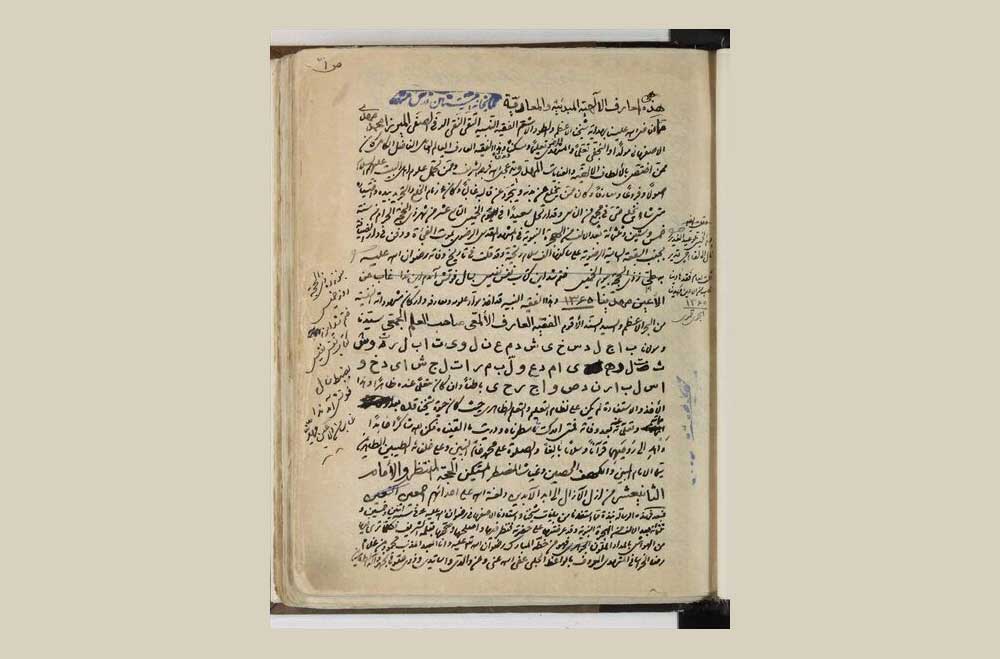
Let’s be honest: when we look at a breathtaking Islamic manuscript—pages covered in gold, calligraphy so perfect it seems to float, illuminations that twist and bloom across the margins—we tend to imagine the person who made it. The scribe, hunched over his desk for months. The illuminator, mixing lapis lazuli with egg white to create that impossible blue. The calligrapher, trained for decades to make each letter flow into the next.
But here’s the thing: none of those people would have created anything without someone paying the bills. Behind every lavish manuscript stands a patron—someone with money, taste, and a reason to want a beautiful book. And in the Islamic world, those patrons were often the most powerful people in society: sultans, princes, governors, and even the women of the royal court.
Patronage is the engine that drove Islamic manuscript production for over a thousand years. Without it, there would be no Blue Qur’an, no Shahnamah of Shah Tahmasp, no magnificent copies of Rumi’s Masnavi glowing in libraries around the world. The story of Islamic manuscripts is, in large part, the story of who paid for them and why.
At The Islamic Manuscripts Press of Leiden (IMPL), we believe that understanding patronage is essential for anyone who wants to truly appreciate these remarkable objects. So let’s dive into the world of sultans and princes—and the surprising array of other patrons—who made Islamic manuscript culture possible.
The Big Picture: How Many Manuscripts Survive?
Before we get into the stories of individual patrons, let’s put things in perspective. Just how many Islamic manuscripts are we talking about?
The numbers are staggering. The Al-Furqan Islamic Heritage Foundation has estimated that approximately 3 million Islamic manuscripts have survived to the present day . Other academics suggest even higher numbers: perhaps 7 million surviving manuscripts out of an estimated 90 million written between the 7th and 14th centuries .
The estimates vary for good reasons. Many manuscripts are located in conflict zones, inaccessible to researchers. Others sit in private libraries, uncatalogued and unknown. Some have been destroyed over centuries by war, fire, flood, or neglect. The ones that survive—the ones we can see today in museums and libraries—represent a fraction of what once existed.
And here’s the crucial point: the manuscripts that survived tend to be the ones that were most valued. And the ones that were most valued were often the ones produced for wealthy patrons. A plain copy of a text, made for a student’s personal use, might be used until it fell apart. But a lavishly illuminated manuscript made for a sultan’s library was treated with care, preserved, and passed down through generations.
The University of Michigan’s Islamic Manuscripts Collection, one of the largest in North America, holds more than 1,800 texts in over 1,100 volumes . These include manuscripts from the Abdul Hamid collection—several exemplars of “the highest level of artistry in binding, illumination, calligraphy and illustration” . These are the kinds of manuscripts that patrons commissioned: not just books, but works of art.
So who were these patrons? Let’s meet them.
The Mamluk Patrons: Sultans and Their Books
Let’s start with one of the most fascinating periods of Islamic manuscript production: the Mamluk sultanate, which ruled Egypt and Syria from 1250 to 1517. This was a time of extraordinary cultural flourishing, and the book was at its center.
Doris Behrens-Abouseif’s landmark study, “The Book in Mamluk Egypt and Syria (1250-1517),” is the first work ever dedicated to the circulation of the book as a commodity in the Mamluk world . And what she found challenges many assumptions about how manuscripts were produced and used.
Princely Patronage and Its Impact
The Mamluk elite were not born into wealth and power. They were purchased as slaves (mamluk means “owned one”), converted to Islam, trained as soldiers, and rose through the ranks based on merit. By the time they became sultans or emirs, they had experienced a remarkable trajectory from servitude to rulership.
And they wanted books.
Behrens-Abouseif documents the “impact of princely patronage on the production of books” throughout the Mamluk period . Sultans and high-ranking emirs commissioned manuscripts for their own libraries, for religious institutions they founded, and as diplomatic gifts. They employed scribes, calligraphers, and illuminators. They created what we might call a “court culture” of book production.
But here’s the interesting part: unlike some other Islamic dynasties, the Mamluks did not maintain a single, centralized royal workshop or kitabkhana (library-atelier). Instead, patronage was more diffuse. Different patrons commissioned work from different artists, and the market for manuscripts extended beyond the court .
Libraries for the Public Good
Mamluk patrons didn’t just collect books for themselves. They also established libraries as part of religious institutions—mosques, madrasas (schools), and Sufi lodges. These libraries made manuscripts available to scholars and students, creating a public good from private wealth.
Behrens-Abouseif examines “the formation and management of libraries in religious institutions, their size and their physical setting” . These were not small collections. Some institutional libraries held thousands of volumes, making them major centers of learning.
The key mechanism that made this work was the charitable endowment, or waqf. When a patron founded a library, they would endow it with property—rental buildings, agricultural land, shops—whose income would support the library in perpetuity. The books themselves were also endowed, which meant they could not be sold, given away, or used as collateral. They were permanently dedicated to the institution and its users .
This system was remarkably effective. Manuscripts endowed to libraries centuries ago survive today precisely because they were protected by waqf law. You can still see the endowment statements written in their front pages, naming the patron and spelling out the conditions of use.
The Market for Manuscripts
Patronage didn’t mean that all manuscripts were produced for specific patrons. There was also a lively commercial market. Behrens-Abouseif explores “the market as a venue of intellectual and commercial exchanges and a production centre,” with references to prices and fees .
Scribes and calligraphers worked in markets, taking commissions from customers who might range from wealthy scholars to middle-class professionals. Some manuscripts were produced on speculation and offered for sale. Others were copied to order. The existence of this commercial market meant that even people without princely connections could own books—though not, perhaps, the most lavishly illuminated ones.
The prices varied widely depending on the manuscript’s size, quality, and decoration. A simple copy of a common text might cost a few dirhams—perhaps a week’s wages for a skilled worker. A luxury manuscript, with gold illumination and fine binding, could cost as much as a house.
The Patrons of Rum: Anatolia Before the Ottomans
While the Mamluks ruled Egypt and Syria, another fascinating manuscript culture was developing in Anatolia—the region that is now Turkey. Between the Mongol invasions of the mid-13th century and the rise of the Ottomans in the late 14th century, this area (called Rum in Arabic and Persian sources) was marked by political instability and conflict. Yet despite—or perhaps because of—this turbulence, a remarkable body of illuminated manuscripts was produced.
Cailah Jackson’s groundbreaking study, “Islamic Manuscripts of Late Medieval Rum, 1270s-1370s,” examines fifteen beautifully decorated Arabic and Persian manuscripts from this period . What she found reveals a complex web of patronage involving multiple groups.
Who Were the Patrons?
Jackson shows that manuscript patronage in late medieval Anatolia came from three main groups: local Turcoman princes, Seljuk bureaucrats, and Mevlevi dervishes .
The Turcoman princes were the local rulers of various Anatolian cities and regions. They commissioned manuscripts as a way of asserting their legitimacy and displaying their cultivation. A lavishly produced book signaled that they were not just warriors but patrons of culture, worthy of respect in the Islamic world.
The Seljuk bureaucrats were descendants of the great Seljuk dynasty that had once ruled much of the Middle East. Even as their political power waned, they maintained their cultural prestige. They commissioned manuscripts that reflected their refined tastes and their connections to Persian literary traditions.
The Mevlevi dervishes were followers of the great Sufi poet Jalal al-Din Rumi, whose Masnavi is one of the masterpieces of Persian literature. Rumi’s order, based in the city of Konya, was deeply involved in manuscript production. They needed copies of Rumi’s works for their devotional practices, and they had the resources to commission beautiful ones .
The Case of Sati ibn Hasan
One particularly interesting patron that Jackson identifies is a man named Sati ibn Hasan, a Mevlevi patron from the city of Erzincan . Little is known about him beyond what can be gleaned from the manuscripts he commissioned. But those manuscripts reveal a person of considerable wealth and taste, who wanted copies of Sufi texts that were both accurate and beautiful.
This is one of the challenges—and joys—of studying patronage. Often the only evidence we have is the manuscripts themselves. But if we read them carefully, they tell stories.
Konya as a Center of Production
Jackson’s research shows that the central Anatolian city of Konya was a “dynamic centre of artistic activity” during this period . As Rumi’s home and the capital of the Seljuk sultanate, it attracted scholars, artists, and patrons. Manuscripts produced in Konya show distinctive styles of illumination and calligraphy, influenced by both Persian and local traditions.
This regional variation is important. Islamic manuscript production was not monolithic. Different centers developed different styles, and patrons often chose to support local artists. A manuscript from Konya looks different from one made in Cairo, which looks different from one made in Shiraz. These differences help us trace the movement of artists, the spread of styles, and the preferences of patrons.
The Safavid Patrons: Princes and Painters in Iran
Let’s jump forward a few centuries and move east to Iran, where the Safavid dynasty ruled from 1501 to 1736. This was one of the great periods of Persian manuscript production, known especially for its magnificent illustrated manuscripts of epic poetry.
A dissertation by Marianna Shreve Simpson (published through Penn State) examines the illustrated manuscript tradition in Iran during the mid-17th century, focusing on a group of sixteen manuscripts produced between the 1630s and 1660s .
The Mashhad Question
Four of the manuscripts in this group internally record their patrons as governors of the provincial city of Mashhad, a major Shi’ite pilgrimage destination and an economically and militarily strategic center. Based on this, some scholars have proposed the existence of a previously unrecognized Mashhad-based school of painting, characterized by a unique style distinct from what was being produced in the royal capital, Isfahan .
But Simpson’s analysis raises questions. Many of the remaining twelve manuscripts lack records of their production sites and have been ascribed to Mashhad based on illustrative style. The evidence for sustained production in that center during this period “remains open to question” .
This is a good reminder that identifying patronage is not always straightforward. Patrons didn’t always include their names in manuscripts. Artists moved between cities. Styles traveled. A manuscript might be commissioned by a patron in one city but produced by artists trained elsewhere. Teasing out these connections requires careful analysis of codicological, documentary, and stylistic evidence.
Patrons Across the Socio-Economic Spectrum
One of the most interesting findings in Simpson’s research is that manuscripts from this period indicate “patronage across the socio-economic spectrum” . While some manuscripts were produced for governors and high-ranking elites, others seem to have been commissioned by people of more modest means.
The physical features of manuscripts provide clues. A deluxe manuscript, with fine paper, extensive illumination, and professional calligraphy, cost more than a plain copy on cheaper materials. By examining these features, scholars can make inferences about the resources available to the patron.
This is an important corrective to the tendency to focus only on the most spectacular manuscripts. Yes, sultans and princes commissioned extraordinary works. But so did merchants, scholars, and minor officials. The market for manuscripts was broader and more diverse than we sometimes imagine.
The Relationship Between Patrons and Artists
Simpson also addresses a question that fascinates many people: what was the relationship between patrons and the artists they employed?
In the Safavid period, we begin to see painters’ signatures appearing more frequently on manuscript illustrations. This has led some scholars to emphasize individual painters’ identities and to construct narratives about artistic personalities. But Simpson argues that this emphasis “is undermined by a scanty textual record and ambiguities in painters’ signatures” . Moreover, “stylistic individuality, often considered to be a hallmark of later Safavid painting, may have been a less important factor in visual creativity than previously believed.”
Instead, she draws attention to the role of imitation and response to past masters’ work, drawing parallels to principles of creativity in poetry . This is a more nuanced view of artistic production: not solitary geniuses expressing themselves, but skilled craftsmen working within traditions, responding to patrons’ desires, and engaging with the work of their predecessors and contemporaries.
The Ottoman Patrons: Sultans, Sufis, and Calligraphers
The Ottoman Empire, which ruled from the late 13th century until 1922, was one of the longest-lasting and most powerful Islamic dynasties. Ottoman sultans were enthusiastic patrons of manuscript production, and the empire produced some of the most magnificent manuscripts in Islamic history.
The Palace Workshop
The Ottoman court maintained a sophisticated artistic establishment, often called the nakkaşhane (painting house) or ehl-i hiref (community of the talented). This was not a single workshop but a system for recruiting and supporting artists from across the empire. Calligraphers, illuminators, bookbinders, and painters received regular salaries and produced manuscripts for the sultan and his court.
The University of Michigan’s collection includes exquisite calligraphic specimens by Ottoman masters: Şeyh Hamdullah of Amasya (d.1519 or 20), Hafız Osman Efendi (d.1698), Seyyid Abdullah of Yedikule (d.1731), Yesari Mehmed Esad Efendi (d.1798), Mahmud Celâleddin Efendi (d.1829), and Hasan Rıza Efendi (d.1920) . These were not just scribes but celebrities of their time, sought after by patrons who wanted the prestige of owning work by the greatest names.
The collection also includes four albums containing 158 calligraphic specimens, possibly bound in the Yıldız Palace workshop for someone close to Sultan Abdülhamid II (r.1876-1909), “within the family or diplomatic circle” . These albums show the range of Ottoman calligraphy, from massive panels suitable for mosque decoration to tiny pieces meant for intimate contemplation.
The Abdul Hamid Collection
The University of Michigan’s Abdul Hamid manuscripts are particularly intriguing. They were acquired in 1924 from a Cairo antiquities dealer who claimed they had once been part of the personal collection of Sultan Abdülhamid II . While there is “so far no evidence to support this asserted provenance,” the manuscripts are certainly of exquisite quality.
What we do know is that they were “supposedly obtained in Constantinople [Istanbul] around 1912 by the dealer Tammaro De Marinis who went seeking ‘any valuable manuscripts that might be being sold out of the estates of the country’s former rulers’ on behalf of J. Pierpont Morgan” . The mark of De Marinis appears in most of the manuscripts.
This story illustrates something important about patronage: it doesn’t end with the original patron. Manuscripts have afterlives. They are collected, sold, and re-sold. They pass through the hands of dealers and collectors. Each owner adds their mark—an ownership note, a seal, a library stamp—creating a provenance that future scholars can trace.
Sufi Patrons in the Ottoman World
Patronage wasn’t limited to the imperial court. Sufi orders were also important patrons of manuscripts, and the UCLA Library’s collection provides wonderful examples.
Consider Fatimah Khanum, an Ottoman Sufi mystic who died in 1122 AH (1710 CE). She was a descendant of the renowned poet Rumi, and along with her mother and brother, she managed the local Mevlevi Sufi lodge in the Anatolian city of Kutahya from 1650 to 1689 .
In 1104 AH (1692-93 CE), Fatimah Khanum endowed a manuscript to her family’s descendants and to the devotees of the Sufi order. The manuscript contains poetry in Persian and Turkish from over twenty poets, including selections from Sa’di, Khayali, Nizami, and others . The colophon, dated 992 AH (1584 CE), identifies the scribe as Davari ibn Azmi Bey el-Gedusi, himself a poet whose work appears in the volume.
Why did Fatimah Khanum endow this particular manuscript? As a poet herself—she is said to have composed her own compilation (diwan) of poetry—she likely consulted it personally. It could also have functioned as “a repertoire and reference for poetry recitation in gatherings at their Sufi lodge” . Since it included several poets from Gediz, a nearby town, it likely held additional significance as “a repository of local poetry.”
This example shows that patronage could be personal, local, and deeply connected to community needs. Fatimah Khanum wasn’t trying to impress other sultans or demonstrate her dynasty’s power. She was supporting the spiritual and cultural life of her Sufi community.
The Surprising Patrons: Women of the Court
One of the most exciting developments in recent scholarship is the recovery of women’s roles as patrons of Islamic manuscripts. For too long, the assumption was that manuscript patronage was exclusively male. But the evidence tells a different story.
The UCLA Library has been at the forefront of this research through its Islamicate Manuscript Initiative. Their collection contains “endowment statements (waqfiyah) from a range of Muslim women, including a descendant of the celebrated Sufi poet Rumi, the grandmother of a Safavid emperor, as well as others who are little known within the historical record” .
Fatimah Khanum, Descendant of Rumi
We’ve already met Fatimah Khanum, the Ottoman Sufi mystic who managed a Mevlevi lodge in Kutahya. Her endowment statement reads:
“The endowment of the Pilgrim Fatimah Khanum, from the descendants of the Esteemed Mevlana [Rumi] — may his sublime soul be sanctified — for the progeny of her most felicitous grandfather, century after century. O Allah, accept it from her by Your kindness, pardon her by Your bounty, and forgive her by Your mercy, O Most Merciful of the merciful, by the sanctity of the trustworthy intercessor. Ameen” .
This statement is remarkable for several reasons. First, it explicitly identifies Fatimah Khanum as a descendant of Rumi, grounding her authority in that lineage. Second, it dedicates the manuscript not just for her own descendants but “century after century”—a vision of perpetual benefit. Third, it includes prayers for her own forgiveness and salvation, showing the spiritual dimension of the endowment act.
Rahimah Khatun’s Gift for a Friday Mosque
Another example from the UCLA collection is Rahimah Khatun al-Khawarizimiyah, daughter of Yusuf, who endowed a manuscript in 1124 AH (1712-13 CE) to be used “to teach and preach within a newly established chair at the Devlet Han Camii, a Friday mosque built in the 14th century in the Anatolian city of Yalvaç” .
There is otherwise no information readily available about Rahimah Khatun. She doesn’t appear in historical chronicles or biographical dictionaries. But her endowment statement survives, preserving her name and her act of generosity for future generations.
The manuscript she endowed was Anwar al-Tanzil wa-Asrar al-Ta’wil (The Lights of Revelation and the Secrets of Interpretation), one of the most popular commentaries on the Qur’an, written by Qadi Nasir al-Din al-Baydawi (d. 719 AH / 1319 CE) . This was an attractive text to endow because it could be expected to be actively used by the town’s imam to teach local residents.
The manuscript itself was copied a century earlier, in 989 AH (1581-82 CE), and displays “extensive marginal notes in a number of different hands, as well as an aesthetically pleasing illuminated floral headpiece” . It had already been used and annotated before Rahimah Khatun acquired it and gave it to the mosque.
Munibah Khanum’s Personal Stamp
The UCLA collection also includes a manuscript endowed by Munibah Khanum (Turkish: Münibe Hanım), whose family managed the famed ‘Aziz Mahmud Hudayi Sufi lodge in Uskudar, Istanbul . From biographical sources, we learn that she was the daughter of Mehmet Ruşen Tevfikî Efendi (d.1309 AH / 1891 CE), the longtime head of the lodge from 1842 to 1891.
What distinguishes Munibah Khanum’s manuscript is that she had her personal stamp throughout the manuscript, with the date 1267 AH (1850-51 CE) . This is a powerful assertion of ownership and identity. She wasn’t just a passive recipient of a manuscript; she actively marked it as hers.
The text itself is al-Shifa bi-Ta’rif Huquq al-Mustafa (The Book of Healing through Recognition of The Rights of the Chosen One) , a popular work on the biography and virtues of the Prophet Muhammad by the Andalusian jurist Qadi ‘Iyad (d. 544 AH / 1149 CE) . This book had acquired sacred significance of its own; owning a copy was believed by some to provide spiritual protection.
Fatimah Khanum of Sidon’s Memorial Gift
A particularly moving example comes from the late Ottoman Levant. In 1251 AH (1835 CE), a woman named Fatimah Khanum endowed a manuscript “placing its divine reward upon the soul of the humble woman in need of her Lord’s mercy, the Lady Aminah” . Her endowment statement reads:
“Fatimah Khanum, the pearl of virtue and gem of refinement, daughter of the late governor of Sidon Hajj Sulayman Pasha, has duly and lawfully endowed, dedicated, and donated this blessed book, placing its divine reward upon the soul of the humble woman in need of her Lord’s mercy, the Lady Aminah, consort of cousin Sayyid Abd Allah Pasha, the former governor of Sidon, hoping thereby in reward from the Generous Sovereign Lord, under the condition that the book may not be sold, pawned, or exchanged. Whoever alters it after hearing this, the sin shall be upon those who alter it; indeed God is All-Hearing, All-Knowing. Year 1251, on the 29th of Rabi’ al-Akhir” .
This is a memorial gift, dedicating a manuscript to the memory of Lady Aminah. The language is formal and elaborate—”the pearl of virtue and gem of refinement”—suggesting that Fatimah Khanum was a woman of status who understood the conventions of such documents.
The historical context adds depth. The years leading up to this endowment had witnessed “several profound changes to the political order of the Levant” . The Ottoman Mamluk system in Sidon province, under which enslaved people were imported to lead the administrative and military structures, had come to an end. Fatimah Khanum’s father and cousin were central figures in this transition.
Her endowment thus provides “an interesting glimpse into the social history of the late-Ottoman Levant” . It testifies to the role women played in the endowment of landed property, wealth, and personal possessions throughout Islamic history.
Women as Calligraphers and Illuminators
Women didn’t just patronize manuscripts; they also produced them. An intriguing example comes from a Qur’an manuscript produced in Makkah in 1259 AH (1843 CE). According to the colophon, it was completed by Fatimah bint Abdullah in Makkah, while the illuminator was Manal Kucuk, whose signature appears in the ribbon at the bottom of the manuscript’s second page .
This is extraordinary: both the scribe and the illuminator were women. The manuscript itself is richly decorated “in the baroque style and featuring images of Makkah al-Mukarramah and Al-Madinah al-Munawwarah” . It represents the highest level of artistic achievement, produced by women in the holy city of Makkah.
The same source highlights two other Qur’an manuscripts endowed by women based at imperial courts in Türkiye and Egypt. One was endowed by Ruhshah Kadin, who died in about AH 1222/1807 CE, to the Rawdhah for recitation . The other was endowed by an emancipated qalfah (attendant) of the Khedive Isma’il Pasha (r. AH 1280-96/1863–79 CE) , first to his tomb in Cairo and later to the Prophet’s Mosque in Medina .
These examples show that women’s patronage extended across the Islamic world, from Makkah to Istanbul to Cairo, and across social levels, from imperial consorts to freed attendants.
Why Patrons Did It: The Meanings of Patronage
So why did all these people—sultans, princes, governors, Sufi mystics, imperial consorts—spend enormous sums on manuscripts? What motivated them?
Piety and Spiritual Reward
One of the most important motivations was religious. Endowing a Qur’an to a mosque or a Sufi lodge was considered a pious act, a form of sadaqah jariyah (recurring charity) . The idea was that as long as people used the manuscript—reading it, studying it, benefiting from it—the patron would continue to receive spiritual rewards, even after death.
Endowment statements often express this hope explicitly. Patrons pray for God’s forgiveness, mercy, and acceptance. They ask to be remembered and prayed for by name. They are acutely aware of their mortality and seek to create something that will outlast them and continue to generate blessing .
This is why endowment statements were written “with a strong awareness of human mortality, coupled with prayers for the forgiveness and salvation of the patron” . The patrons “would write their names within the pages of a manuscript so they could be remembered and prayed for by name. The statements were meant not only for people around them, but for readers in the future (like us!)” .
Prestige and Legitimacy
Another motivation was political. For rulers, commissioning magnificent manuscripts was a way of displaying their wealth, taste, and cultivation. A sultan who patronized the arts demonstrated that he was not just a military leader but a civilized ruler, worthy of respect in the international community of Islamic dynasties.
This was particularly important for rulers whose legitimacy might be questioned. The Mamluks, as former slaves, had to establish their credentials as proper Islamic rulers. Patronizing religious institutions and commissioning beautiful Qur’ans helped do that. The Turcoman princes of Anatolia, ruling in the shadow of more powerful neighbors, used manuscript patronage to assert their cultural sophistication. The Safavid governors of Mashhad, far from the royal capital, commissioned manuscripts that showed they were players in the cultural life of the empire .
Love of Learning and Literature
Some patrons seem genuinely to have loved books and learning. Fatimah Khanum, the Mevlevi Sufi who endowed a poetry anthology, was herself a poet who likely consulted the manuscript personally . Rahimah Khatun endowed a Qur’an commentary to support teaching in her local mosque, ensuring that others could benefit from the text she valued .
The scholars and bureaucrats who commissioned manuscripts often did so because they needed copies of texts for their own work. A judge needed law books. A physician needed medical texts. A Sufi needed copies of Rumi’s poetry. Their patronage was practical as well as prestigious.
Family and Memory
Some endowments were acts of family piety. Fatimah Khanum of Sidon dedicated a manuscript to the memory of Lady Aminah, preserving her name and seeking spiritual benefits for her soul . Fatimah Khanum of Kutahya dedicated her manuscript to her family’s descendants “century after century,” creating a legacy that would link future generations to their ancestors .
These acts remind us that manuscripts were not just cultural objects but personal ones. They carried family histories, memories, and hopes. When a patron wrote their name in a manuscript, they were saying: I was here. I mattered. Remember me.
The Mechanism: How Patronage Worked
How did patronage actually work in practice? What were the mechanisms that connected patrons to the manuscripts they commissioned?
The Kitabkhana
In some times and places, patrons maintained organized workshops called kitabkhana (literally “book house”). The Safavid and Mughal courts had particularly elaborate kitabkhanas, where calligraphers, illuminators, painters, and binders worked together under royal supervision .
But not all patrons had such formal arrangements. The Mamluk elite, as we’ve seen, did not maintain a centralized royal workshop. Instead, they commissioned work from artists working in the market or brought artists into their households on a temporary basis .
Direct Commission
The simplest form of patronage was direct commission. A patron would approach a scribe or artist and request a specific manuscript. They might specify the text, the script, the size, the decoration, and the binding. They would negotiate a price and a delivery date. When the manuscript was complete, they would pay and take possession.
Direct commissions allowed patrons to get exactly what they wanted. They also allowed artists to work for multiple patrons, moving between households and markets as opportunities arose.
The Market
Not all manuscripts were commissioned. Many were produced for the open market and sold to whoever could afford them. The book markets of Cairo, Damascus, Baghdad, and other cities were lively centers of commercial activity .
This market served a broader clientele than direct commission could. Merchants, scholars, and professionals could browse, compare, and purchase manuscripts that suited their needs and budgets. The existence of a commercial market meant that book ownership was not limited to the ultra-wealthy.
Endowment
Endowment (waqf) was a special form of patronage that created a permanent, inalienable trust. A patron would dedicate a manuscript (or a collection of manuscripts) to an institution—a mosque, a madrasa, a Sufi lodge—along with property to support its maintenance .
Endowed manuscripts could not be sold, given away, or used as collateral. They were permanently dedicated to the institution and its users. This protected them from dispersal and ensured that they would remain available for generations.
The endowment statement was often written directly in the manuscript, sometimes on the first page or in a prominent location. It named the patron, specified the conditions of use, and invoked God’s blessing. These statements are invaluable for scholars today, providing evidence of provenance and the social history of books.
The Chain of Transmission
One of the most fascinating aspects of Islamic manuscript culture is the way it preserved chains of transmission. Manuscripts often contain notes documenting who owned them, who read them, who borrowed them, and who studied them. The University of Michigan’s collection includes “numerous manuscript notes document transmission, reading / study, borrowing, purchase, ownership and collecting as well as births, deaths, travel, etc.” .
These notes create a kind of biography for each manuscript. They show us how books moved through society, who valued them, how they were used. A manuscript produced for a sultan might end up in a scholar’s library, then in a Sufi lodge, then in a European collector’s cabinet. Each owner added their mark, and each mark tells a story.
The Legacy: Why Patronage Matters Today
So why should we care about all of this? What does the history of manuscript patronage mean for us today?
Preserving the Record
First, patronage is why these manuscripts survive. The elaborate endowment system created a framework for preserving books over centuries. The Tiflis manuscripts in the University of Michigan’s collection, for example, show “great signs of wear and were likely consulted often by scholars and practitioners.” Many of them “became part of two 19th century Eastern Anatolian waqf collections endowed to support scholars” .
Without patrons who valued books enough to protect them, most of these manuscripts would have been lost. The fact that we can see them today, in libraries and museums around the world, is a direct result of the patronage system.
Understanding Cultural Values
Second, patronage reveals what people valued. The texts that were most often copied and most lavishly illuminated tell us what mattered to the societies that produced them. Qur’ans, of course, were always important. But so were works of poetry, history, law, and science.
The choices patrons made—which texts to commission, how much to spend, which artists to employ—reflect cultural priorities. When a Safavid governor commissioned a Shahnamah (Book of Kings), he was aligning himself with Persian epic traditions and asserting his place in a long line of rulers . When an Ottoman Sufi endowed a poetry anthology, she was supporting the devotional practices of her community .
Recovering Hidden Histories
Third, patronage helps us recover histories that might otherwise be lost. Women patrons, in particular, have been overlooked for too long. But their endowment statements survive, preserving their names and their acts of generosity .
The qalfah (attendant) of Khedive Isma’il Pasha, whose name we don’t even know, endowed a magnificent Qur’an to her master’s tomb . Fatimah bint Abdullah and Manal Kucuk, working in Makkah, produced a manuscript of extraordinary beauty . These women were not passive figures on the margins of history. They were active participants in manuscript culture, and their work deserves to be recognized.
Connecting Across Time
Finally, patronage connects us to the past in a deeply personal way. When we hold a manuscript and read its endowment statement—”the Pilgrim Fatimah Khanum, from the descendants of the Esteemed Mevlana”—we are in the presence of someone who lived centuries ago . They wanted to be remembered. They wrote their names so that readers in the future would pray for them.
We are those readers. We are the ones they were addressing. And when we read their words, we fulfill their hope. We remember them.
A Practical Guide: What to Look For in a Manuscript
If you’re interested in exploring patronage for yourself—whether in a library, a museum, or an online collection—here’s what to look for.
Colophons
The colophon is the scribe’s signature at the end of a manuscript. It often includes the date of copying and the scribe’s name. Sometimes it includes the name of the patron who commissioned the work, or the place where it was copied.
Look for phrases like “copied for the library of…” or “commissioned by…” These are direct evidence of patronage.
Endowment Statements
Endowment statements (waqfiyah) are often written on the first page or in a prominent location. They typically name the patron, specify the conditions of endowment, and include prayers for the patron’s soul.
The UCLA Library’s website provides wonderful examples with translations . Reading these statements is like hearing the patron speak across the centuries.
Ownership Notes
Many manuscripts contain ownership notes added by later owners. These might be simple statements like “in the possession of…” followed by a name and date. Or they might be more elaborate, with seals and stamps.
By tracing ownership notes, you can reconstruct a manuscript’s journey through time and space. The University of Michigan’s collection has particularly rich examples, including “seal impressions often accompany the many ownership notes” .
Marginal Notes
Marginal notes (ḥawāshī) can also provide evidence of use and transmission. When a scholar writes a comment or correction, they’re showing that they read the manuscript. When multiple hands appear, they’re showing that the manuscript was shared and studied .
Physical Evidence
Don’t forget the physical object itself. Fine paper, gold illumination, professional binding—these all indicate that someone spent money on the manuscript. They suggest a patron with resources and taste.
Conversely, plain paper, simple script, and worn pages suggest a more modest origin. But even these manuscripts have stories. They were used, read, and valued by someone.
The Bigger Picture: Patronage Across the Islamic World
Let’s step back and look at the broader patterns. What do these different examples—Mamluk, Anatolian, Safavid, Ottoman—tell us about Islamic manuscript patronage as a whole?
Diversity of Patrons
First, patrons were diverse. Yes, sultans and princes commissioned magnificent manuscripts. But so did provincial governors, Sufi mystics, women of the court, and even freed attendants. Patronage extended across social levels and geographic regions.
The Tiflis manuscripts in the University of Michigan’s collection, for example, consist largely of “Arabic texts dealing with Islamic legal topics (jurisprudence), doctrine, mysticism, philosophy, dialectic and Arabic grammar.” They “show great signs of wear and were likely consulted often by scholars and practitioners” . These were working manuscripts, used by people who needed them for their daily lives. They too were patronized—by someone who paid for their production.
Diversity of Motivations
Second, motivations were diverse. Some patrons sought spiritual reward. Others sought political prestige. Others simply loved books and wanted copies for their own use. These motivations were not mutually exclusive; a single patron might have multiple reasons for commissioning a manuscript.
Diversity of Manuscripts
Third, the manuscripts themselves were diverse. The Islamic manuscript tradition encompasses Qur’ans, yes, but also poetry, history, law, medicine, astronomy, philosophy, and more. The University of Michigan’s collection includes texts on “the Qur’an and sciences (exegesis, readings, recitation, etc.), collections and studies in the science of ḥadīth, and works of theology, jurisprudence (fiqh), Sufism, philosophy, mathematics, astronomy, rhetoric, grammar, poetry, belles-lettres, history, geography, and medicine” .
This diversity reflects the breadth of Islamic intellectual life. Patrons supported all of these fields, not just religious texts.
Continuity and Change
Finally, the patronage system shows both continuity and change across time and space. The waqf system, established early in Islamic history, continued to function for centuries. Endowment statements from the 19th century follow patterns established in the 12th.
But there was also change. New dynasties brought new styles and new preferences. The Safavids favored illustrated epic poetry; the Ottomans favored magnificent Qur’ans. Manuscript production responded to these shifting demands.
The Enduring Mystery: What We Still Don’t Know
For all that we’ve learned about Islamic manuscript patronage, many mysteries remain.
We don’t know the names of most scribes and illuminators. They worked anonymously, their identities lost to history. We don’t know the exact relationships between patrons and artists—how they found each other, how they negotiated, how they collaborated. We don’t know the full extent of women’s patronage; for every documented case, there are likely dozens more waiting to be discovered.
The estimates of surviving manuscripts vary wildly, from 3 million to 7 million . We don’t know how many have been lost, destroyed, or hidden away in private collections. We don’t know what future research will reveal.
But that’s part of the excitement. Every manuscript has the potential to tell a new story. Every endowment statement is a voice from the past. Every ownership note is a connection to someone who lived centuries ago.
At The Islamic Manuscripts Press of Leiden (IMPL), we’re committed to preserving and studying these voices. We believe that every manuscript matters, every patron deserves to be remembered, and every story deserves to be told.
The Last Word: Remembering the Patrons
Let me end where I began: with the people who made it all possible.
The scribes and illuminators were artists of extraordinary skill. They deserve our admiration and study. But they worked because someone paid them. They created because someone commissioned. They produced beauty because someone valued it enough to fund it.
Those patrons—sultans and princes, yes, but also Sufi mystics and women of the court, provincial governors and freed attendants—deserve to be remembered. They wrote their names in manuscripts so that we would read them. They endowed books to institutions so that generations would benefit. They created a system that preserved knowledge and beauty for centuries.
When you look at a magnificent Islamic manuscript, don’t just see the calligraphy and illumination. See also the patron who said: “Make this for me.” See the intention, the motivation, the hope. See a person reaching across time, wanting to be remembered.
They succeeded. We remember them. And as long as their manuscripts survive, we will continue to remember.
References
- University of Pennsylvania – Behrens-Abouseif D, “The Book in Mamluk Egypt and Syria (1250-1517)” (Brill, 2019) [Landmark study of Mamluk book culture, including princely patronage, libraries, and the book market]
- Oxford Academic – Jackson C, “Islamic Manuscripts of Late Medieval Rum, 1270s-1370s” (Edinburgh University Press, 2020) [In-depth analysis of manuscript production in late medieval Anatolia, examining patrons including Turcoman princes, Seljuk bureaucrats, and Mevlevi dervishes]
- UCLA Library – “Sacred endowments: Muslim women patrons of Islamic manuscript culture” (June 2025) [Groundbreaking article documenting women patrons through endowment statements, including Fatimah Khanum (Rumi descendant), Rahimah Khatun, Munibah Khanum, and Fatimah Khanum of Sidon]
- Wikipedia – Islamic manuscripts *[Overview of Islamic manuscript tradition, including survival estimates of 3-7 million manuscripts and discussion of production and function]*
- American University of Beirut – Behrens-Abouseif D, “The Book in Mamluk Egypt and Syria (1250-1517)” (Brill, 2019) [Detailed catalog entry with chapter breakdown on patronage, libraries, endowments, and the book market]
- Penn State Libraries – Simpson MS, “The Illustrated Manuscript Tradition in Iran, 1040s/1630s-1070s/1660s” (PhD diss., 2015) [Study of Safavid manuscript patronage, including the “Mashhad school” question and patronage across socio-economic spectrum]
- University of Michigan Library – “Islamic Manuscripts Collection: About the Collection” [Detailed collection overview with statistics, provenance information, and discussion of Ottoman court patronage and calligraphers]
- Saint Louis University – Behrens-Abouseif D, “The Book in Mamluk Egypt and Syria (1250-1517)” (Brill, 2018) [Additional catalog entry with comprehensive summary of Mamluk book culture and patronage]
- Ashland University Library – Jackson C, “Islamic Manuscripts of Late Medieval Rum” (Edinburgh University Press, 2020) [Catalog entry with detailed summary of Jackson’s research on Anatolian manuscript patronage]
- Biennale.org.sa – “Female Patronage: Women as Patrons and Artists” [Documentation of women patrons and artists, including Fatimah bint Abdullah (calligrapher), Manal Kucuk (illuminator), Ruhshah Kadin, and the qalfah of Khedive Isma’il Pasha]
- The Islamic Manuscripts Press of Leiden (IMPL) – Official Website *[Dedicated to the preservation, study, and publication of Islamic manuscripts, offering resources for understanding manuscript cultures and patronage]