Introduction
The history and impact of paper in the Islamic manuscript tradition is one of the most fascinating stories in human civilization. It’s a story about ideas traveling across continents, about knowledge being preserved against all odds, and—believe it or not—about how something as simple as paper changed the world.
Think about it for a second. Right now, you’re reading text on a screen. But for centuries, knowledge depended on physical materials—stone, parchment, and eventually paper. Without paper, many of the books, discoveries, and ideas we rely on today might have been lost.
In this article, we’ll explore the history and impact of paper in the Islamic manuscript tradition in a simple, engaging, and human-friendly way. No dry academic tone—just a story worth telling.
Before Paper: A World Without Easy Writing
Let’s imagine a world without paper.
No notebooks. No newspapers. No printed books.
Instead, people wrote on:
- Stone (heavy… very heavy)
- Clay tablets
- Animal skins (called parchment)
The Problem?
- Expensive
- Hard to produce
- Not widely available
Writing was limited to elites—scholars, priests, rulers.
The Birth of Paper
Paper was invented in China around the 2nd century BCE.
It was lightweight, affordable, and easy to produce.
But Here’s the Twist:
It didn’t stay in China forever.
How Paper Reached the Islamic World
Paper entered the Islamic world around the 8th century.
A Famous Turning Point:
The Battle of Talas (751 CE).
After this event, Chinese papermakers were captured and brought to Central Asia.
Result:
Paper production spread to cities like:
- Samarkand
- Baghdad
- Damascus
Why the Islamic World Embraced Paper
The Islamic civilization was uniquely positioned to use paper effectively.
Reasons:
- Strong emphasis on knowledge
- Growth of cities and education
- Demand for religious and scientific texts
A Culture Built on Knowledge
In Islamic culture, knowledge is highly valued.
Famous Saying:
“Seek knowledge from the cradle to the grave.”
This mindset created a huge demand for books.
The Rise of Manuscript Culture
With paper available, manuscript production exploded.
What Was Written?
- Religious texts (Qur’an)
- Scientific works
- Philosophy
- Literature
Humor Break: Imagine Copying Books by Hand
Before printing presses, every book was copied by hand.
Yes… by hand.
Imagine copying a 300-page book…
Now imagine making a mistake on page 299.
That’s dedication.
The Golden Age of Islamic Manuscripts
Between the 8th and 14th centuries, the Islamic world experienced a golden age.
Centers of Learning:
- Baghdad
- Cairo
- Cordoba
Key Developments:
- Libraries
- Translation movements
- Book markets
The House of Wisdom
One of the most famous institutions was in Baghdad.
It was a center for:
- Translation
- Research
- Learning
Scholars translated works from:
- Greek
- Persian
- Indian traditions
Paper and Scientific Progress
Paper made it easier to record and share ideas.
Fields That Grew:
- Medicine
- Mathematics
- Astronomy
Statistical Insight
Historians estimate that:
- Thousands of manuscripts were produced yearly in major cities
- Some libraries held hundreds of thousands of books
For comparison, many European libraries at the time had only a few hundred.
The Art of Manuscript Making
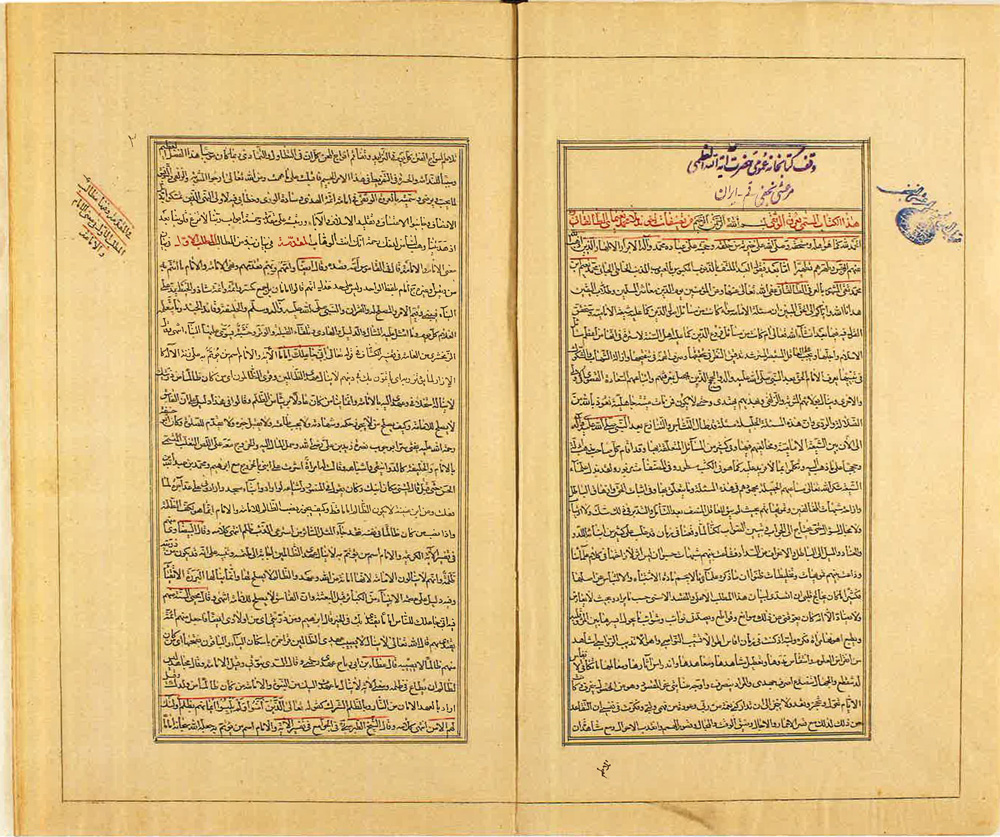
Islamic manuscripts were not just books—they were works of art.
Features:
- Beautiful calligraphy
- Decorative designs
- Gold illumination
Calligraphy: Writing as Art
In Islamic culture, calligraphy became a major art form.
Why?
Because representing living beings was often discouraged in religious contexts.
So artists focused on:
- Letters
- Patterns
- Geometry
Paper Quality and Innovation
Islamic papermakers improved the craft.
Innovations:
- Smoother surfaces
- Better durability
- Watermarks
Trade and Spread of Paper
Paper didn’t stay in the Islamic world.
It spread to:
- Europe
- Africa
- Asia
Impact:
It helped spark the European Renaissance.
Manuscripts as Cultural Memory
Manuscripts preserved:
- Religion
- Science
- History
Without them, much knowledge would be lost.
Decline and Transformation
With the invention of printing, manuscript culture declined.
But it never disappeared.
Modern Research and Discoveries
Today, scholars use:
- Digital imaging
- AI analysis
- Restoration techniques
to study manuscripts.
Why This History Still Matters
Paper and manuscripts shaped:
- Education
- Science
- Culture
They are the foundation of modern knowledge systems.
Common Misconceptions
Myth 1: Paper was always cheap
→ Early paper was valuable.
Myth 2: Manuscripts were only religious
→ They covered many fields.
Lessons for Today
The story teaches us:
- Knowledge matters
- Sharing ideas changes the world
- Simple innovations can have huge impacts
Conclusion
The history and impact of paper in the Islamic manuscript tradition is more than just a historical topic—it is a story about human curiosity, creativity, and connection.
From the introduction of paper in the 8th century to the flourishing of manuscript culture across cities like Baghdad and Cordoba, this innovation transformed how knowledge was recorded, shared, and preserved.
Today, platforms like https://manuscriptsleiden.com continue this legacy by exploring, preserving, and sharing the beauty and importance of manuscripts with a global audience. By studying these works, we not only understand the past but also gain insight into how knowledge shapes our future.