The Qur’an as a Masterpiece: Exploring the History of Quranic Manuscripts and Calligraphy
Think of the most important book you know. Now, imagine that book is not just read, but also seen, heard, and felt as a physical object of breathtaking beauty. For over 1.4 billion Muslims, the Qur’an is the divine word of God, revealed to the Prophet Muhammad. But from the very beginning, it has also been something more: a masterpiece of human artistry. Its history is not just a story of faith, but a 1,400-year journey of pen, paper, and pigment—a journey that transformed writing into a sacred art and the book into a luminous object.
This is the story of Quranic manuscripts and calligraphy. It’s a tale that begins with simple markings on palm leaves and animal bones and evolves into some of the most spectacular books ever created, shimmering with gold and intricate patterns. To study a Qur’an manuscript is to witness a profound act of devotion, where the skill of the human hand strives to honor the perfection of the divine word.
At The Islamic Manuscripts Press of Leiden (IMPL), we have the profound privilege of working with these texts. In the quiet halls of one of Europe’s oldest centers for the study of the Islamic world, we see these manuscripts not merely as historical artifacts, but as the pinnacle of a spiritual and artistic tradition. They are where theology meets geometry, where revelation meets craftsmanship. This article invites you on a journey through that tradition, exploring how the Qur’an became the driving force behind one of the world’s most elegant and complex art forms.
In the Beginning: The First Fragments and the Birth of a Script
The early story of the Qur’an is one of urgent preservation. According to Islamic tradition, the revelations were initially memorized by the Prophet’s companions and recorded on whatever was at hand: palm stalks, thin stones, pieces of leather, and the shoulder blades of camels.
After the Prophet’s death, these scattered fragments were compiled into a single, authoritative codex under the third Caliph, Uthman ibn Affan (d. 656). These “Uthmanic codices” were sent to major Islamic cities. While none survive in complete form, tiny fragments believed to be from this era, like the famous Birmingham Qur’an leaf (scientifically dated to between 568 and 645 CE), give us a glimpse into the birth of the Islamic book.
The First Script: Hijazi and Early Kufic
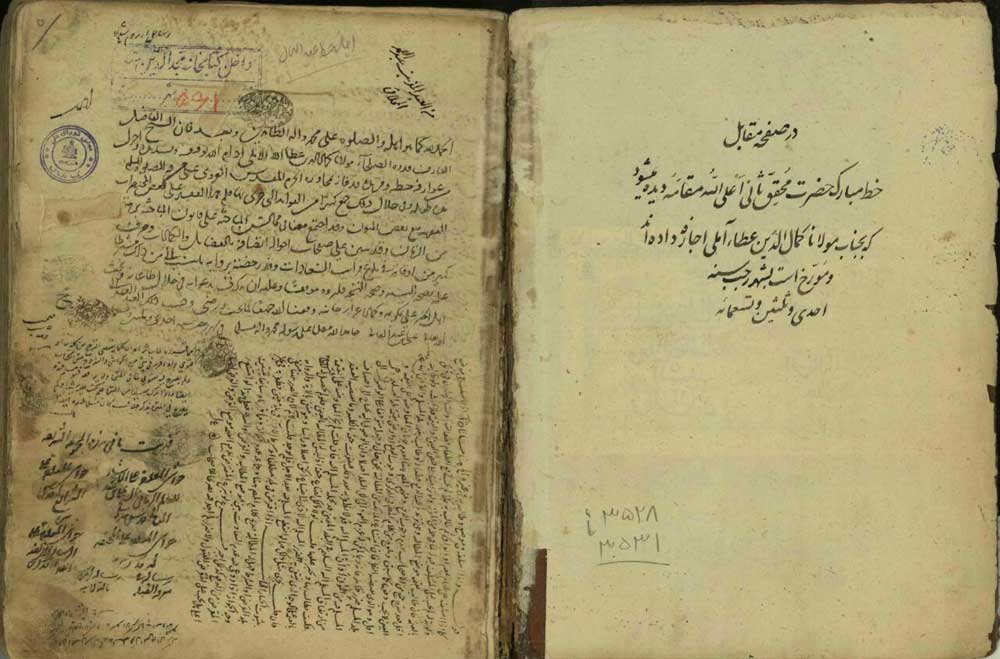
The script of these earliest fragments is now called Hijazi. It’s angular, upright, and functional, with a raw, powerful energy. It was designed for clarity and speed in transcription. From this, a more formal script quickly evolved: Kufic. Named after the city of Kufa in Iraq, early Kufic became the first major calligraphic style of the Qur’an. Its letters are horizontal, with strong, vertical strokes and sharp angles. It feels architectural, solid, and majestic—a script meant to endure.
These early Qur’ans had no decoration, no vowel markings, and often no spaces between words. They were tools for those who already knew the text. Their beauty lay in the stark, powerful presence of the words themselves.
The Pen is Sanctified: Why Calligraphy Became Sacred Art
In Islamic culture, the prohibition on depicting the divine or the Prophet in religious contexts channeled immense creative energy into other avenues. The primary outlet became the word, especially the word of God. Writing the Qur’an was an act of worship (ibadah).
The Arabic script was not a neutral tool; it was the vessel for the literal speech of God. Therefore, beautifying it became a pious duty. A famous hadith (saying of the Prophet) states, “Beautiful writing makes the truth stand out.” Calligraphers (khattats) were not mere scribes; they were artists and scholars, often spiritual figures themselves. They developed a quasi-mystical philosophy around their craft, seeing the shapes of letters as manifestations of divine attributes and the movement of the pen as a spiritual exercise.
This sanctification of writing is the engine that drove 14 centuries of breathtaking calligraphic innovation. The goal was always the same: to create a visual form worthy of the celestial content.
The Golden Ages: Evolution of Styles and Splendor
As the Islamic empire expanded and grew wealthy, Qur’anic manuscripts became objects of imperial patronage and artistic ambition. The simple codex transformed into a masterpiece.
The Abbasid Revolution: Mastery of Kufic (8th-10th Centuries)
Under the Abbasid Caliphs in Baghdad, calligraphy and book arts exploded. Kufic script was refined to an incredible degree of elegance and variety. We see:
- Foliated Kufic: Letters end in stylized leaf-like motifs.
- Flowered Kufic: Incorporating more complex floral designs.
- Square or Geometric Kufic: Used in architecture, where letters become part of an abstract geometric pattern.
Abbasid Qur’ans were often large, horizontal volumes (called * mushaf *). They were written on parchment in dark brown ink, with chapter headings in gold. Their beauty was in monumental simplicity and graphic power.
The Breakthrough: The Rise of Cursive Scripts (10th Century Onward)
Writing in strict Kufic was slow. As demand for copies grew, faster, more fluid scripts were needed for everyday use. The visionary calligrapher Ibn Muqla (d. 940) is credited with systematizing cursive scripts based on geometric principles. He used the dot made by the nib of the reed pen (qalam) as a proportional unit for all letters.
This led to the development of the “Six Pens” (al-aqlam al-sitta), the core cursive styles:
- Naskh: The clear, legible, and rounded script that became the standard for copying the Qur’an from the 11th century onward. It is the script you are most likely reading this in if you see Arabic text today. Its readability made it ideal for scripture.
- Thuluth: A more imposing, elegant script with sweeping horizontal lines. Used for majestic chapter headings and architectural inscriptions.
- Muhaqqaq: A stately, precise script with long, thin verticals, considered one of the most beautiful for large-format Qur’ans.
The adoption of paper from China was pivotal. Its smooth surface was perfect for the flowing, nuanced lines of these new cursive scripts.
The Peak of Splendor: Illuminated Masterpieces (13th-16th Centuries)
This is the era of the most famous and stunning Qur’ans. Patronized by Mamluk sultans in Egypt, Timurid princes in Persia, and Ottoman sultans in Turkey, these manuscripts are celebrations of light.
- Mamluk Qur’ans: Epitomes of geometric grandeur. Their double-frontispieces are explosions of gold interlace and arabesques on deep blue or red grounds. The script is often majestic Muhaqqaq or Thuluth.
- Persian & Mughal Qur’ans: Introduce delicate floral illumination, cloud-like motifs, and exquisite borders. The Bihari script from India is a stunning, dense vertical style.
- Ottoman Qur’ans: Reach a sublime balance of powerful Thuluth headings and clear Naskh text, surrounded by lavish gold margins and stylized floral designs (like tulips and carnations).
In these manuscripts, the illumination—the gold and color—is not decoration. It frames and elevates the sacred text, acting as a visual guide and creating a sense of entering a sacred, luminous space. You can explore the artistic principles behind this in our article on The Stunning Art of Illumination in Islamic Manuscripts.
The Tools and the Craft: How a Qur’an Was Made
Creating a Qur’an was a spiritual and physical discipline.
- The Qalam (Reed Pen): Carefully cut from a dried reed, its nib shaped for a specific script. The calligrapher’s most personal tool.
- Ink: Black ink was often made from soot or gallnuts. Colored inks came from minerals: lapis lazuli for blue, malachite for green, cinnabar for red.
- Gold: The most precious material, applied as paint (shell gold) or delicate leaf, symbolizing divine light.
- Paper: Burnished to a smooth, glossy finish with an agate stone to allow the pen to glide.
- The Process: A master calligrapher would first mentally prepare, often with prayer. He would rule the page with faint lines as a guide. Writing was slow, deliberate, and required perfect control of breath and movement. A single mistake could mean starting the entire page over.
Beyond the Book: Calligraphy in Every Dimension
The art of the Qur’an burst the bounds of the manuscript. The same scripts that graced the page were scaled up to adorn architecture.
- Monumental Kufic and Thuluth circle the inner domes of mosques, run along the walls of palaces, and decorate tombstones. The Square Kufic on the walls of the Sultan Hassan Mosque in Cairo or the flowing Thuluth inside the Dome of the Rock in Jerusalem turn buildings into three-dimensional manifestations of the Qur’anic word.
Modernity and Continuity: The Living Tradition
The tradition of Quranic calligraphy never died. While the age of imperial patronage passed, the art was kept alive in master-student lineages, especially in Turkey, Iran, and Pakistan.
- The 20th-Century Master: Hâmid Aytaç of Turkey is revered as one of the last great classical masters, linking Ottoman tradition to the modern world.
- Contemporary Practice: Artists like El-Seed use calligraphy in public murals and “calligraffiti,” while others like Ustad Ahmed Moustafa explore its principles through modern abstract painting. The International Research Centre for Islamic History, Art and Culture (IRCICA) in Istanbul holds prestigious competitions, ensuring the craft’s future.
- Digital Calligraphy: The sacred art now meets technology, with artists using digital tools to design and create, ensuring its relevance for new generations.
A Journey of Faith and Form
To trace the history of Quranic manuscripts is to trace a civilization’s deepest relationship with its sacred text. It is a history of unwavering devotion expressed through ever-evolving beauty. From the stark power of early Kufic to the golden radiance of an Ottoman folio, each manuscript is a prayer made visible, a moment where human skill reached for the divine.
These masterpieces remind us that the Qur’an is more than a text to be studied; it is an aesthetic, spiritual, and cultural universe. In its letters, we see the faith of billions and the boundless creativity it can inspire—a creativity that continues to write, paint, and design its story today.
At The Islamic Manuscripts Press of Leiden, we are dedicated to the study and appreciation of this extraordinary tradition. To delve deeper into the world of Quranic manuscripts and Islamic calligraphy, we invite you to explore our scholarly publications and resources.
References & Further Reading
- The Qur’an of the British Library Blog (Exploring the BL’s collection): https://blogs.bl.uk/asian-and-african/ (Search for “Qur’an”)
- The Museum of Islamic Art, Doha – “The Art of the Qur’an” Exhibition: https://www.mia.org.qa/en/exhibitions/the-art-of-the-quran
- The David Collection, Copenhagen – Qur’ans and Calligraphy: https://www.davidmus.dk/en/collections/islamic/materials/manuscripts/qurans
- University of Birmingham – “The Birmingham Qur’an Manuscript”: https://www.birmingham.ac.uk/facilities/cadbury/research/projects/birmingham-quran/index.aspx
- The Khalili Collections – “The Art of the Qur’an”: https://www.khalilicollections.org/all-collections/art-of-the-quran/
- “The Codex of a Companion of the Prophet and the Qur’an of the Prophet” by Dr. Saud Al-Sarhan: https://www.jstor.org/stable/</action> (Academic article on early fragments)
- Metropolitan Museum of Art – “Calligraphy in Islamic Art”: https://www.metmuseum.org/toah/hd/cali/hd_cali.htm
- “The Splendour of Islamic Calligraphy” by Abdelkebir Khatibi and Mohammed Sijelmassi: https://www.amazon.com/Splendour-Islamic-Calligraphy-Abdelkebir-Khatibi/dp/0500016715
- Library of Congress – “The Qur’an in East and West”: https://www.loc.gov/exhibits/quran/
- IRCICA (International Research Centre for Islamic History, Art and Culture) – Calligraphy Competitions: https://www.ircica.org/calligraphy-competitions