Decoding the Secrets: What Scientific Manuscripts Tell Us About Islamic Golden Age Innovations
Picture the most sophisticated technology you use every day. Your smartphone’s GPS, the algorithm curating your social media feed, the medicine in your cabinet, even the glasses on your nose. Now, rewind about a thousand years. Could a civilization without electricity, without silicon chips, without modern laboratories, have laid the groundwork for these very things?
The answer, hidden in plain sight within thousands of scientific manuscripts, is a resounding yes. While the term “Islamic Golden Age” often conjures images of majestic mosques and philosophical texts, its true engine was a revolution in science, technology, and medicine. And the detailed, handwritten records of that revolution—the lab notebooks of a millennium—are the manuscripts that scholars at institutions like ours are decoding today.
For centuries, a persistent myth suggested that medieval scholars merely preserved ancient Greek knowledge. The reality, as these manuscripts reveal, is far more exciting. From the 8th to the 14th centuries, scientists across the Islamic world—from Cordoba to Cairo, Baghdad to Bukhara—didn’t just save old books; they tested, critiqued, and spectacularly improved upon them. They built the world’s first dedicated hospitals, mapped the stars with unprecedented accuracy, pioneered new branches of mathematics, and developed chemical processes that changed the world.
This article is a detective story. We’re going to open these ancient manuscripts and look over the shoulders of the master scientists. We’ll see their diagrams, read their marginal notes debating Aristotle, and understand how they turned observation into theory. At The Islamic Manuscripts Press of Leiden (IMPL), working with these texts is our daily mission. We see them not as dusty relics, but as dynamic records of a time when curiosity was the highest virtue and the pursuit of knowledge about the natural world was a sacred pursuit. Let’s decode their secrets together.
The Manuscript as Laboratory: More Than Just a Textbook
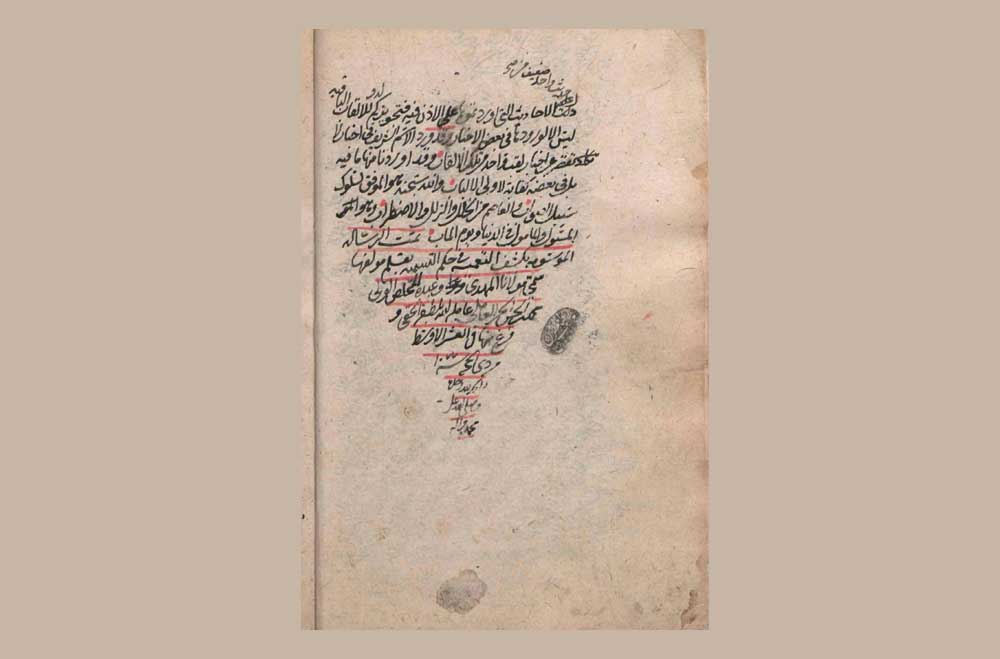
First, we must understand what we’re looking at. A scientific manuscript from this era is a multi-layered object. It’s often a palimpsest—not literally, but intellectually—where you can see the layers of thought.
- The Core Text: A translation or commentary on a Greek, Persian, or Indian work (by Ptolemy, Galen, Euclid, etc.).
- The Glosses and Marginalia (Hawashi): This is where the magic happens. Scholars and students wrote debates, corrections, and new ideas in the margins. One famous manuscript of Ibn Sina’s Canon of Medicine might have centuries of medical notes from different doctors scribbled around the main text, creating a conversation across time.
- The Diagrams: These aren’t just illustrations; they are integral to the argument. Precise geometric proofs, astronomical charts, anatomical drawings, and engineering schematics.
- The Colophon: The “made by” note at the end, telling us who copied it, for whom, where, and when. This turns a book into a historical artifact with a passport.
These manuscripts were tools for active research, used in observatories, hospitals, and classrooms. They were living documents.
Chapter 1: The Astronomers – Mapping the Cosmos from Samarkand
Look up at the night sky. How do you know what you’re seeing? Today, an app tells you. In the 10th century, you’d consult a zij.
A zij was an astronomical handbook with tables for calculating planetary positions, sunrise times, and qibla direction. But creating one required immense innovation.
Manuscript in Focus: The Zīj-i Sulṭānī of Ulugh Beg (15th century, Samarkand).
Ulugh Beg, a Timurid prince and passionate astronomer, built a monumental observatory in Samarkand. His team’s manuscript records their painstaking work:
- The Giant Instrument: They used a massive meridian arc (a sextant carved into a hillside) to make incredibly precise observations of star positions.
- The Result: Their star catalogue, recorded in the Zīj-i Sulṭānī, listed 1,018 stars with unprecedented accuracy. It remained the standard in both East and West for centuries.
- The Manuscript Evidence: The tables in these manuscripts aren’t just numbers; they are the output of a rigorous, observational science. They show corrections to Ptolemy’s ancient Greek data, proving these scientists were not just copying—they were verifying.
The Legacy: This tradition of precise observation, documented in manuscript after manuscript, refined the planetary models that would later inspire Copernicus and Kepler. The very names of many stars—like Altair, Deneb, and Betelgeuse—are Arabized versions found in these medieval star charts.
Chapter 2: The Alchemists & Chemists – From Mysticism to Method
The word “alchemy” might sound like magic. But in the hands of scholars like Jābir ibn Ḥayyān (Geber) and al-Rāzī (Rhazes), it became the foundation of modern chemistry. Their manuscripts are recipe books for transforming matter.
Manuscript in Focus: Works of al-Rāzī (10th century, Baghdad).
Al-Rāzī, a towering physician and chemist, wrote manuscripts like Kitāb al-Asrār (The Book of Secrets). In them, he:
- Classified Matter: He clearly distinguished between animal, vegetable, and mineral substances.
- Pioneered Lab Equipment: He described and illustrated the alembic (for distillation), the retort, and chemical vessels still used in iconography today.
- Performed Experiments: His texts list step-by-step procedures for producing acids (like sulfuric and nitric acid), alcohols, and other compounds.
The Manuscript Evidence: These texts are filled with practical, repeatable instructions. They move away from symbolic mysticism toward systematic experimentation and documentation—the core of the scientific method. When you see an old etching of a chemist in a lab, the equipment they’re using was detailed in these Arabic manuscripts centuries earlier.
Chapter 3: The Physicians – The Blueprint of Modern Medicine
Imagine a medical textbook used as the ultimate authority for over 600 years. That was Ibn Sīnā’s (Avicenna) al-Qānūn fī al-ṭibb (The Canon of Medicine). But it was just the pinnacle of a vast medical tradition documented in manuscripts.
Manuscript in Focus: A Surgical Manual by al-Zahrāwī (Abulcasis, 10th century, Cordoba).
While the Canon was the theory, al-Zahrāwī’s al-Taṣrīf (The Method) was the practical surgical guide. Its manuscripts are groundbreaking:
- Detailed Illustrations: They contain the first known illustrations of over 200 surgical instruments—forceps, scalpels, bone saws, and speculums. Many designs are recognizable to modern surgeons.
- Step-by-Step Procedures: He describes operations for cataracts, amputations, and dental work, emphasizing anatomy and precision.
- The Importance of Observation: He insisted surgery be based on direct knowledge of anatomy, challenging older, more theoretical approaches.
The Manuscript Evidence: These illustrated manuscripts were copied and recopied, spreading advanced surgical techniques across continents. They show a commitment to empirical knowledge, detailed documentation, and technical innovation that formed the bedrock of later European medicine. Scholars at IMPL often trace how a single diagram of an instrument evolved as it was copied from Spain to Persia, each scribe adding a slight local nuance.
Chapter 4: The Mathematicians – Creating the Language of Science
Our modern world runs on algorithms and algebra. We owe those words—and the concepts—to manuscript-wielding mathematicians of the Golden Age.
Manuscript in Focus: Al-Kitāb al-mukhtaṣar fī ḥisāb al-jabr wa’l-muqābalah by al-Khwārizmī (9th century, Baghdad).
The title of this manuscript gives us the word “algebra” (al-jabr means “completion”).
- Systematizing Solutions: Al-Khwārizmī didn’t just solve problems; he wrote a manuscript that systematically laid out methods for solving linear and quadratic equations. He established algebra as an independent discipline.
- Introducing the Decimal System: Although the numerals themselves came from India, his manuscript was crucial in transmitting and explaining the decimal positional number system (our 0-9 digits) to the West.
- The “Algorithm”: His Latinized name, “Algoritmi,” became the term for any step-by-step procedure of calculation.
The Manuscript Evidence: The clarity and logical structure of these mathematical manuscripts, filled with geometric proofs and problem sets, made them perfect teaching tools. They turned mathematics from a collection of tricks into a coherent, universal language for describing the world, essential for everything from astronomy to architecture.
Chapter 5: The Engineers – Machines of Wonder and Function
The Golden Age was also an age of mechanical marvels, and the manuscripts are their instruction manuals.
Manuscript in Focus: The Book of Knowledge of Ingenious Mechanical Devices by al-Jazarī (13th century, Diyarbakır).
This is perhaps the most stunning visual record of medieval engineering. Al-Jazarī, a court engineer, didn’t just build devices; he wrote a detailed manuscript to describe them, complete with breathtaking painted diagrams.
- Automation and Control: His manuscripts show designs for automated water clocks, elephant-shaped clocks, musical automata powered by water, and sophisticated water-lifting devices.
- Precision Engineering: He describes the use of crankshafts, camshafts, and valves—fundamental components of later machinery.
- The Purpose: These weren’t just toys. They were for timekeeping, irrigation, and ceremony, blending art, science, and practical utility.
The Manuscript Evidence: Al-Jazarī’s manuscript is a masterpiece of technical writing. Each device has an assembly diagram, a painted illustration of the final product, and precise instructions. It proves a highly advanced understanding of hydraulics, mechanics, and automation, centuries before the European industrial revolution.
Decoding with 21st-Century Tools: The New Golden Age
Today, we’re not just reading these manuscripts; we’re using technology to see through them.
- Multispectral Imaging: At labs collaborating with institutions like IMPL, scientists use different light wavelengths to see erased or faded text, uncovering earlier drafts or hidden notes.
- Digital Analysis: Algorithms can compare thousands of handwriting samples to trace the movement of scribes and ideas, or analyze diagram geometry for precision.
- Material Science: X-ray fluorescence (XRF) can identify the exact composition of inks and pigments without touching the page, revealing trade routes for materials.
These tools are helping us decode the manuscripts on a deeper level, confirming their authenticity, understanding their creation, and recovering lost knowledge. It’s a new era of discovery, built upon the old.
The Real Secret: A Culture of Systematic Inquiry
The ultimate secret decoded from these manuscripts isn’t a single formula or star chart. It’s the blueprint for an innovative society: a culture of systematic, evidence-based inquiry. These scholars shared key traits:
- Respect for Legacy + Critical Eye: They revered Greek knowledge but felt free to correct it through experiment.
- The Drive to Systematize: They sought to organize all knowledge into clear, teachable systems.
- The Importance of Utility (Manfaʿa): Science was meant to improve life, through better medicine, timekeeping, agriculture, and architecture.
- A Collaborative, International Network: Ideas traveled freely from Spain to China in the common language of Arabic, documented in manuscripts.
The pages of these scientific manuscripts are where that culture came to life. They are where observation met calculation, where theory was tested, and where the foundation of our modern scientific world was laid down, one meticulous diagram and one careful equation at a time.
They remind us that innovation isn’t just about a flash of genius; it’s about the patient, collaborative work of observation, documentation, and relentless curiosity—a lesson as vital today as it was a thousand years ago.
At The Islamic Manuscripts Press of Leiden, we are committed to bringing these groundbreaking works to light. Explore our publications and resources to delve deeper into the scientific genius of the Islamic Golden Age. Start your discovery on our homepage.
References & Further Reading
- The Smithsonian Institution – “Science in the Islamic World”: https://www.si.edu/spotlight/islamic-world-science
- The British Library – “Discovering Science in Medieval Manuscripts”: https://www.bl.uk/science-manuscripts
- The Morgan Library & Museum – “Islamic Science and Medicine”: https://www.themorgan.org/collection/islamic-science-and-medicine
- 1001 Inventions (Educational Foundation on Islamic Golden Age Science): https://www.1001inventions.com/
- The Vatican Library – Digitized Arabic Scientific Manuscripts: https://www.vaticanlibrary.va/home.php (Search collections)
- “The House of Wisdom: How Arabic Science Saved Ancient Knowledge and Gave Us the Renaissance” by Jim al-Khalili: https://www.penguinrandomhouse.com/books/176285/the-house-of-wisdom-by-jim-al-khalili/
- “Avicenna’s Medicine: A New Translation of the 11th-Century Canon” by Mones Abu-Asab et al.: https://www.inner-traditions.com/books/avicenna-s-medicine
- The University of Oklahoma – “History of Science Collections” (Islamic Manuscripts): https://libraries.ou.edu/history-science-collections
- “The Book of Ingenious Devices” by al-Jazari (English translation): https://www.amazon.com/Book-Ingenious-Devices-Kitāb-al-Ḥiyal/dp/9027708338
- Journal of the International Society for the History of Islamic Medicine (JISHIM): http://www.ishim.net/ishimj/