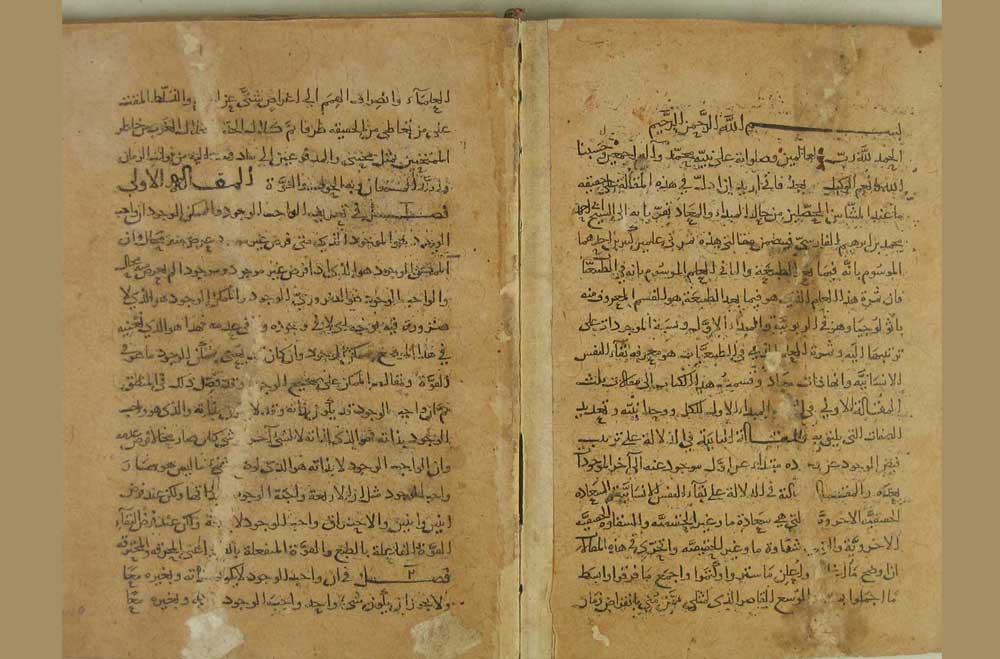
The story of the Islamic manuscript is also the story of human civilization, curiosity, trade, scholarship, and creativity. Long before cloud storage, smartphones, and “low battery anxiety,” people across the Islamic world were preserving science, poetry, medicine, astronomy, philosophy, and religion through carefully handwritten manuscripts.
And at the center of this intellectual revolution stood one surprisingly humble invention: paper.
Today, historians often describe paper as one of the most important technologies in human history. Without it, many of the scientific, literary, and philosophical achievements of the medieval Islamic world might never have survived.
From Baghdad to Cairo, from Damascus to Andalusia, Islamic manuscripts carried knowledge across continents. These manuscripts preserved ancient Greek philosophy, expanded mathematics, transformed medicine, and inspired artistic traditions that continue to fascinate scholars today.
At urlManuscripts Leidenhttps://manuscriptsleiden.com/, collectors, researchers, and history lovers continue exploring the beauty and historical value of rare Islamic manuscripts and related cultural treasures.
And honestly, when you see the precision of some medieval calligraphy, you may start feeling slightly embarrassed about your own handwriting.
Why Islamic Manuscripts Matter
Islamic manuscripts are handwritten documents produced across the Islamic world over many centuries.
They include:
- Religious texts
- Scientific works
- Poetry
- Medicine
- Astronomy
- Mathematics
- Philosophy
- Maps
- Historical chronicles
These manuscripts became powerful tools for preserving and spreading knowledge.
Many ancient works that disappeared in Europe survived because scholars in the Islamic world translated and copied them.
Without Islamic manuscript culture, parts of Aristotle, Galen, Euclid, and many classical thinkers may have vanished forever.
That is not a small historical footnote.
That is civilization-level backup storage.
The Arrival of Paper in the Islamic World
Before paper became common, people wrote on:
- Papyrus
- Parchment
- Animal skin
- Wood
- Cloth
These materials were expensive or difficult to produce.
Paper changed everything.
Historians generally believe paper-making technology traveled from China into the Islamic world during the 8th century.
One famous story connects this transfer to the Battle of Talas in 751 CE, where Chinese prisoners reportedly shared paper-making techniques.
Whether every detail of the story is accurate or not, historians agree on one thing:
The Islamic world rapidly improved and expanded paper production.
Soon, cities like Baghdad became global centers of paper manufacturing.
Baghdad and the Knowledge Revolution
During the Abbasid Caliphate, Baghdad became one of the world’s greatest intellectual capitals.
The famous House of Wisdom attracted scholars from many cultures and languages.
There, translators and researchers worked on:
- Greek philosophy
- Persian literature
- Indian mathematics
- Medical knowledge
- Astronomy
Paper made this possible on a massive scale.
Books became easier to copy.
Knowledge became more accessible.
Libraries expanded.
Imagine trying to run a giant medieval research center using only expensive animal skin parchment.
The accounting department alone would probably collapse.
How Islamic Paper Was Made
Islamic paper production evolved into a highly skilled craft.
Paper makers often used:
- Linen rags
- Hemp fibers
- Flax
- Water-powered mills
The process involved:
- Soaking fibers
- Breaking them into pulp
- Filtering the pulp
- Drying sheets
- Polishing surfaces
Many Islamic papers became famous for their durability and beauty.
Some surviving manuscripts are over 800 years old and remain remarkably readable.
That durability continues to impress modern conservators.
Islamic Calligraphy: More Than Writing
One of the most celebrated elements of the Islamic manuscript tradition is calligraphy.
Calligraphy was not viewed simply as handwriting.
It became an art form.
Different styles developed across regions:
- Kufic
- Naskh
- Thuluth
- Nastaliq
- Diwani
Calligraphers trained for years.
A skilled calligrapher needed precision, patience, discipline, and excellent control.
One crooked line could ruin hours of work.
Modern people complain when autocorrect changes one word.
Medieval scribes dealt with ink, geometry, and zero “undo” buttons.
The Golden Age of Islamic Manuscripts
Between roughly the 8th and 14th centuries, manuscript production flourished.
Books circulated across massive trade networks.
Major centers included:
- Baghdad
- Cairo
- Damascus
- Cordoba
- Isfahan
- Samarkand
Manuscripts covered subjects far beyond religion.
Science and Medicine
Islamic scholars produced groundbreaking works in:
- Surgery
- Pharmacology
- Optics
- Anatomy
- Mathematics
Ibn Sina’s medical encyclopedia remained influential in Europe for centuries.
Astronomy
Astronomers created detailed observations, star charts, and planetary calculations.
Mathematics
Algebra itself developed significantly in the Islamic world.
The word “algorithm” comes from the Persian scholar Al-Khwarizmi.
So every time your phone algorithm recommends strange videos at midnight, you are indirectly participating in manuscript history.
The Role of Libraries
Libraries became central institutions in Islamic civilization.
Some medieval libraries reportedly contained hundreds of thousands of manuscripts.
Booksellers, copyists, binders, and scholars formed entire intellectual ecosystems.
In some cities, book markets became major cultural centers.
Scholars often traveled enormous distances to study rare manuscripts.
Today, researchers continue this tradition through archives, museums, and specialized collections.
At urlManuscripts Leidenhttps://manuscriptsleiden.com/, visitors can explore rare materials connected to Islamic manuscript heritage and historical collecting traditions.
Islamic Manuscripts and Europe
Islamic manuscripts strongly influenced Europe during the Middle Ages and Renaissance.
Translations from Arabic into Latin helped reintroduce classical knowledge to European scholars.
Fields affected included:
- Medicine
- Mathematics
- Philosophy
- Astronomy
- Chemistry
Many historians consider this transmission of knowledge essential to later European scientific development.
Knowledge traveled through:
- Spain
- Sicily
- Mediterranean trade routes
- Translation centers
In many ways, manuscripts functioned like the internet of the medieval world — slower, heavier, and with fewer cat videos.
Artistic Beauty of Islamic Manuscripts
Islamic manuscripts are admired not only for intellectual content but also for visual beauty.
Features often include:
- Gold illumination
- Geometric patterns
- Floral decoration
- Detailed borders
- Colorful pigments
- Elegant bindings
Some manuscripts took months or years to complete.
Luxury manuscripts became symbols of prestige and scholarship.
Collectors today highly value manuscripts with:
- Historical importance
- Fine calligraphy
- Rare illumination
- Strong preservation condition
Statistics and Global Interest
Interest in Islamic manuscripts continues growing worldwide.
Museums, universities, and collectors increasingly invest in preservation and digitization.
According to UNESCO and academic archives:
- Millions of Islamic manuscript pages survive globally
- Large collections exist across Europe, the Middle East, Asia, and North America
- Digitization projects continue expanding access to researchers
Institutions such as:
- The British Library
- Leiden University
- Bibliothèque nationale de France
- The Library of Congress
…maintain significant Islamic manuscript collections.
Modern Technology and Manuscript Preservation
Technology is transforming manuscript studies.
Researchers now use:
- Multispectral imaging
- AI-assisted restoration
- Digital archiving
- High-resolution scanning
These methods help recover faded text and preserve fragile materials.
Some damaged manuscripts once considered unreadable can now be partially restored digitally.
Ironically, cutting-edge computers are now helping us understand handwritten books from 1,000 years ago.
History has a sense of humor.
Hidden Stories Inside Manuscripts
Manuscripts often contain more than the main text.
Researchers discover:
- Personal notes
- Ownership stamps
- Marginal comments
- Trade records
- Family histories
- Corrections by scribes
These details provide insight into everyday life.
Sometimes a tiny note in the margin tells historians more than the official text itself.
Why Collectors Love Islamic Manuscripts
Collectors appreciate Islamic manuscripts for many reasons:
- Historical value
- Artistic beauty
- Cultural importance
- Investment potential
- Intellectual heritage
Authentic manuscripts connect modern audiences directly to past civilizations.
Holding a centuries-old manuscript can feel surprisingly emotional.
You suddenly realize someone carefully wrote those lines hundreds of years ago by candlelight.
Meanwhile, most of us get impatient waiting three seconds for a webpage to load.
The Future of Islamic Manuscript Studies
Interest in manuscript studies continues expanding.
Universities increasingly support:
- Islamic art history
- Codicology
- Conservation science
- Digital humanities
- Manuscript preservation
Online collections also make rare works more accessible than ever before.
This growing accessibility helps global audiences appreciate Islamic intellectual history beyond stereotypes and headlines.
Final Thoughts
The history of paper and the Islamic manuscript tradition represents one of humanity’s greatest intellectual achievements. Through paper production, calligraphy, scholarship, translation, and preservation, Islamic civilizations helped protect and expand global knowledge for centuries.
Today, these manuscripts continue inspiring historians, artists, collectors, and researchers around the world.
For those interested in discovering rare Islamic manuscripts, historical collections, and cultural treasures, urlManuscripts Leidenhttps://manuscriptsleiden.com/ offers valuable insight into this extraordinary heritage and the enduring beauty of manuscript culture.