Why Islamic Manuscripts Still Fascinate the World
The term Islamic manuscript may sound like something hidden in a museum basement, locked away behind glass and guarded by serious-looking historians. In reality, Islamic manuscripts are among the most fascinating windows into human history.
These handwritten books and documents tell stories about religion, science, medicine, astronomy, literature, mathematics, trade, art, and everyday life. Long before laptops, cloud storage, and smartphones existed, people carefully copied knowledge by hand, often spending months or even years completing a single manuscript.
Imagine spending an entire year writing one book with a pen.
Now imagine making a mistake on page 300.
Suddenly, modern technology feels like a miracle.
Today, Islamic manuscripts attract scholars, collectors, museums, universities, and history enthusiasts from all over the world. From Europe to the Middle East, from North America to Asia, interest in these remarkable works continues to grow.
Institutions and specialists such as Manuscripts Leiden play an important role in helping preserve, study, and appreciate these historical treasures for future generations.
But what exactly is an Islamic manuscript?
Why are some of them worth thousands—or even millions—of dollars?
And why are researchers still discovering new information inside texts that were written centuries ago?
Let’s begin the journey.
What Is an Islamic Manuscript?
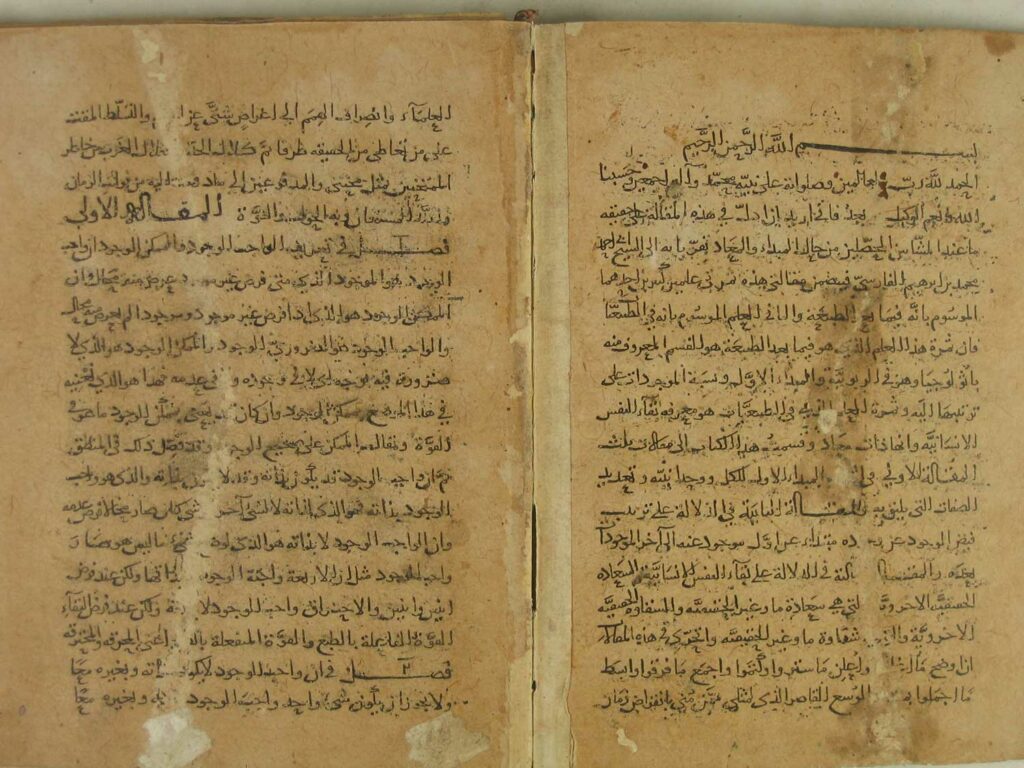
An Islamic manuscript is a handwritten document created within the Islamic world or connected to Islamic civilization.
The term covers a wide range of materials, including:
- Qur’anic manuscripts
- Religious texts
- Scientific works
- Medical books
- Astronomy treatises
- Poetry collections
- Historical records
- Legal documents
- Travel accounts
- Philosophical writings
Contrary to a common misconception, Islamic manuscripts are not limited to religious topics.
In fact, some of the most important manuscripts in human history discuss mathematics, medicine, engineering, geography, and astronomy.
These manuscripts reflect the incredible diversity of intellectual life throughout the Islamic world.
The Golden Age of Knowledge
When discussing Islamic manuscripts, historians often mention the Islamic Golden Age.
This period, generally spanning from the 8th to the 14th century, witnessed extraordinary achievements in science, philosophy, medicine, architecture, and literature.
During this era, scholars translated knowledge from many civilizations, including:
- Greek
- Persian
- Indian
- Roman
- Syriac traditions
However, Islamic scholars did far more than simply preserve knowledge.
They expanded it.
They challenged it.
They improved it.
Many scientific breakthroughs emerged from this intellectual environment.
As a result, manuscripts became powerful tools for spreading ideas across vast regions.
A World Without Printing Presses
Today, producing a book is relatively simple.
Publishers can print thousands of copies in a matter of hours.
The situation was very different centuries ago.
Every manuscript had to be copied manually.
Every page.
Every line.
Every word.
Every punctuation mark.
This required extraordinary patience and skill.
Professional scribes often dedicated their lives to manuscript production.
Some became famous for their beautiful handwriting.
Others specialized in illumination, decoration, or binding.
The creation of a manuscript was often a collaborative effort involving multiple artisans.
Why Handwriting Was Considered an Art Form
In many cultures, handwriting was viewed as a practical skill.
In the Islamic world, it became something much greater.
Calligraphy evolved into one of the most respected art forms.
Because Islam traditionally emphasized the written word, particularly through the Qur’an, beautiful writing acquired deep cultural significance.
Master calligraphers trained for years.
Some spent decades perfecting a single script style.
A famous saying among calligraphers suggested that beautiful handwriting reflected discipline, patience, and character.
Whether entirely true or not, it certainly encouraged students to practice.
A lot.
The Birth of Islamic Calligraphy
Islamic calligraphy developed into several distinctive styles.
Some of the most famous include:
Kufic Script
One of the earliest forms of Arabic writing.
Characteristics:
- Angular appearance
- Geometric shapes
- Strong visual impact
Many early Qur’anic manuscripts were written using Kufic script.
Naskh Script
Over time, Naskh became one of the most widely used scripts.
Characteristics:
- Greater readability
- Smooth curves
- Practical for longer texts
Many manuscripts copied after the medieval period employed Naskh.
Thuluth Script
Known for elegance and decorative complexity.
Frequently used in:
- Architecture
- Religious inscriptions
- Ceremonial works
Nastaliq Script
Particularly associated with Persian literary traditions.
Often described as one of the most beautiful forms of Islamic calligraphy.
The Materials Behind Great Manuscripts
Modern readers rarely think about paper.
Ancient scribes thought about it constantly.
A manuscript’s survival often depended on the quality of its materials.
Parchment
Early manuscripts frequently used parchment.
Made from animal skin, parchment offered durability but required extensive preparation.
Paper
Paper transformed manuscript production.
After papermaking techniques spread across the Islamic world, books became more accessible.
Paper allowed scholars to produce larger collections and share knowledge more efficiently.
Ink
Creating ink was itself a specialized craft.
Various formulas used ingredients such as:
- Carbon
- Plant extracts
- Minerals
- Gum arabic
Some inks have remained remarkably stable for centuries.
Gold and Pigments
Luxury manuscripts often incorporated:
- Gold leaf
- Lapis lazuli
- Silver
- Natural pigments
The results could be breathtaking.
Some pages resemble works of art more than ordinary books.
Islamic Manuscripts and the Preservation of Knowledge
One of the most important contributions of Islamic manuscripts involves preservation.
Many ancient texts survive today because scholars copied and transmitted them through manuscript traditions.
Without these efforts, portions of human knowledge might have disappeared forever.
Historians often note that manuscripts preserved works relating to:
- Philosophy
- Mathematics
- Medicine
- Astronomy
- Ethics
- Literature
This preservation later influenced intellectual developments in Europe and beyond.
Knowledge traveled across borders long before the internet existed.
Manuscripts were the vehicles.
The House of Wisdom: A Legendary Center of Learning
Few institutions capture the imagination like the House of Wisdom in Baghdad.
Known in Arabic as Bayt al-Hikma, this center became a symbol of scholarship and intellectual exchange.
Researchers, translators, scientists, and scholars gathered there.
Texts from different cultures were translated and studied.
New discoveries emerged.
Ideas crossed linguistic and cultural boundaries.
Although many details remain debated among historians, the House of Wisdom remains one of history’s most famous centers of learning.
Its legacy survives through countless manuscripts produced during and after that period.
Manuscripts as Time Machines
Imagine opening a manuscript written 800 years ago.
The ink was applied by a real person.
The pages were touched by real hands.
The ideas reflected real concerns, hopes, and questions.
In a sense, manuscripts function as time machines.
They connect modern readers with individuals who lived centuries ago.
Unlike many historical artifacts, manuscripts often contain direct human voices.
Authors explain their ideas.
Poets share emotions.
Scientists record observations.
Travelers describe distant lands.
The experience can feel surprisingly personal.
What Can We Learn From Islamic Manuscripts Today?
The answer is simple:
A great deal.
Modern researchers continue studying manuscripts to better understand:
- History
- Climate patterns
- Trade routes
- Medical practices
- Religious thought
- Linguistic development
- Social structures
Sometimes new discoveries emerge from texts that have existed for hundreds of years.
A manuscript may sit quietly on a shelf for generations before someone notices an overlooked detail.
Historians often describe archives as treasure hunts.
The treasure simply happens to be knowledge.
Why Interest in Islamic Manuscripts Is Growing
Global interest in Islamic manuscripts has increased significantly over the past two decades.
Several factors contribute to this trend.
Digital Technology
Digitization projects have made manuscripts accessible to wider audiences.
Researchers no longer need to travel across continents to view certain texts.
Academic Research
Universities continue expanding manuscript studies programs.
Cultural Heritage Preservation
Many organizations recognize manuscripts as irreplaceable cultural assets.
Public Curiosity
People increasingly seek deeper understanding of world history and cultural connections.
As a result, Islamic manuscripts have gained visibility beyond specialist circles.
The Role of Modern Specialists
Preserving manuscripts requires expertise.
Specialists may include:
- Conservators
- Historians
- Archivists
- Calligraphy experts
- Researchers
- Cataloguers
Their work helps ensure these fragile objects survive.
Organizations dedicated to manuscript research and preservation, such as Manuscripts Leiden, contribute to broader efforts aimed at documenting, studying, and appreciating manuscript heritage.
Without such work, countless historical sources might remain inaccessible or at risk of deterioration.
A Treasure Hidden in Plain Sight
One of the most fascinating aspects of Islamic manuscripts is that many remain understudied.
Large collections exist throughout:
- Europe
- The Middle East
- North Africa
- Central Asia
- North America
Some manuscripts have been thoroughly researched.
Others remain mysteries.
Scholars continue discovering previously unknown texts, authors, and historical details.
In other words, the story of Islamic manuscripts is still being written.
Or perhaps more accurately—
It is still being read.
Famous Manuscripts, Scientific Discoveries, and Hidden Treasures of Islamic Civilization
The Most Famous Islamic Manuscripts in History
Some Islamic manuscripts are so important that historians compare them to cultural treasures such as ancient monuments or priceless works of art.
These manuscripts are not famous merely because they are old.
They are famous because they preserve knowledge, artistic achievement, and historical memory.
Many have survived wars, natural disasters, political upheavals, and centuries of travel.
The fact that they still exist today is remarkable.
In some cases, a manuscript may have passed through dozens of owners and crossed multiple continents before arriving in a modern library or museum.
Every stain, note, repair, and handwritten comment can tell part of its story.
The Blue Qur’an: One of the World’s Most Extraordinary Manuscripts
Among the most celebrated Islamic manuscripts is the famous Blue Qur’an.
Created around the 9th or 10th century, this manuscript is instantly recognizable.
Why?
Because its pages are deep blue.
The text is written in gold.
Yes, actual gold.
The visual effect remains breathtaking even after more than a thousand years.
Historians continue debating exactly where it was produced.
Possible locations include:
- North Africa
- Tunisia
- Sicily
- Other regions connected to the medieval Islamic world
Regardless of its origin, the Blue Qur’an represents one of the finest achievements of manuscript art.
It demonstrates how manuscripts were valued not only as books but also as masterpieces.
The Topkapi Qur’an
Another famous manuscript is the Topkapi Qur’an, preserved in the museum collections of Istanbul.
For centuries, this manuscript attracted attention because some traditions associated it with the early Islamic period.
While historians continue discussing aspects of its dating and provenance, it remains one of the most significant Qur’anic manuscripts in existence.
Its importance lies not only in age but also in its historical and cultural influence.
The Samarkand Qur’an
The Samarkand Qur’an is among the most well-known Islamic manuscripts in the world.
Today, it is associated with Central Asian manuscript heritage.
Its large format and historical significance have made it a symbol of Islamic civilization for generations.
Visitors often find themselves amazed by its scale.
The manuscript reminds us that books were not always portable objects.
Some were designed to inspire awe.
Why Qur’anic Manuscripts Hold Special Importance
When discussing Islamic manuscripts, Qur’anic manuscripts naturally occupy a central place.
For Muslims, the Qur’an represents the sacred text of Islam.
As a result, copying the Qur’an became one of the most respected scholarly and artistic activities.
Creating a Qur’anic manuscript required:
- Accuracy
- Skill
- Patience
- Religious devotion
Even small mistakes could be significant.
Many scribes developed rigorous methods for checking and verifying their work.
This commitment contributed to the preservation of the text over centuries.
The Art of Illuminated Manuscripts
Many Islamic manuscripts contain stunning decorative elements.
These include:
- Gold leaf
- Geometric designs
- Floral patterns
- Colorful borders
- Chapter markers
This artistic tradition is known as illumination.
The goal was not merely decoration.
Illumination reflected respect for knowledge and beauty.
In some manuscripts, the artwork is so intricate that modern viewers struggle to imagine how it was created by hand.
Particularly before coffee became widely available.
Science in Islamic Manuscripts
One common misconception is that Islamic manuscripts focus mainly on religion.
The reality is much broader.
Islamic civilization produced thousands of scientific works.
These manuscripts addressed subjects such as:
- Medicine
- Astronomy
- Mathematics
- Engineering
- Geography
- Chemistry
- Botany
Many were groundbreaking for their time.
Some influenced scientific developments far beyond the Islamic world.
Medical Manuscripts That Changed History
Medicine occupies a special place within Islamic manuscript traditions.
During the medieval period, physicians across the Islamic world produced extensive medical literature.
Perhaps the most famous example is the work of Ibn Sina, known in Europe as Avicenna.
His monumental medical encyclopedia, often called “The Canon of Medicine,” became one of the most influential medical texts in history.
For centuries, it was studied in both Islamic and European institutions.
Imagine writing a book so useful that people continue reading it hundreds of years later.
Most social media posts struggle to survive a week.
Al-Razi and the Advancement of Medical Knowledge
Another remarkable scholar was Al-Razi, known in the West as Rhazes.
His writings covered numerous medical topics.
He emphasized observation and practical experience.
Many historians consider him among the most important physicians of the medieval world.
His manuscripts demonstrate how scientific inquiry flourished within Islamic civilization.
Astronomy: Reading the Heavens
Long before modern telescopes existed, astronomers carefully observed the night sky.
Islamic manuscripts preserve detailed records of these observations.
Astronomical texts often included:
- Star catalogues
- Planetary calculations
- Lunar observations
- Eclipse predictions
- Navigation techniques
These works contributed to global scientific knowledge.
They also supported practical needs such as navigation and calendar calculations.
Mathematics and the Language of Numbers
Mathematics played a crucial role in the development of Islamic scholarship.
Many manuscripts discuss topics such as:
- Arithmetic
- Geometry
- Algebra
- Trigonometry
The word “algebra” itself derives from the Arabic term “al-jabr.”
Mathematical manuscripts helped spread concepts that remain fundamental today.
Students solving equations may not realize they are participating in a tradition that spans more than a millennium.
Geographic Manuscripts and Global Exploration
Islamic scholars were deeply interested in geography.
Travelers, merchants, and scholars crossed enormous distances.
As a result, manuscripts often contained descriptions of:
- Cities
- Trade routes
- Rivers
- Mountains
- Cultures
- Political systems
These texts provide valuable information about historical societies.
Some geographic works reveal surprisingly sophisticated understandings of the world.
Travel Literature: Medieval Adventure Stories
Travel manuscripts are among the most entertaining historical sources.
Readers encounter:
- Exotic locations
- Cultural observations
- Personal experiences
- Unexpected challenges
One of the most famous travelers was Ibn Battuta.
His journeys covered vast regions across Africa, Asia, and beyond.
His accounts continue fascinating readers today.
If medieval travel blogging had existed, Ibn Battuta might have dominated the internet.
Islamic Manuscripts in Europe
Many people are surprised to learn that Europe contains significant collections of Islamic manuscripts.
Over centuries, manuscripts entered European collections through:
- Trade
- Diplomacy
- Scholarship
- Exploration
- Private collecting
Today, important collections exist in:
- Netherlands
- Germany
- France
- United Kingdom
- Italy
- Spain
These collections play a vital role in global manuscript research.
Why the Netherlands Became Important for Manuscript Studies
The Netherlands has long been associated with scholarship, publishing, and international research.
As a result, numerous important manuscript collections found homes there.
Today, researchers from around the world visit Dutch institutions to study Islamic manuscripts.
Organizations such as Manuscripts Leiden contribute to ongoing efforts aimed at documenting and preserving this rich heritage.
Their work helps connect modern audiences with centuries of intellectual history.
The Economics of Islamic Manuscripts
Not all manuscripts remain in museums.
Many are held by private collectors.
Rare manuscripts can command impressive prices.
Factors affecting value include:
- Age
- Condition
- Provenance
- Rarity
- Artistic quality
- Historical significance
Exceptional examples sometimes sell for hundreds of thousands of dollars.
In rare cases, prices can climb even higher.
However, serious collectors often view manuscripts as cultural heritage rather than mere investments.
Why Provenance Matters
Provenance refers to documented ownership history.
In the manuscript world, provenance is extremely important.
It helps establish:
- Authenticity
- Historical context
- Legal ownership
- Scholarly significance
A well-documented manuscript often carries greater value and research potential.
Think of provenance as the manuscript’s biography.
Every owner adds another chapter.
Amazing Discoveries Hidden in Manuscripts
One reason manuscript research remains exciting is that discoveries continue happening.
Researchers occasionally uncover:
- Unknown authors
- Lost texts
- Forgotten commentaries
- Historical corrections
- New scientific insights
Sometimes a manuscript sitting quietly on a shelf for centuries suddenly becomes the focus of international attention.
History can be surprisingly unpredictable.
Palimpsests: Hidden Layers of Knowledge
Some manuscripts contain erased texts beneath visible writing.
These are called palimpsests.
Advanced imaging technologies can reveal hidden layers that are invisible to the naked eye.
This process occasionally uncovers lost information.
Imagine finding an entire second book hidden underneath the first.
For historians, that is the academic equivalent of finding buried treasure.
Digital Technology Is Transforming Manuscript Research
Recent technological advances have revolutionized manuscript studies.
Researchers now use:
- High-resolution imaging
- Spectral analysis
- Digital databases
- Artificial intelligence tools
- Online archives
These technologies improve accessibility while reducing physical handling of fragile manuscripts.
Scholars located thousands of kilometers apart can collaborate more easily than ever before.
This trend is expected to continue accelerating.
How Many Islamic Manuscripts Exist?
No one knows the exact number.
Experts estimate that millions of Islamic manuscripts may survive worldwide.
Many remain uncatalogued.
Others are held in private collections.
Some await detailed scholarly study.
This means future discoveries remain highly likely.
The field is far from exhausted.
In fact, many researchers believe some of the most exciting discoveries may still lie ahead.
Why Every Manuscript Tells a Different Story
No two manuscripts are identical.
Even copies of the same text often contain differences.
Scribes introduced:
- Notes
- Corrections
- Personal comments
- Regional variations
These details provide valuable historical information.
A manuscript is not merely a container of knowledge.
It is also an artifact with its own life story.
Islamic Manuscript: A Fascinating Journey Through History, Art, Science, and Cultural Heritage
Libraries, Preservation, Hidden Mysteries, and the Future of Islamic Manuscripts
The Great Libraries of the Islamic World
Every manuscript needs a home.
Throughout history, some of the world’s most impressive libraries emerged across the Islamic world. These institutions were more than buildings filled with books. They served as centers of learning, research, discussion, translation, and innovation.
Students, scholars, scientists, physicians, philosophers, and travelers gathered there to exchange ideas.
In many ways, these libraries functioned as the universities of their time.
Their collections helped shape intellectual history for centuries.
Libraries as Knowledge Networks
Modern readers often think of libraries as quiet places.
Historically, many great libraries were bustling environments.
People arrived carrying manuscripts.
Copyists produced new texts.
Teachers instructed students.
Researchers debated theories.
Travelers shared information from distant regions.
Knowledge moved constantly.
A manuscript copied in Baghdad might eventually appear in Cairo, Damascus, Cordoba, Istanbul, Samarkand, or beyond.
This movement created vast intellectual networks long before airplanes and email existed.
Cordoba: A Beacon of Learning in Medieval Europe
During the medieval period, Cordoba in Islamic Spain became one of the world’s leading centers of scholarship.
Historical accounts describe enormous collections of books and manuscripts.
At a time when many European libraries contained relatively modest numbers of books, Cordoba possessed a reputation for intellectual richness.
Scholars traveled long distances to study there.
The city’s manuscript culture helped preserve and expand knowledge in fields ranging from medicine to philosophy.
Cairo and the Tradition of Scholarship
Cairo emerged as another major center of manuscript production and preservation.
Its institutions attracted scholars from across the Islamic world.
Numerous manuscripts copied in Cairo survive today.
These works provide insights into:
- Religion
- Law
- Literature
- Science
- Economics
- Social life
The city’s manuscript legacy remains an important area of research.
Istanbul: A Bridge Between Worlds
Istanbul occupies a unique place in manuscript history.
For centuries, it connected Europe, Asia, and the Middle East.
As a result, manuscripts from many regions eventually found their way into Ottoman collections.
Today, Istanbul houses some of the world’s most important Islamic manuscript collections.
Researchers continue studying these materials to uncover new historical insights.
The Unsung Heroes: Women in Manuscript Culture
When people imagine medieval manuscript production, they often picture male scholars.
While men certainly played important roles, women also contributed significantly to intellectual life.
Historical records reveal women who:
- Sponsored manuscript production
- Established educational institutions
- Supported scholars
- Owned manuscript collections
- Participated in teaching traditions
Although surviving evidence varies by region and period, researchers increasingly recognize the important contributions of women within manuscript culture.
Modern scholarship continues uncovering stories that were overlooked for generations.
The Journey of a Manuscript Across Centuries
Consider the life of a single manuscript.
It might begin in a workshop.
Then pass to a scholar.
Later it enters a private library.
Generations later, it travels through trade networks.
Perhaps it survives conflict.
Perhaps it changes countries.
Eventually it reaches a museum, archive, or research institution.
Its journey may span:
- Hundreds of years
- Multiple languages
- Several owners
- Numerous cities
In some cases, the manuscript’s travels are nearly as fascinating as its contents.
Why Some Manuscripts Disappeared
Not every manuscript survived.
Many were lost through:
- Fires
- Floods
- Wars
- Neglect
- Insects
- Environmental damage
The destruction of libraries throughout history represents one of humanity’s greatest cultural losses.
Historians sometimes estimate that only a fraction of medieval manuscript production survives today.
This reality makes preservation efforts especially important.
Every surviving manuscript may represent knowledge that narrowly escaped disappearance.
The Science of Manuscript Preservation
Preserving manuscripts requires expertise from multiple disciplines.
Conservators must understand:
- Paper chemistry
- Ink composition
- Environmental conditions
- Historical binding techniques
- Restoration methods
Their work helps extend the life of fragile materials.
Preservation is not simply about protecting old books.
It is about protecting human history.
The Enemies of Manuscripts
Manuscripts face numerous threats.
Some are obvious.
Others are surprisingly small.
Light
Excessive exposure can damage pigments and ink.
Humidity
High moisture levels encourage mold growth.
Temperature Fluctuations
Rapid changes can weaken materials.
Insects
Tiny insects can cause major damage.
Human Handling
Even careful use creates wear over time.
Because of these risks, archives carefully monitor storage conditions.
Modern Restoration Techniques
Restoration has advanced significantly in recent decades.
Specialists may use techniques such as:
- Paper stabilization
- Surface cleaning
- Binding repair
- Ink analysis
- Humidity control
The goal is not making manuscripts look new.
The goal is preserving authenticity while preventing further deterioration.
Good restoration should respect the manuscript’s history.
After all, a thousand-year-old manuscript is not supposed to look like it came from a bookstore yesterday.
How Digital Preservation Is Changing Everything
Perhaps the most important development in manuscript studies today is digitization.
High-resolution imaging allows institutions to create digital copies of fragile works.
Benefits include:
- Improved accessibility
- Reduced handling
- Global collaboration
- Long-term documentation
Researchers in different countries can examine the same manuscript without traveling.
Students gain access to materials that were once available only to specialists.
Knowledge becomes more democratic.
Artificial Intelligence and Manuscript Research
Artificial intelligence is beginning to transform manuscript studies.
Researchers now use AI-assisted tools for:
- Handwriting recognition
- Text analysis
- Image enhancement
- Cataloguing assistance
- Pattern detection
These technologies do not replace historians.
Instead, they help researchers process enormous quantities of information more efficiently.
Some projects have already accelerated the identification of previously overlooked texts.
The future promises even more exciting possibilities.
The World’s Most Expensive Manuscripts
Determining the exact value of a manuscript can be difficult.
Some manuscripts are effectively priceless because they rarely enter the market.
However, exceptional examples can achieve astonishing prices.
Collectors often value manuscripts for:
- Historical significance
- Artistic beauty
- Rarity
- Provenance
- Scholarly importance
For serious collectors, ownership often carries a sense of stewardship as well as prestige.
Why Collectors Love Islamic Manuscripts
Collectors are drawn to Islamic manuscripts for many reasons.
Some appreciate the artistic qualities.
Others focus on historical importance.
Some enjoy the detective work involved in researching provenance.
Many simply love books.
The attraction often combines scholarship, beauty, history, and cultural heritage.
Few objects bring all these elements together so effectively.
Manuscript Mysteries That Remain Unsolved
Despite centuries of study, numerous questions remain unanswered.
Researchers continue investigating mysteries such as:
- Unknown authors
- Missing manuscript pages
- Lost libraries
- Unidentified workshops
- Disputed dates
- Uncertain origins
These puzzles keep the field vibrant.
Every new discovery creates fresh questions.
Historians rarely run out of mysteries to investigate.
Lost Libraries That Still Fascinate Historians
Some legendary libraries vanished long ago.
Yet their influence continues through surviving manuscripts.
Historians attempt to reconstruct these collections by tracing manuscripts scattered across the world.
Sometimes a manuscript discovered in Europe helps illuminate the history of a library that once existed thousands of kilometers away.
The process resembles assembling an enormous historical puzzle.
Unfortunately, some pieces remain missing.
UNESCO and the Protection of Manuscript Heritage
Organizations such as UNESCO recognize the importance of documentary heritage.
Numerous preservation initiatives focus on protecting manuscripts and archival materials.
These efforts support:
- Conservation
- Digitization
- Education
- International cooperation
Protecting manuscripts is not simply a regional concern.
It is a global responsibility.
Human history belongs to everyone.
Why Islamic Manuscripts Matter in the Modern World
Some people wonder why ancient manuscripts remain relevant.
The answer extends beyond history.
Islamic manuscripts help us understand:
- Cultural exchange
- Scientific development
- Human creativity
- Intellectual history
- Global connections
They remind us that civilizations have always learned from one another.
Knowledge rarely develops in isolation.
Instead, ideas travel.
They evolve.
They cross borders.
Islamic manuscripts provide evidence of these remarkable journeys.
The Growing Importance of Manuscript Research
Interest in manuscript studies continues expanding.
Universities, museums, archives, and independent researchers increasingly collaborate on international projects.
Digital technology makes collections more accessible.
New analytical tools reveal previously hidden information.
Younger generations of scholars continue entering the field.
As a result, manuscript research appears poised for significant growth during the coming decades.
Manuscripts and Cultural Identity
For many communities, manuscripts represent more than historical objects.
They symbolize identity, memory, and continuity.
They connect people with earlier generations.
They preserve voices that might otherwise have disappeared.
This emotional dimension helps explain why preservation efforts often inspire such dedication.
People are not merely protecting paper.
They are protecting stories.
The Role of Institutions Like Manuscripts Leiden
Modern manuscript research depends upon organizations dedicated to preservation, documentation, and scholarly engagement.
Institutions such as Manuscripts Leiden contribute to these efforts by helping promote understanding of manuscript heritage and supporting interest in historical collections.
As public awareness grows, such organizations play an increasingly valuable role in connecting contemporary audiences with centuries of cultural and intellectual achievement.
A Living Legacy
One of the most remarkable aspects of Islamic manuscripts is that they are not merely relics of the past.
They continue generating new knowledge.
Every year researchers publish discoveries based on manuscript evidence.
Every year new projects digitize collections.
Every year students encounter texts that transform their understanding of history.
The manuscript tradition remains alive through study, preservation, and curiosity.
And curiosity, fortunately, seems unlikely to disappear anytime soon.
Islamic Manuscript: A Fascinating Journey Through History, Art, Science, and Cultural Heritage
Fascinating Facts, SEO FAQ, References, Keywords, and Final Summary
Fascinating Facts About Islamic Manuscripts
After exploring the history, art, science, and preservation of Islamic manuscripts, it is worth highlighting some surprising facts that continue to amaze researchers and visitors alike.
Some Manuscripts Are More Than 1,200 Years Old
A number of surviving Islamic manuscripts date back to the earliest centuries of Islam.
Considering the fragility of paper, parchment, ink, and bindings, their survival is extraordinary.
Many modern books struggle to remain intact for a few decades.
Some Islamic manuscripts have endured for more than a millennium.
A Single Manuscript Could Require Years to Complete
Luxury manuscripts often involved multiple specialists.
These could include:
- Scribes
- Calligraphers
- Illuminators
- Bookbinders
- Editors
The production process sometimes took months or even years.
The result was not merely a book.
It was a masterpiece.
Manuscripts Traveled More Than Many People Did
In the medieval world, international travel was difficult.
Yet manuscripts frequently crossed continents.
Some traveled farther than their owners ever did.
A manuscript copied in one region could later appear in another thousands of kilometers away.
These journeys helped spread knowledge throughout the world.
Marginal Notes Can Be Historical Gold
Many readers assume the main text is the most important part of a manuscript.
Not always.
Scholars often become excited about notes written in margins.
These comments may reveal:
- Personal opinions
- Teaching methods
- Ownership history
- Reading habits
- Intellectual debates
Sometimes a small handwritten note can change historians’ understanding of an entire period.
No Two Manuscripts Are Exactly the Same
Even when copying the same text, scribes introduced differences.
These variations might include:
- Spelling changes
- Additional comments
- Decorative elements
- Corrections
- Regional adaptations
Each manuscript possesses its own personality.
What Modern Science Is Revealing About Islamic Manuscripts
Recent technological advances continue transforming manuscript research.
Scientists and historians increasingly collaborate on interdisciplinary projects.
Methods include:
Multispectral Imaging
This technology helps reveal faded writing invisible to the naked eye.
Researchers can recover information once thought lost forever.
Ink Analysis
Scientists study chemical compositions to understand manuscript production techniques.
Carbon Dating
Dating methods help estimate the age of manuscripts.
Artificial Intelligence Tools
AI-assisted systems increasingly support:
- Script identification
- Cataloguing
- Text recognition
- Comparative analysis
These developments are opening new research possibilities every year.
Why Islamic Manuscripts Continue Attracting Global Attention
Interest in Islamic manuscripts extends far beyond academic circles.
People are fascinated because manuscripts combine:
- History
- Art
- Religion
- Science
- Mystery
- Human stories
Few historical objects offer such a rich combination.
A manuscript can simultaneously be:
- A scientific document
- A work of art
- A cultural artifact
- A historical witness
This unique combination helps explain their enduring appeal.
Frequently Asked Questions About Islamic Manuscripts
What Is an Islamic Manuscript?
An Islamic manuscript is a handwritten document produced within Islamic civilization or closely connected to Islamic intellectual, religious, scientific, artistic, or cultural traditions.
These manuscripts may include religious texts, scientific works, poetry, history, medicine, astronomy, and many other subjects.
Why Are Islamic Manuscripts Important?
Islamic manuscripts preserve knowledge that shaped global history.
They provide evidence of scientific discoveries, literary traditions, artistic achievements, and cultural exchange across centuries.
Without them, much of human intellectual history would be incomplete.
How Old Are the Oldest Islamic Manuscripts?
Some surviving Islamic manuscripts date to the 7th and 8th centuries.
Certain early Qur’anic fragments are among the oldest known examples.
Researchers continue studying these materials to better understand their origins and historical significance.
What Languages Are Found in Islamic Manuscripts?
Although Arabic is the most common language, Islamic manuscripts also appear in:
- Persian
- Ottoman Turkish
- Urdu
- Malay
- Syriac
- Berber languages
- Other regional languages
This linguistic diversity reflects the global reach of Islamic civilization.
How Are Islamic Manuscripts Preserved?
Modern preservation methods include:
- Climate-controlled storage
- Conservation treatments
- Digitization
- Protective housing
- Scientific monitoring
These techniques help ensure long-term survival.
Where Can People View Islamic Manuscripts?
Islamic manuscripts can be found in:
- Museums
- Libraries
- Universities
- Archives
- Private collections
- Digital repositories
Many institutions now provide online access to high-resolution images.
Why Are Some Islamic Manuscripts So Valuable?
Value depends on factors such as:
- Age
- Rarity
- Condition
- Provenance
- Historical importance
- Artistic quality
Exceptional manuscripts may be worth substantial amounts because of their cultural significance.
What Makes Islamic Calligraphy Unique?
Islamic calligraphy combines artistic beauty with written communication.
Over centuries, calligraphers developed sophisticated styles that transformed writing into a respected art form.
Many manuscripts are admired as much for their visual qualities as for their content.
Are New Discoveries Still Being Made?
Yes.
Researchers continue discovering:
- Unknown texts
- Hidden annotations
- Previously unidentified authors
- Lost historical information
The field remains active and full of opportunities for future discoveries.
How Can I Learn More About Islamic Manuscripts?
One excellent starting point is exploring specialist resources and institutions dedicated to manuscript heritage, including Manuscripts Leiden, which focuses on manuscript studies and historical collections.
Looking Toward the Future
The future of manuscript studies appears exceptionally promising.
Several trends are likely to shape the coming decades:
Expanded Digitization
Millions of manuscript pages may become accessible online.
International Collaboration
Researchers from different countries increasingly work together.
Improved Scientific Analysis
New technologies will continue revealing hidden information.
Greater Public Engagement
Manuscripts are becoming more accessible to non-specialist audiences.
Enhanced Preservation Methods
Conservation science continues improving.
These developments suggest that the most exciting discoveries may still lie ahead.
Final Summary
The story of the Islamic manuscript is ultimately the story of human curiosity.
Across centuries, scholars, scientists, artists, travelers, physicians, philosophers, and calligraphers committed themselves to preserving and sharing knowledge. Their efforts produced extraordinary manuscripts that continue inspiring researchers and readers today.
These works are far more than old books. They are witnesses to intellectual achievement, cultural exchange, scientific innovation, artistic excellence, and the enduring desire to understand the world. Through manuscripts, we can hear voices from centuries past and better appreciate the connections that link civilizations across time and geography.
From magnificent Qur’anic manuscripts and groundbreaking scientific texts to beautifully illuminated works of literature, Islamic manuscripts remain among humanity’s most valuable cultural treasures. Their preservation is essential not only for understanding Islamic history but also for understanding global history.
As technology opens new opportunities for research and access, institutions dedicated to manuscript heritage become increasingly important. Organizations such as Manuscripts Leiden help promote appreciation, research, and preservation of manuscript collections, ensuring that future generations can continue learning from these remarkable witnesses of the past.
References
- UNESCO Memory of the World Programme
- British Library – Islamic Manuscripts Collection
- Qatar Digital Library
- Library of Congress – Islamic Manuscripts
- The Metropolitan Museum of Art – Islamic Art Department
- World Digital Library Archive
- Oxford Centre for Islamic Studies
- Cambridge Digital Library – Islamic Manuscripts
- Leiden University Libraries Special Collections
- Islamic Heritage Project at Harvard University
- The Walters Art Museum Manuscripts Collection
- Manuscripts Leiden