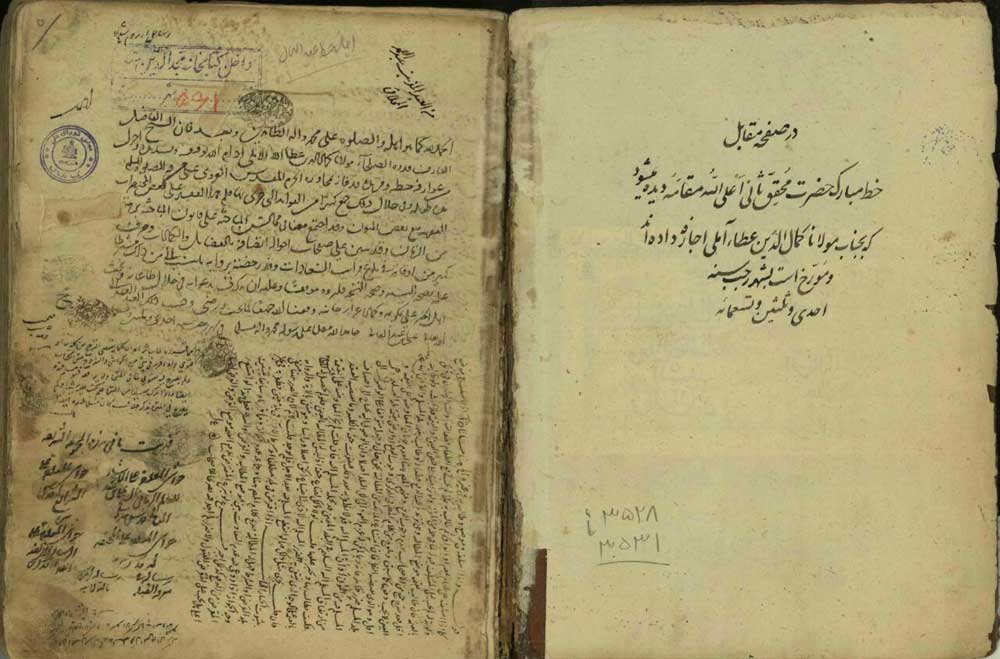
The phrase Arabic Manuscripts may sound like something that belongs exclusively in museums, university archives, or the offices of very serious historians wearing white gloves.
In reality, Arabic manuscripts tell a story that affects all of us.
From medicine and astronomy to mathematics and literature, countless ideas that influence modern life have survived because they were carefully recorded, copied, preserved, and passed down through Arabic manuscripts. These remarkable documents are not merely old books. They are time capsules that allow us to hear the voices of scholars, scientists, travelers, poets, physicians, and philosophers from centuries ago.
Long before cloud storage, digital libraries, and online databases, knowledge traveled through handwritten manuscripts. A scholar in Baghdad could influence thinkers in Cairo, Cordoba, Damascus, Samarkand, or even later generations in Europe because manuscripts carried ideas across continents.
Today, Arabic manuscripts remain one of the world’s richest sources of historical knowledge. Researchers continue discovering forgotten texts, while modern technologies are revealing hidden details that were impossible to see just a few years ago.
Institutions and specialist resources such as Manuscripts Leiden contribute to the preservation, study, and appreciation of this extraordinary intellectual heritage.
What Are Arabic Manuscripts?
Simply put, Arabic manuscripts are handwritten documents written in the Arabic language.
However, that simple definition only scratches the surface.
Arabic manuscripts include works covering:
- Religion
- Science
- Mathematics
- Medicine
- Geography
- Literature
- Philosophy
- History
- Law
- Linguistics
- Astronomy
Some manuscripts contain only a few pages.
Others fill multiple volumes.
Some were written by famous scholars.
Others were copied by students trying to preserve knowledge for future generations.
Each manuscript represents a unique historical journey.
Why Arabic Manuscripts Matter
Imagine if every laptop, smartphone, hard drive, and cloud server suddenly disappeared.
Future historians would have a difficult time understanding our civilization.
For much of human history, manuscripts performed the role that digital storage performs today.
They preserved information.
Without Arabic manuscripts, much of the world’s intellectual heritage would have been lost.
Historians often describe manuscripts as bridges across time.
They connect modern readers with people who lived hundreds or even thousands of years ago.
And unlike social media posts, many manuscript authors took their time before publishing.
Sometimes a lot of time.
The Rise of Arabic Manuscript Culture
The growth of Arabic manuscript production accelerated significantly after the rise of Islamic civilization.
As cities expanded and educational institutions developed, demand for books increased.
Major centers of learning emerged in cities such as:
- Baghdad
- Damascus
- Cairo
- Cordoba
- Fez
- Samarkand
These cities became hubs of scholarship.
Libraries grew.
Students traveled.
Ideas circulated.
Manuscripts became essential tools for learning and communication.
The Golden Age of Knowledge
Between approximately the 8th and 14th centuries, intellectual activity flourished across much of the Islamic world.
This period is often called the Islamic Golden Age.
During this era, scholars wrote extensively about:
Mathematics
Algebra, geometry, and arithmetic advanced significantly.
Many mathematical concepts studied today were preserved through Arabic manuscripts.
Medicine
Physicians recorded observations, treatments, and medical theories.
Medical manuscripts influenced healthcare education for centuries.
Astronomy
Astronomers documented celestial movements and developed sophisticated calculations.
Many of these observations survive in manuscript form.
Geography
Travelers and scholars described lands, cultures, trade routes, and political systems.
These accounts remain valuable historical sources.
Arabic Manuscripts and the Preservation of Global Knowledge
One of the most remarkable achievements of Arabic manuscript culture was its role in preserving knowledge from multiple civilizations.
Scholars translated and studied works originating from:
- Ancient Greece
- Persia
- India
- Central Asia
- Egypt
But preservation was only part of the story.
Scholars also expanded existing knowledge.
They analyzed ideas, corrected errors, and developed new theories.
Knowledge was not simply stored.
It evolved.
The Art Behind Arabic Manuscripts
Arabic manuscripts are not only intellectually valuable.
Many are visually stunning.
A beautifully produced manuscript could require months or even years of work.
Calligraphy
Arabic calligraphy became one of the most respected artistic traditions in history.
Different styles emerged, including:
- Kufic
- Naskh
- Thuluth
- Nastaliq
Each style reflected particular artistic and cultural preferences.
Illumination
Many manuscripts feature decorative elements such as:
- Gold leaf
- Floral designs
- Geometric patterns
- Colored borders
These decorations transformed books into works of art.
Bookbinding
Bookbinders created protective covers that were often artistic masterpieces themselves.
Some bindings survive today in remarkably good condition despite their age.
Famous Arabic Manuscripts That Changed History
Some Arabic manuscripts have become legendary among historians.
The Canon of Medicine
Written by Ibn Sina (Avicenna), this medical encyclopedia influenced healthcare education in both the Islamic world and Europe for centuries.
The Book of Optics
Authored by Ibn al-Haytham, this groundbreaking work helped advance the scientific understanding of light and vision.
Many historians consider him one of the pioneers of the scientific method.
Al-Khwarizmi’s Mathematical Works
His contributions to mathematics influenced generations of scholars.
The modern term “algorithm” ultimately traces its roots to his name.
Not many people can say their surname became a technology term used by billions of people every day.
How Arabic Manuscripts Traveled Across Continents
Knowledge rarely stays in one place.
Merchants, scholars, diplomats, and travelers carried manuscripts across vast distances.
Trade routes connected:
- North Africa
- The Middle East
- Central Asia
- Southern Europe
- South Asia
A manuscript copied in one city might eventually appear thousands of kilometers away.
This movement helped spread ideas and foster intellectual exchange.
Arabic Manuscripts and European Learning
Many people are surprised to learn how important Arabic manuscripts were to European intellectual history.
During the Middle Ages, numerous Arabic works were translated into Latin.
European scholars gained access to:
- Medical knowledge
- Mathematical techniques
- Philosophical writings
- Scientific observations
These translations contributed to educational developments across Europe.
Knowledge moved in multiple directions, creating a rich network of intellectual exchange.
The Challenges of Preserving Ancient Manuscripts
Preserving manuscripts is not easy.
Time is not always kind to paper.
Environmental Threats
Manuscripts can be damaged by:
- Humidity
- Heat
- Light
- Mold
- Pollution
Human Threats
Throughout history, manuscripts have faced risks from:
- Wars
- Theft
- Neglect
- Political instability
Countless works have unfortunately been lost.
This makes surviving manuscripts even more valuable.
Modern Technology Is Transforming Manuscript Research
Researchers today have access to tools that earlier generations could hardly imagine.
Digital Imaging
High-resolution photography allows scholars to study manuscripts in extraordinary detail.
Multispectral Imaging
This technology can reveal hidden writing and faded text.
In some cases, scholars have recovered information that appeared lost forever.
Artificial Intelligence
AI tools are increasingly helping researchers:
- Analyze handwriting
- Compare manuscripts
- Reconstruct damaged pages
- Identify scribes
It is fascinating to see ancient handwriting meeting modern algorithms.
Arabic Manuscripts in the Digital Age
The internet has transformed access to historical materials.
Many institutions now provide digital collections online.
Benefits include:
- Greater accessibility
- Improved preservation
- International collaboration
- Educational opportunities
Researchers no longer need to travel across the world to examine certain manuscripts.
A laptop and internet connection can open doors to centuries of history.
Why Collectors Value Arabic Manuscripts
Collectors often seek manuscripts because of their:
Historical Importance
Some manuscripts document unique events or intellectual traditions.
Artistic Quality
Calligraphy and illumination can make manuscripts visually extraordinary.
Rarity
Certain texts survive in only a handful of copies.
Cultural Significance
Manuscripts often represent important aspects of regional and global heritage.
Recent Discoveries and New Research
The field of manuscript studies remains active.
Researchers continue to uncover:
- Unknown texts
- Previously overlooked manuscripts
- Hidden annotations
- New historical insights
Digitization projects have accelerated discoveries by making materials more accessible.
As a result, our understanding of history continues to evolve.
Why Arabic Manuscripts Still Matter Today
Some people assume manuscripts belong exclusively to the past.
In reality, they remain highly relevant.
Arabic manuscripts help us understand:
- Cultural exchange
- Scientific development
- Intellectual history
- Religious traditions
- Human creativity
They remind us that knowledge has always been international.
Ideas travel.
Cultures interact.
People learn from one another.
The manuscript tradition provides evidence of these connections.
Frequently Asked Questions
Are Arabic manuscripts only religious texts?
No.
While many religious manuscripts exist, Arabic manuscripts also cover science, medicine, mathematics, literature, philosophy, law, and many other subjects.
How old are the oldest Arabic manuscripts?
Some surviving Arabic manuscripts date back more than a thousand years.
Are new Arabic manuscripts still being discovered?
Yes.
Researchers continue identifying previously unknown manuscripts in libraries, archives, and private collections.
Why are Arabic manuscripts important globally?
They preserve knowledge that influenced multiple civilizations and contributed to developments across numerous fields.
Can people study manuscripts online?
Increasingly, yes.
Many institutions provide digital access to manuscript collections.
Final Summary
Arabic manuscripts are among humanity’s most valuable intellectual treasures. They preserve centuries of knowledge, artistic achievement, scientific inquiry, and cultural exchange. From medicine and mathematics to literature and philosophy, these handwritten works continue to shape our understanding of the world and our shared history.
Modern technologies are helping researchers uncover new insights while making manuscripts more accessible than ever before. As digitization projects expand and scholarly interest grows, Arabic manuscripts will continue to serve as essential bridges between past and present.
For readers, researchers, collectors, and anyone fascinated by the history of knowledge, Manuscripts Leiden provides a valuable resource dedicated to the study, appreciation, and preservation of manuscript heritage. These remarkable documents are not simply relics of the past—they are living witnesses to humanity’s ongoing pursuit of learning and discovery.
References
- British Library – Arabic Manuscripts Collection
- Leiden University Libraries
- UNESCO Memory of the World Programme
- Qatar Digital Library
- Cambridge Digital Library – Islamic Manuscripts
- Oxford Centre for Islamic Studies
- The Metropolitan Museum of Art – Islamic Art Collection
- Library of Congress Digital Collections
- World Digital Library Archive
- Chester Beatty Library Manuscript Collections