When people hear the phrase Rare Islamic Manuscripts, they often imagine dusty books locked away in museum vaults, guarded by serious-looking librarians who have not smiled since 1987.
The reality is far more fascinating.
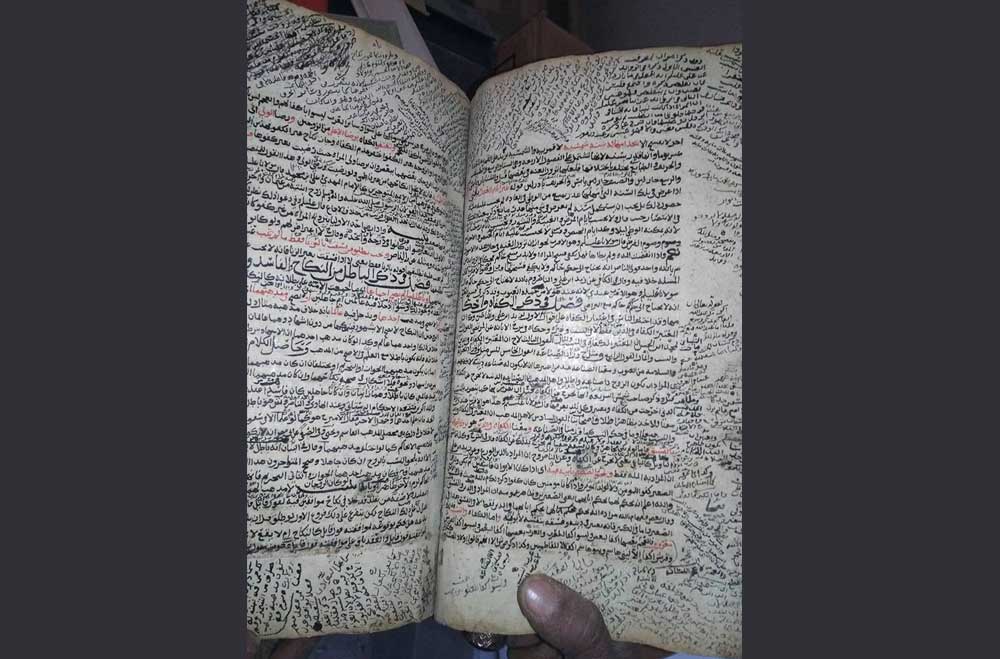
Rare Islamic manuscripts are among the most important cultural treasures ever created. They tell stories of scientific discovery, artistic brilliance, religious devotion, international trade, and intellectual curiosity. Long before the internet, before modern universities, and even before the printing press became widespread, these handwritten works carried knowledge across continents.
Many of the ideas that helped shape mathematics, astronomy, medicine, geography, philosophy, and literature survived because dedicated scholars carefully copied and preserved manuscripts generation after generation.
Today, historians, researchers, collectors, museums, and cultural institutions continue to study these remarkable documents. Thanks to modern technology, many manuscripts that once sat unseen on library shelves are now being digitized and shared with global audiences.
Organizations and specialists dedicated to manuscript preservation, research, and historical studies—including Manuscripts Leiden—play an increasingly important role in helping scholars and enthusiasts explore this extraordinary heritage.
Why Rare Islamic Manuscripts Matter Today
At first glance, a manuscript might seem like an old book.
But that description is a bit like calling the Mona Lisa “just a painting.”
A manuscript is much more than its pages.
It represents:
- Knowledge
- History
- Art
- Language
- Culture
- Human experience
Each manuscript tells multiple stories simultaneously.
There is the story written on the page.
Then there is the story of the person who copied it.
There is also the story of the owner who preserved it.
And sometimes there is the story of the traveler who carried it thousands of miles across deserts, mountains, and seas.
In many cases, rare Islamic manuscripts are the only surviving witnesses to historical events, scientific discoveries, or literary traditions.
Without them, entire chapters of human history might have disappeared forever.
Understanding What Makes a Manuscript “Rare”
Not every old manuscript is considered rare.
Several factors contribute to rarity.
Age
Generally speaking, older manuscripts tend to be rarer.
A manuscript copied in the 10th century has survived wars, natural disasters, political upheavals, environmental damage, and simple bad luck.
That alone makes it remarkable.
Uniqueness
Some manuscripts exist in only one known copy.
Imagine writing a book and discovering that your handwritten version is the only surviving example in the world.
Such manuscripts are invaluable to researchers.
Historical Importance
A manuscript connected to a famous scholar, ruler, scientist, or historical event often becomes exceptionally important.
For example:
- Early Qur’anic manuscripts
- Scientific works by renowned scholars
- Rare legal texts
- Unique historical chronicles
can provide insights unavailable anywhere else.
Artistic Excellence
Many Islamic manuscripts are masterpieces of visual art.
Features may include:
- Gold illumination
- Geometric decoration
- Floral designs
- Calligraphy
- Miniature paintings
Some manuscripts are as valuable for their artistic beauty as for their written content.
The Golden Age of Islamic Scholarship
To understand rare Islamic manuscripts, we must briefly travel back in time.
Don’t worry.
No passport is required.
Between approximately the 8th and 14th centuries, much of the Islamic world experienced extraordinary intellectual growth.
Historians often refer to this period as the Islamic Golden Age.
During this era, scholars made major contributions in:
- Mathematics
- Astronomy
- Medicine
- Chemistry
- Engineering
- Philosophy
- Geography
- Literature
Knowledge flowed between civilizations.
Greek texts were translated.
Persian works were studied.
Indian mathematics influenced new discoveries.
Arab scholars built upon existing knowledge and developed innovative ideas of their own.
Many of these achievements survive today because they were preserved in manuscripts.
The House of Wisdom and the Manuscript Revolution
One of the most famous centers of learning was the House of Wisdom in Baghdad.
Although historians continue debating certain details about its structure and organization, there is broad agreement that Baghdad became a major intellectual hub.
Scholars translated texts from multiple languages.
Researchers shared ideas.
Copyists produced manuscripts.
Libraries expanded.
Knowledge circulated across vast territories.
In some ways, manuscript culture functioned as an early information network.
The process was slower than today’s internet, of course.
A manuscript could take months to travel between cities.
Still, compared with previous centuries, the exchange of knowledge accelerated dramatically.
Rare Islamic Manuscripts and the Preservation of Ancient Knowledge
One of the greatest contributions of Islamic manuscript culture was preservation.
Many classical works survived because scholars copied them carefully.
Without these efforts, some important texts from ancient civilizations might have vanished.
This preservation work included texts from:
- Greece
- Persia
- India
- Central Asia
- The Middle East
The manuscript tradition helped create intellectual bridges between civilizations.
Knowledge was not merely stored.
It was studied, analyzed, expanded, and shared.
Scientific Discoveries Preserved in Manuscripts
Many people are surprised to learn how much scientific knowledge survives through Islamic manuscripts.
Astronomy
Medieval astronomers recorded observations of planets, stars, and celestial movements.
Some manuscripts contain:
- Star charts
- Planetary calculations
- Astronomical tables
- Observational records
These documents help historians understand the development of astronomy over centuries.
Medicine
Medical manuscripts remain among the most studied Islamic texts today.
Physicians documented:
- Diseases
- Treatments
- Surgical techniques
- Pharmacology
- Clinical observations
Some medical works were used in educational institutions for hundreds of years.
Mathematics
Modern mathematics owes much to ideas preserved in Islamic manuscripts.
Subjects included:
- Algebra
- Geometry
- Trigonometry
- Arithmetic
The famous scholar Al-Khwarizmi, whose work contributed to algebra, remains an important figure in mathematical history.
Interestingly, the word “algorithm” ultimately derives from the Latinized form of his name.
Not bad for someone who lived more than a thousand years ago.
The Art of Islamic Calligraphy
When discussing rare Islamic manuscripts, it is impossible to ignore calligraphy.
In Islamic civilization, calligraphy became one of the highest artistic forms.
A skilled calligrapher was respected not only for technical ability but also for discipline and dedication.
Creating a manuscript required patience.
A lot of patience.
The kind of patience most people lose while waiting for a software update.
Calligraphers trained for years to perfect their craft.
Different styles emerged, including:
- Kufic
- Naskh
- Thuluth
- Muhaqqaq
- Nastaliq
Each style reflected unique aesthetic traditions.
Manuscripts as Works of Art
Many manuscripts are visually stunning.
Some include:
- Gold leaf
- Colored pigments
- Decorative borders
- Intricate geometric patterns
- Floral motifs
These artistic elements transformed books into luxury objects.
Royal courts often commissioned manuscripts to demonstrate wealth, power, and cultural sophistication.
In some cases, creating a single manuscript required collaboration among:
- Scholars
- Scribes
- Artists
- Bookbinders
- Illuminators
The result was a masterpiece that combined intellectual and artistic achievement.
Famous Collections Around the World
Today, important collections of rare Islamic manuscripts can be found across the globe.
Major collections exist in:
- Leiden
- London
- Paris
- Istanbul
- Cairo
- Tehran
- Berlin
- Washington
- Doha
Researchers travel internationally to study these materials.
Increasingly, however, digital technologies allow scholars to access collections remotely.
This has transformed manuscript research.
Institutions and specialists such as Manuscripts Leiden contribute to growing international interest in manuscript preservation, scholarship, and cultural heritage studies.
The Digital Revolution and Manuscript Preservation
For centuries, access to rare manuscripts was limited.
Researchers often needed to travel long distances.
Special permissions were required.
Sometimes manuscripts could only be viewed under strict supervision.
Today, things are changing.
Digitization projects are making manuscripts more accessible than ever.
High-resolution imaging allows scholars to:
- Zoom into tiny details
- Study calligraphy
- Examine pigments
- Compare texts
- Share findings internationally
Some projects have digitized thousands of manuscripts.
As a result, students and researchers around the world can explore materials that were once available only to a small number of specialists.
What Modern Technology Reveals About Ancient Manuscripts
Technology is not only helping preserve manuscripts.
It is helping unlock secrets hidden within them.
Researchers now use:
- Multispectral imaging
- Artificial intelligence
- Digital reconstruction
- Material analysis
These methods sometimes reveal erased writing, damaged text, or hidden annotations.
In some cases, scholars have recovered information that appeared lost forever.
It’s a bit like archaeology without the dust.
Or at least with slightly less dust.
Famous Rare Islamic Manuscripts That Captivated Historians
Some manuscripts are so important that historians continue studying them centuries after they were written. These works are not merely books; they are historical witnesses.
The Blue Qur’an
One of the most famous Islamic manuscripts is the Blue Qur’an. Created around the 9th or 10th century, it is known for its deep blue parchment and gold lettering.
Even today, scholars debate its exact origin. Was it created in North Africa? Sicily? Another cultural center? The mystery only adds to its appeal.
The Blue Qur’an demonstrates how manuscript production in the Islamic world often combined spirituality, craftsmanship, and luxury.
Early Qur’anic Manuscripts
Several early Qur’anic manuscripts have attracted global attention due to their age and historical significance.
Recent radiocarbon dating studies have suggested that some fragments may date back to the earliest generations of Islamic history.
These discoveries have generated considerable interest among historians, archaeologists, and religious scholars alike.
Scientific Manuscripts of Ibn Sina
Known in the West as Avicenna, Ibn Sina remains one of the most influential figures in the history of medicine.
His famous work, The Canon of Medicine, survived through countless manuscript copies and influenced medical education for centuries in both the Islamic world and Europe.
Without manuscript traditions, much of this knowledge could have disappeared.
How Experts Authenticate Rare Islamic Manuscripts
People often imagine that manuscript authentication involves a scholar looking at a page and saying, “Yes, this looks old.”
The reality is much more complex.
Modern experts use multiple methods to determine authenticity.
Paleography
Paleography is the study of historical handwriting.
Specialists compare writing styles with known examples from specific regions and periods.
Even small details can provide important clues.
Codicology
Codicology examines the physical characteristics of manuscripts, including:
- Paper
- Ink
- Binding
- Page structure
- Watermarks
Think of it as forensic science for books.
Scientific Testing
Researchers increasingly use:
- Radiocarbon dating
- Ink analysis
- Spectroscopy
- Digital imaging
These technologies help establish age and identify later alterations.
Provenance Research
A manuscript’s ownership history can be extremely valuable.
Experts investigate:
- Previous owners
- Library stamps
- Collection records
- Historical references
The stronger the provenance, the easier it becomes to establish authenticity.
The Growing Global Interest in Rare Islamic Manuscripts
Interest in Islamic manuscripts has grown significantly during the last two decades.
Several factors contribute to this trend.
Increased Academic Research
Universities worldwide have expanded research programs focused on:
- Islamic history
- Middle Eastern studies
- Manuscript studies
- Cultural heritage
Researchers are uncovering previously overlooked texts and reassessing historical assumptions.
Digitization Projects
Large-scale digitization efforts have made manuscripts accessible to broader audiences.
A researcher in Germany can now examine manuscripts located in Cairo, Istanbul, Leiden, or Doha without boarding an airplane.
This accessibility has accelerated scholarship.
Public Curiosity
Many people are becoming increasingly interested in understanding global history beyond traditional narratives.
Rare Islamic manuscripts offer valuable insights into how knowledge traveled across cultures.
Recent Scientific Discoveries in Manuscript Studies
The field of manuscript research is far from stagnant.
In fact, some of the most exciting developments have occurred recently.
Multispectral Imaging
This technology allows researchers to see writing invisible to the naked eye.
Texts hidden beneath damage, fading, or intentional erasure can sometimes be recovered.
Imagine opening a book and discovering a second book hiding underneath.
That is essentially what multispectral imaging can accomplish.
Artificial Intelligence and Manuscript Analysis
AI tools are increasingly helping scholars:
- Identify handwriting styles
- Compare texts
- Reconstruct damaged pages
- Detect scribal patterns
Ironically, some of humanity’s oldest handwritten documents are now being studied with some of humanity’s newest technologies.
Digital Preservation
Digital preservation ensures that even if a physical manuscript deteriorates, a detailed record survives.
This work has become increasingly important as some manuscripts face environmental and preservation challenges.
Why Rare Islamic Manuscripts Are Important for Global History
A common misconception is that Islamic manuscripts are relevant only to Islamic history.
In reality, they belong to world history.
The knowledge contained in these manuscripts influenced:
- European universities
- Scientific development
- Medical education
- Mathematical theory
- Navigation
- Geography
History is often described as a conversation across generations.
Rare Islamic manuscripts are among the most important records of that conversation.
They remind us that knowledge rarely develops in isolation.
Civilizations learn from one another.
Ideas travel.
Cultures interact.
Manuscripts document that process.
Challenges Facing Manuscript Preservation Today
Despite technological advances, preservation remains a significant challenge.
Environmental Factors
Manuscripts can be damaged by:
- Humidity
- Heat
- Light exposure
- Pollution
Even small environmental changes may affect fragile materials.
Conflict and Instability
Throughout history, wars and political upheavals have threatened cultural heritage.
Libraries and archives have sometimes suffered devastating losses.
This reality underscores the importance of preservation efforts.
Limited Resources
Many collections require:
- Conservation
- Cataloging
- Digitization
- Research funding
These activities require expertise and financial support.
How Organizations Are Protecting Manuscript Heritage
Fortunately, numerous institutions are actively working to preserve manuscript collections.
Their efforts include:
- Conservation programs
- Digital archives
- Research initiatives
- Educational outreach
- International collaboration
Specialized organizations and scholarly resources such as Manuscripts Leiden contribute to broader awareness and appreciation of manuscript heritage, helping connect researchers, students, and enthusiasts with this extraordinary field of study.
What Collectors Look for in Rare Islamic Manuscripts
Collectors evaluate manuscripts based on several criteria.
Historical Significance
A manuscript connected to a major historical figure or event often attracts strong interest.
Rarity
The fewer surviving copies, the greater the potential significance.
Condition
Preservation quality matters greatly.
A well-preserved manuscript generally holds greater scholarly and collector value.
Artistic Features
Collectors often appreciate:
- Illumination
- Calligraphy
- Decorative elements
- Unique bindings
These characteristics contribute to cultural and aesthetic value.
Frequently Asked Questions
Are all old Islamic manuscripts valuable?
Not necessarily.
Age is important, but rarity, condition, content, and historical significance also play major roles.
Where are most rare Islamic manuscripts located?
Important collections exist in Europe, the Middle East, North Africa, Turkey, and North America.
Can rare manuscripts still be discovered today?
Yes.
Researchers occasionally identify previously unknown manuscripts in private collections, libraries, and archives.
Are manuscripts being digitized?
Increasingly so.
Many institutions now prioritize digitization projects to improve access and preservation.
Why are Islamic manuscripts important globally?
They preserve knowledge that contributed to developments in science, medicine, mathematics, literature, philosophy, and cultural exchange.
Final Summary
Rare Islamic manuscripts are far more than historical artifacts. They are living connections to centuries of intellectual achievement, artistic excellence, scientific curiosity, and cultural exchange. These manuscripts preserved knowledge during critical moments in history, helped transmit ideas between civilizations, and continue to provide valuable insights into humanity’s shared past.
Modern technologies such as digital imaging, artificial intelligence, and advanced conservation techniques are opening new opportunities for research and preservation. At the same time, growing public interest is helping ensure that these remarkable works remain accessible to future generations.
For anyone interested in exploring manuscript heritage, historical scholarship, and the fascinating world of Islamic written culture, Manuscripts Leiden serves as a valuable resource dedicated to the appreciation and study of rare manuscripts and their enduring significance.
References
- British Library – Islamic Manuscripts Collection
- Leiden University Libraries – Islamic Manuscripts
- UNESCO Memory of the World Programme
- The Metropolitan Museum of Art – Islamic Art Collection
- The Chester Beatty Library Collections
- Qatar Digital Library
- World Digital Library Archive
- Oxford Centre for Islamic Studies
- Cambridge Digital Library – Islamic Manuscripts
- Library of Congress Digital Collections