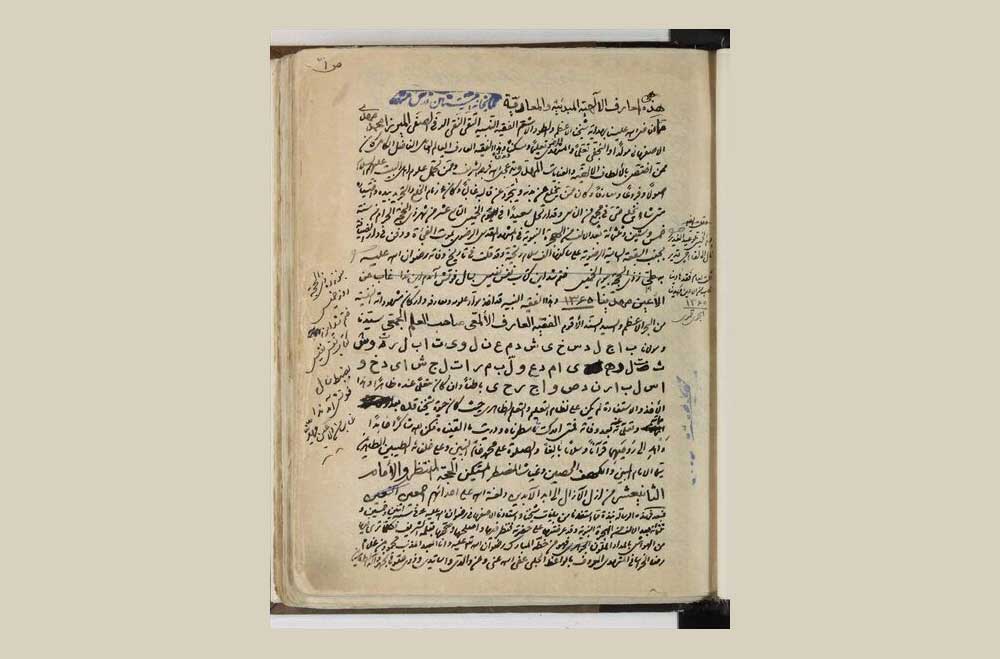
The story of the Islamic manuscript is much more than a story about old books sitting quietly on library shelves. It is a story about human curiosity, creativity, travel, science, faith, art, and the desire to preserve knowledge for future generations.
Imagine a world without books, notebooks, journals, or even simple sheets of paper. Today, we often take paper for granted. We scribble shopping lists, print reports, and sometimes waste entire sheets because of a tiny mistake. Yet centuries ago, paper was one of the most valuable technologies ever introduced to human civilization.
In many ways, the history of the Islamic manuscript is also the history of how ideas traveled across continents. Through manuscripts, scholars shared discoveries, poets expressed emotions, physicians recorded treatments, astronomers mapped the heavens, and historians documented the rise and fall of empires.
For anyone interested in manuscript studies, Islamic heritage, or the preservation of historical texts, resources such as Manuscripts Leiden provide valuable insight into the remarkable world of manuscripts and historical collections.
The World Before Paper
Before paper became widely available, people wrote on many different materials.
Some civilizations used:
- Stone tablets
- Clay tablets
- Animal skins
- Papyrus
- Wood
- Metal plates
Each material had advantages and disadvantages.
Stone was durable but heavy.
Clay could preserve information for thousands of years but was difficult to transport.
Animal skin, often known as parchment, was flexible but expensive.
Papyrus was useful but fragile and sensitive to environmental conditions.
As societies expanded, the need for a practical writing material became increasingly important.
Knowledge was growing rapidly, and scholars needed a more efficient way to record information.
This challenge eventually led to one of the most important developments in human history: paper.
The Arrival of Paper in the Islamic World
Many historians trace the spread of papermaking technology to interactions between Chinese and Islamic civilizations during the eighth century.
A frequently cited historical event is the Battle of Talas in 751 CE.
Although historians continue to debate some details, the broader historical consensus suggests that knowledge of papermaking gradually spread westward through cultural and commercial exchanges.
Once introduced, paper was not simply copied.
Muslim craftsmen improved production methods and adapted paper manufacturing to local needs.
Cities such as:
- Samarkand
- Baghdad
- Damascus
- Cairo
became important centers of paper production.
The impact was extraordinary.
Paper was less expensive than parchment.
It was easier to produce.
It could be transported more efficiently.
Most importantly, it allowed knowledge to spread on an unprecedented scale.
Why Paper Changed Everything
To understand the significance of paper, imagine trying to create a university library using only animal skins.
The cost would be enormous.
The time required would be overwhelming.
Paper dramatically reduced these limitations.
As a result:
- More books could be produced.
- More scholars could access knowledge.
- More students could learn.
- More ideas could circulate.
This transformation helped fuel one of history’s most remarkable intellectual periods.
The Islamic Golden Age and the Rise of Manuscript Culture
Between approximately the eighth and thirteenth centuries, many regions of the Islamic world experienced extraordinary scientific and cultural growth.
This period is often referred to as the Islamic Golden Age.
During this era, scholars worked in diverse fields including:
- Mathematics
- Astronomy
- Medicine
- Philosophy
- Geography
- Engineering
- Literature
The availability of paper played a crucial role in supporting these activities.
Imagine trying to calculate advanced astronomical observations without notebooks.
Imagine documenting medical treatments without written records.
Imagine preserving poetry without manuscripts.
Paper made these achievements possible.
Baghdad: A Center of Knowledge
One of the most famous intellectual centers was Baghdad.
The city became a hub for scholars from different cultural backgrounds.
Greek works were translated into Arabic.
Persian texts were preserved.
Indian mathematical ideas were studied and expanded.
New scientific discoveries were recorded and shared.
The famous House of Wisdom became a symbol of scholarly collaboration.
Although the institution itself is sometimes romanticized in popular culture, there is little doubt that Baghdad served as one of the most important centers of learning in medieval history.
Paper helped support this vibrant intellectual environment.
Manuscripts as Cultural Time Machines
A fascinating aspect of Islamic manuscripts is their ability to transport modern readers into the past.
A manuscript is not simply a text.
It often contains clues about:
- The author
- The copyist
- The owner
- The reader
- The historical period
Marginal notes can reveal what people thought centuries ago.
Corrections may show how knowledge evolved.
Ownership stamps can trace a manuscript’s journey across regions and generations.
In many cases, manuscripts function almost like historical passports.
They carry evidence of movement, exchange, and human interaction.
The Art of Beautiful Writing
When discussing Islamic manuscripts, it is impossible to ignore calligraphy.
In many manuscript traditions, writing was not merely functional.
It was artistic.
Calligraphers spent years mastering their craft.
A beautifully copied manuscript represented both knowledge and beauty.
Different styles emerged over time, including:
Kufic Script
One of the earliest and most recognizable styles.
Characterized by geometric forms and strong visual structure.
Naskh Script
Highly readable and widely used for copying books.
Thuluth Script
Elegant and decorative, often used in architectural inscriptions and prestigious works.
These scripts transformed manuscripts into works of art.
Manuscript Workshops: The Medieval Publishing Houses
Today, producing a book often involves writers, editors, designers, printers, and marketers.
Medieval manuscript production also required teamwork.
A manuscript workshop might include:
- Paper makers
- Scribes
- Calligraphers
- Illuminators
- Bookbinders
Each specialist contributed to the final product.
Creating a manuscript could take weeks, months, or even years.
The process demanded patience, skill, and dedication.
In many ways, manuscript production represented a remarkable blend of technology and artistry.
The Economics of Knowledge
One overlooked aspect of manuscript history is economics.
Paper did not merely help scholars.
It also created entire industries.
Papermaking generated employment.
Book markets expanded.
Libraries grew.
Educational institutions developed.
Knowledge became more accessible than before.
Some historians argue that paper played a role similar to the internet in later centuries.
While the comparison is not perfect, both technologies dramatically increased access to information.
A Funny Thought Experiment
Imagine telling a twelfth-century scholar that one day people would carry thousands of books in a device small enough to fit inside a pocket.
The scholar might laugh.
Or perhaps ask whether the device was powered by magic.
Yet that is exactly the world we live in today.
Ironically, our digital revolution owes much to the manuscript revolution that came before it.
Without centuries of manuscript culture preserving knowledge, many modern scientific and technological advances might never have occurred.
Why Islamic Manuscripts Matter Today
Some people wonder why manuscripts remain important in the digital age.
The answer is simple.
Manuscripts preserve original evidence.
They help scholars understand:
- Historical events
- Scientific development
- Religious traditions
- Literary culture
- Artistic practices
They also reveal how people thought about the world around them.
Every manuscript represents a conversation between generations.
That conversation continues today through research, digitization projects, conservation efforts, and institutions dedicated to preserving manuscript heritage.
For readers interested in exploring historical collections, manuscript studies, and the broader world of Islamic manuscript heritage, platforms such as Manuscripts Leiden offer valuable resources and insights into these remarkable cultural treasures.
The Journey Continues
The story of paper and the Islamic manuscript does not end with the medieval period.
In fact, some of the most fascinating chapters are still ahead.
How were manuscripts preserved for centuries?
What hidden treasures remain undiscovered in libraries and private collections?
How are modern technologies helping scholars uncover lost knowledge?
And what can these ancient books teach us about the future of preserving human knowledge?
These questions will guide the next part of our exploration.
The Hidden Journey of Islamic Manuscripts Across Continents
When most people hear the phrase Islamic manuscript, they often imagine a beautifully decorated book resting safely inside a museum display case. While that image is partly true, it tells only a small part of the story.
The reality is much more exciting.
Many manuscripts traveled thousands of kilometers during their lifetimes. Some crossed deserts on camel caravans. Others sailed across oceans inside merchant ships. A few survived wars, fires, floods, political upheavals, and even simple human forgetfulness.
If manuscripts could speak, they would probably have better travel stories than most of us.
Imagine a manuscript copied in Baghdad during the tenth century, studied in Damascus during the eleventh century, purchased by a merchant in Cairo during the twelfth century, and eventually ending up in a European library centuries later.
Such journeys were not unusual.
They were part of a vast network of intellectual exchange that connected regions stretching from Spain to India and beyond.
How Trade Routes Helped Spread Knowledge
When people think about historical trade routes, they usually think about valuable goods such as:
- Silk
- Spices
- Gold
- Precious stones
However, ideas traveled alongside these products.
In many ways, knowledge became one of the most valuable commodities of all.
Major trade routes connected important cities including:
- Baghdad
- Damascus
- Cairo
- Cordoba
- Samarkand
- Isfahan
- Shiraz
- Istanbul
These cities became centers of learning, scholarship, and manuscript production.
Books were bought, sold, copied, exchanged, and gifted.
A successful scholar often attracted students from different regions.
When those students returned home, they frequently carried manuscripts with them.
As a result, manuscripts became vehicles for spreading scientific discoveries, literary traditions, religious teachings, and philosophical debates.
The Library Revolution of the Medieval Islamic World
Today, public libraries seem completely normal.
We expect books to be available.
We expect information to be accessible.
Centuries ago, this was far from guaranteed.
The widespread use of paper helped create what some historians describe as a library revolution.
Numerous cities established significant collections of books.
Historical records suggest that some medieval libraries contained thousands of manuscripts.
Although exact numbers are sometimes difficult to verify, there is little doubt that manuscript collections expanded dramatically during the Islamic Golden Age.
These collections covered subjects such as:
Science
Astronomy, mathematics, chemistry, medicine, and engineering.
Literature
Poetry, storytelling, biographies, and historical narratives.
Religion
Quranic studies, theology, legal scholarship, and mystical writings.
Geography
Maps, travel accounts, and descriptions of distant lands.
Philosophy
Works exploring ethics, logic, metaphysics, and human understanding.
The diversity of these collections demonstrates how broad intellectual life had become.
The Human Side of Manuscripts
One of the most fascinating aspects of manuscript studies is discovering the people behind the pages.
Modern readers often focus on famous authors.
Yet many other individuals contributed to the survival of these works.
Consider the humble copyist.
A copyist might spend months reproducing a manuscript by hand.
One small mistake could alter the meaning of a passage.
Imagine spending six months copying a 400-page manuscript only to discover a spelling mistake on page two.
That is the medieval equivalent of realizing you forgot to save an important document after hours of work.
Some copyists even left personal notes inside manuscripts.
These notes occasionally reveal surprising details.
Examples include:
- Complaints about cold weather.
- Remarks about exhaustion.
- Requests for readers to forgive copying errors.
- Expressions of gratitude to teachers.
- Prayers for future owners.
These human touches make manuscripts feel surprisingly modern.
Across centuries, people remain remarkably similar.
We still complain about deadlines.
We still worry about mistakes.
And we still hope our hard work will be appreciated.
The Science Hidden Inside Islamic Manuscripts
Many people associate manuscripts with religion or literature.
However, Islamic manuscripts also preserve an enormous amount of scientific knowledge.
Some manuscripts contain detailed discussions of:
- Surgical procedures
- Pharmacology
- Astronomy
- Mathematics
- Engineering
- Optics
Scholars such as:
Ibn Sina
Al-Biruni
Ibn al-Haytham
produced works that influenced scientific development for centuries.
In some cases, these texts were translated into Latin and became part of European educational systems.
This demonstrates that manuscripts were not isolated cultural artifacts.
They were active participants in global intellectual history.
Preserving Knowledge Through Difficult Times
History has not always been kind to books.
Countless manuscripts have been lost through:
- Fires
- Floods
- Warfare
- Political conflicts
- Neglect
- Environmental damage
Historians estimate that only a fraction of all manuscripts produced throughout history survive today.
This reality makes every surviving manuscript incredibly valuable.
Each preserved manuscript may represent one of the last remaining witnesses to a particular intellectual tradition.
Sometimes a single surviving copy is all that remains of an entire work.
Without that manuscript, the text would disappear forever.
Hidden Manuscripts Still Waiting to Be Discovered
One of the most exciting aspects of manuscript studies is that discoveries continue to happen.
Contrary to popular belief, historians have not found everything.
New manuscripts are still being identified in:
- Private collections
- Family libraries
- Religious institutions
- University archives
- Museum collections
Occasionally, scholars discover texts that have remained largely unknown for centuries.
These discoveries can reshape historical understanding.
A forgotten manuscript may reveal:
- Previously unknown scientific observations.
- Alternative versions of famous texts.
- Lost historical details.
- New perspectives on cultural exchange.
For researchers, such discoveries are the academic equivalent of finding buried treasure.
Why Manuscript Digitization Matters
Today, technology is transforming manuscript preservation.
Digital imaging allows institutions to create high-quality electronic copies of fragile manuscripts.
This process offers several benefits.
Improved Access
Researchers can study manuscripts remotely without traveling across the world.
Better Preservation
Digital copies reduce physical handling of delicate originals.
Enhanced Research
Advanced imaging technologies can reveal faded text invisible to the naked eye.
Global Collaboration
Scholars from different countries can work together more easily.
Organizations and collections dedicated to manuscript preservation, including resources available through Manuscripts Leiden, contribute to broader efforts aimed at increasing awareness and accessibility of manuscript heritage.
The Role of Artificial Intelligence in Manuscript Research
A surprising modern development is the growing use of artificial intelligence.
AI systems are increasingly being used to:
- Analyze handwriting styles.
- Identify damaged text.
- Compare manuscript versions.
- Assist cataloging efforts.
- Improve searchability of collections.
Researchers are now training computer systems to recognize historical scripts that would once have required years of specialized study.
While AI will never replace expert scholars, it is becoming a valuable research tool.
Ironically, one of humanity’s oldest technologies—manuscripts—is now benefiting from one of humanity’s newest technologies.
Surprising Statistics About Manuscript Heritage
Although precise numbers remain difficult to determine, researchers estimate that hundreds of thousands of Islamic manuscripts survive worldwide.
Major collections are located across:
- The Middle East
- North Africa
- Europe
- Central Asia
- South Asia
- North America
Many institutions continue cataloging previously uncatalogued materials.
This means the total number of known manuscripts continues to grow.
In some collections, scholars estimate that significant portions remain understudied.
That reality suggests future discoveries are almost guaranteed.
Why the Public Should Care About Manuscripts
A common question is simple:
Why should ordinary people care about centuries-old manuscripts?
The answer goes beyond history.
Manuscripts help us understand:
- How knowledge develops.
- How cultures interact.
- How ideas survive.
- How societies learn from one another.
They remind us that progress is rarely the work of a single individual.
Instead, knowledge grows through collaboration across generations.
Every scientist builds upon earlier discoveries.
Every writer draws inspiration from previous traditions.
Every society inherits ideas from the past.
Manuscripts provide evidence of that continuous chain of learning.
The Manuscript as a Symbol of Human Curiosity
Perhaps the greatest lesson of manuscript history is that humans have always been curious.
People have always wanted to understand:
- The stars above them.
- The world around them.
- The meaning of life.
- The nature of knowledge itself.
Manuscripts are physical expressions of that curiosity.
Each page represents someone’s effort to record, preserve, and share understanding.
Long before digital clouds and online databases existed, manuscripts performed a similar function.
They carried knowledge across time.
And remarkably, many continue to do so today.
Looking Ahead
The story of the Islamic manuscript becomes even more fascinating when we explore manuscript art, illumination, rare collections, famous discoveries, mystical texts, hidden treasures in private libraries, and the future of manuscript preservation in the digital age.
These topics reveal not only how manuscripts were created but also why they continue to inspire scholars, collectors, historians, and curious readers around the world.
The Artistic Beauty of Islamic Manuscripts: When Knowledge Became Art
If manuscripts had an awards ceremony, some Islamic manuscripts would undoubtedly walk away with the prize for “Most Beautiful Book Ever Created.”
One of the reasons Islamic manuscripts continue to fascinate historians, collectors, and ordinary readers is that they are not merely containers of information. They are works of art.
Long before graphic design became a profession, manuscript artists were already combining typography, color, geometry, and visual storytelling in ways that still impress modern audiences.
A beautifully crafted manuscript could take months or even years to complete. In some cases, entire teams worked together to produce a single volume.
These teams often included:
- Paper makers
- Scribes
- Calligraphers
- Illuminators
- Painters
- Bookbinders
The result was something far greater than a book.
It became a cultural treasure.
Why Beauty Was Important in Manuscript Culture
Today, people often separate art from knowledge.
A textbook is expected to teach.
A painting is expected to inspire.
In many manuscript traditions, these categories were not separated.
Beauty itself was considered a way of honoring knowledge.
A carefully written page reflected respect for the text.
An elegant manuscript demonstrated dedication, patience, and craftsmanship.
For religious texts, beautiful presentation could also express reverence.
For scientific works, clear and attractive layouts improved readability.
For poetry, artistic decoration enhanced emotional impact.
In short, beauty served both practical and symbolic purposes.
The Magic of Islamic Calligraphy
Perhaps no artistic feature is more closely associated with Islamic manuscripts than calligraphy.
Calligraphy transformed writing into visual art.
A skilled calligrapher did not simply copy words.
They shaped letters with extraordinary precision.
Each stroke mattered.
Each curve carried meaning.
Students sometimes spent years mastering a single script.
Imagine practicing handwriting every day for ten years.
That level of dedication was not uncommon.
Several script styles became particularly influential.
Naskh: The Scholar’s Favorite
Naskh became one of the most widely used manuscript scripts.
Its clear and balanced design made it ideal for copying books.
Many manuscripts preserved in libraries today were written in Naskh.
Because it was easy to read, it helped knowledge spread more efficiently.
Thuluth: Elegance in Motion
Thuluth is famous for its flowing curves and dramatic appearance.
It often appeared in prestigious manuscripts and architectural inscriptions.
Some examples look so elegant that modern viewers mistake them for contemporary graphic design.
Kufic: The Architectural Script
Kufic is among the oldest styles of Arabic script.
Its geometric structure gives it a distinctive appearance.
Early Qur’anic manuscripts frequently employed Kufic script.
Even today, designers continue to draw inspiration from its visual power.
Illuminated Manuscripts: Pages That Glow
The word “illumination” does not mean adding electric lights to a manuscript.
Although that would certainly make medieval librarians very popular.
Instead, manuscript illumination refers to decorative elements added by artists.
These often included:
- Gold leaf
- Colorful borders
- Floral motifs
- Geometric patterns
- Decorative chapter headings
When light reflected from gold surfaces, pages appeared to glow.
This visual effect contributed to the term “illuminated manuscript.”
Some surviving examples remain breathtaking centuries later.
The Role of Geometry in Islamic Manuscript Art
One striking feature of Islamic artistic traditions is the use of geometry.
Artists created intricate patterns using mathematical principles.
Circles, stars, polygons, and repeating motifs appeared throughout manuscript decoration.
Interestingly, many of these designs demonstrate a sophisticated understanding of symmetry and proportion.
Modern mathematicians continue studying some historical geometric patterns because of their remarkable complexity.
This connection between art and mathematics illustrates the interdisciplinary nature of manuscript culture.
Knowledge was not divided into isolated categories.
Science, art, and philosophy often interacted closely.
Color and Symbolism
Colors played important roles in manuscript design.
Different pigments were carefully prepared using minerals, plants, and other natural materials.
Common colors included:
- Blue
- Red
- Green
- Gold
- Black
Producing certain pigments could be extremely expensive.
Gold decoration, for example, signaled prestige and importance.
The use of color helped organize information while enhancing visual appeal.
It also demonstrated the resources invested in manuscript production.
The Fascinating World of Bookbinding
When discussing manuscripts, people often focus on pages.
However, the binding itself could be a masterpiece.
Islamic bookbinders developed sophisticated techniques that combined durability and beauty.
Bindings often featured:
- Embossed leather
- Geometric designs
- Gold decoration
- Protective flaps
Some covers were so carefully crafted that they survived for centuries.
In many cases, the binding offers valuable clues about a manuscript’s origin and history.
Researchers frequently study bindings to understand trade networks and artistic influences.
Famous Manuscript Collections Around the World
Today, important Islamic manuscript collections can be found in many countries.
Major collections exist in:
- Turkey
- Iran
- Egypt
- Saudi Arabia
- Morocco
- United Kingdom
- Germany
- France
- Netherlands
- United States
These collections contain works covering nearly every area of human knowledge.
Some manuscripts remain famous because of their artistic quality.
Others are valued because they preserve unique texts.
Still others attract attention because of their historical significance.
Organizations and scholarly platforms such as Manuscripts Leiden contribute to increasing awareness of these remarkable collections and the broader field of manuscript studies.
Hidden Treasures in Private Collections
Not all manuscripts reside in major libraries.
Many remain in private hands.
Families sometimes preserve manuscripts for generations.
In some cases, owners may not even realize the historical significance of what they possess.
Researchers occasionally encounter extraordinary discoveries.
A manuscript stored inside an old wooden chest may turn out to be centuries old.
A forgotten family heirloom may preserve a rare text unavailable elsewhere.
Stories like these continue to inspire historians and collectors alike.
They remind us that the manuscript world still contains mysteries waiting to be uncovered.
When Art Helped Knowledge Survive
Beautiful manuscripts enjoyed an unexpected advantage.
People were more likely to preserve them.
A carefully decorated manuscript was viewed as valuable.
Owners invested effort in protecting it.
Libraries gave it special attention.
Collectors treasured it.
As a result, artistic excellence often contributed directly to survival.
Ironically, some scientific and historical texts may have reached us today because someone centuries ago decided to make them beautiful.
A Lesson for the Modern World
The story of manuscript art offers an interesting lesson.
Modern society often prioritizes speed.
We send messages instantly.
We skim articles.
We consume information rapidly.
Manuscript culture followed a different rhythm.
Creating a book required patience.
Reading often demanded concentration.
Preservation required long-term thinking.
Although modern technology provides extraordinary advantages, manuscript traditions remind us that quality sometimes benefits from slowing down.
Not every meaningful achievement happens quickly.
Sometimes the most valuable work requires time, dedication, and care.
The Enduring Legacy of Islamic Manuscript Art
The artistic traditions associated with Islamic manuscripts continue to inspire contemporary artists, designers, architects, and scholars.
Their influence appears in:
- Modern typography
- Graphic design
- Architectural decoration
- Museum exhibitions
- Educational programs
- Digital humanities projects
Centuries after their creation, these manuscripts remain relevant.
They remind us that knowledge and beauty do not need to exist separately.
At their best, they strengthen one another.
And perhaps that is one of the greatest achievements of manuscript culture: transforming the simple act of writing into an enduring form of art.
Famous Islamic Manuscripts That Changed History
When people hear the phrase Islamic manuscript, they often imagine an old handwritten book sitting behind glass in a museum. While that image is accurate, some manuscripts have had a far greater impact than many people realize.
Certain manuscripts influenced science, medicine, philosophy, literature, and even global history. They traveled across continents, inspired generations of scholars, and helped shape the intellectual development of entire civilizations.
In some cases, a single manuscript became the bridge that connected ancient knowledge with the modern world.
The Canon of Medicine
One of the most influential manuscripts in history was The Canon of Medicine by Ibn Sina (Avicenna).
For centuries, this medical encyclopedia served as a standard reference in hospitals and universities throughout the Islamic world and Europe.
The work discussed:
- Human anatomy
- Diseases
- Treatments
- Pharmacology
- Medical ethics
Remarkably, parts of the book continued to be used in medical education for hundreds of years.
Today, historians regard it as one of the most important medical works ever written.
The Book of Optics
Another revolutionary manuscript was The Book of Optics by Ibn al-Haytham.
His observations challenged earlier assumptions about vision and light.
Instead of believing that eyes emitted rays toward objects, he demonstrated that light enters the eye.
This idea may sound obvious today.
However, at the time, it represented a major scientific breakthrough.
Many historians consider Ibn al-Haytham one of the pioneers of the scientific method.
Al-Khwarizmi and the Birth of Algebra
Modern mathematics owes a surprising debt to Islamic manuscript culture.
The mathematician Al-Khwarizmi produced works that introduced systematic methods for solving equations.
In fact, the word “algebra” comes from the Arabic term al-jabr.
His manuscripts spread mathematical concepts that would later influence Europe and eventually become foundational to modern science and technology.
Without these manuscripts, the development of mathematics might have followed a very different path.
Lost Libraries and Forgotten Treasures
Not every manuscript has survived.
History can be unforgiving.
Throughout the centuries, libraries have been destroyed by:
- Wars
- Fires
- Floods
- Political conflicts
- Neglect
Some losses were so devastating that historians still mourn them today.
The Tragedy of Lost Knowledge
Imagine a library containing thousands of books.
Now imagine that library disappearing in a single day.
Unfortunately, this happened more than once throughout history.
Each destroyed manuscript represented:
- Years of work
- Valuable knowledge
- Unique historical evidence
Sometimes an entire text vanished forever because only one copy existed.
This reality highlights the importance of preservation efforts today.
Every surviving manuscript is precious because it may be the last remaining witness to a forgotten world.
The Remarkable Survival of Ancient Manuscripts
Given the many dangers manuscripts faced, it is remarkable that so many survived at all.
Several factors contributed to their preservation.
Family Collections
Many families carefully passed manuscripts from one generation to another.
A manuscript could become a treasured heirloom, preserved with great care.
Religious Institutions
Mosques, seminaries, and religious schools often maintained manuscript collections.
These institutions played an important role in safeguarding knowledge.
Royal Libraries
Rulers frequently sponsored the collection and preservation of books.
Their libraries sometimes became centers of scholarship and intellectual exchange.
Private Collectors
Throughout history, collectors have acquired and protected manuscripts because of their cultural and artistic value.
Although collecting practices varied, many manuscripts survived thanks to individuals who recognized their importance.
Hidden Manuscripts Still Waiting to Be Studied
One of the most exciting aspects of manuscript studies is that discoveries continue to happen.
Many people assume that historians have already found everything worth finding.
The reality is quite different.
Large collections around the world still contain manuscripts that have never been fully studied.
Researchers continue discovering:
- Unknown authors
- Previously overlooked texts
- Alternative versions of famous works
- Forgotten historical records
Sometimes a manuscript cataloged decades ago receives renewed attention and reveals information that earlier scholars missed.
It is a reminder that history is never truly finished.
New discoveries can emerge from old books.
The Global Journey of Islamic Manuscripts
Today, Islamic manuscripts can be found in libraries and museums throughout the world.
Major collections exist in:
- The Netherlands
- Germany
- France
- United Kingdom
- Turkey
- Egypt
- Iran
- United States
Many manuscripts reached these collections through trade, diplomacy, scholarship, or collecting activities over several centuries.
As a result, manuscript studies have become an international field.
Researchers from different countries often collaborate to study, preserve, and digitize these materials.
Institutions and scholarly resources such as Manuscripts Leiden help promote awareness of manuscript heritage and encourage further research into these extraordinary historical sources.
What Modern Technology Is Revealing
The digital age has transformed manuscript research.
New technologies are helping scholars investigate manuscripts in ways that were impossible only a few decades ago.
Multispectral Imaging
Some manuscripts contain faded text that cannot be seen with the naked eye.
Advanced imaging techniques can reveal hidden writing.
In some cases, entire passages have been recovered using these methods.
Digital Archives
Researchers no longer need to travel thousands of kilometers to examine every manuscript.
High-resolution digital collections allow scholars to study texts remotely.
This has dramatically expanded access to historical materials.
Artificial Intelligence
Artificial intelligence is beginning to assist with:
- Handwriting recognition
- Text analysis
- Manuscript cataloging
- Pattern identification
While human expertise remains essential, these tools are accelerating research and making large collections more accessible.
Why Manuscript Preservation Matters in the Twenty-First Century
Some people wonder whether manuscripts still matter in an age dominated by smartphones and cloud storage.
The answer is a clear yes.
Manuscripts preserve evidence of:
- Human creativity
- Scientific progress
- Cultural exchange
- Religious traditions
- Artistic achievement
They show how knowledge evolved over time.
They reveal connections between societies.
Most importantly, they remind us that ideas can survive for centuries when people value and protect them.
A manuscript copied hundreds of years ago still has the power to educate, inspire, and surprise modern readers.
That is an extraordinary achievement.
The Future of Islamic Manuscript Studies
The future looks promising.
Digitization projects continue expanding.
New research methods are emerging.
International cooperation is increasing.
Younger generations are becoming more interested in cultural heritage.
As technology improves, scholars may uncover hidden details that have remained invisible for centuries.
Some manuscripts may even reveal entirely new chapters of human history.
The story of the Islamic manuscript is far from over.
In many ways, a new chapter is only beginning.
And perhaps that is one of the most remarkable aspects of manuscript culture: even after hundreds of years, these books still have stories left to tell.
Rare Discoveries, European Collections, and Why Islamic Manuscripts Still Matter
Rare Discoveries That Changed Historical Understanding
One of the most exciting aspects of manuscript research is that genuine discoveries continue to happen.
People sometimes assume that historians have already identified every important text. The reality is very different. Large manuscript collections still contain works that have not been fully studied, translated, or even correctly identified.
A manuscript rediscovered after centuries
In several documented cases, scholars have found important texts hidden inside collections that were already known to libraries. A manuscript might be cataloged simply as “miscellaneous notes,” only for a later researcher to recognize that it contains a rare scientific treatise or a unique historical record.
Discoveries like these remind us that archives are not static museums. They are active research environments where new findings can emerge from old shelves.
Hidden Text Beneath Hidden Text: The World of Palimpsests
Sometimes a manuscript contains more than one layer of writing.
Because writing materials were valuable, scribes occasionally erased older text and wrote something new over it. The result is called a palimpsest.
Modern imaging technology can sometimes recover the erased writing underneath. This means a manuscript that appears to contain one text may secretly preserve another text from an earlier period.
For historians, this is the equivalent of discovering a second book hidden inside the first one.
Islamic Manuscripts in European Collections
Today, many important Islamic manuscripts are preserved in European libraries and museums. Their presence reflects centuries of trade, diplomacy, scholarship, collecting, and cultural exchange.
Major collections can be found in cities such as:
-
Leiden
-
London
-
Paris
-
Berlin
-
Oxford
-
Vienna
These institutions often hold manuscripts covering fields ranging from astronomy and medicine to poetry and theology.
For readers interested in exploring manuscript collections, catalogues, and historical studies, Manuscripts Leiden provides a useful starting point for learning about the wider world of manuscript heritage and preservation.
A useful perspective
The goal of manuscript studies today is not to argue over who “owns” knowledge, but to understand how knowledge moved across cultures and how it can be preserved and shared responsibly.
A Funny Thought: Medieval Scholars and Airport Security
Imagine a thirteenth-century scholar carrying a trunk filled with handwritten books while traveling from Damascus to Cairo.
Now imagine that scholar arriving at a modern airport security checkpoint.
The officer asks, “Do you have any liquids, electronics, or sharp objects?”
The scholar replies, “No, but I do have forty volumes of astronomy, medicine, philosophy, and poetry.”
In the medieval world, books were among the most valuable things a traveler could carry. A single manuscript might represent years of labor and a fortune in materials.
Manuscripts and Cultural Identity
Manuscripts are not only historical objects. They are also part of cultural memory.
Communities often see manuscripts as connections to:
-
Language
Manuscripts preserve vocabulary, expressions, and writing styles that might otherwise disappear.
-
Religious traditions
Many communities maintain manuscripts as part of their spiritual heritage.
-
Local history
Family records, legal documents, and regional chronicles often survive only in manuscript form.
-
Artistic traditions
Calligraphy, illumination, and bookbinding reflect centuries of craftsmanship.
When a manuscript is preserved, more than paper is preserved. A piece of human experience survives with it.
The Environmental Side of Manuscript Preservation
Here is an unexpected topic: climate control.
Manuscripts are surprisingly sensitive. Excess humidity can encourage mold. Excess dryness can make paper brittle. Rapid temperature changes can damage bindings.
Modern libraries invest heavily in controlled environments to protect fragile collections.
In other words, manuscripts are like elderly celebrities: they need careful treatment, stable conditions, and protection from harsh environments.
What Researchers Look for in a Manuscript
When scholars examine an Islamic manuscript, they often ask questions such as:
-
Who wrote the text?
-
Who copied the manuscript?
-
When was it produced?
-
Where was it copied?
-
What materials were used?
-
How many owners did it have?
-
Are there notes in the margins?
-
Does the text differ from other surviving copies?
Even small details can be important. A scribbled note in the margin may reveal how a reader understood the text hundreds of years ago.
Why Ordinary Readers Can Enjoy Manuscript History
You do not need to be a specialist to appreciate manuscripts.
Many people enjoy manuscript history for the same reasons they enjoy archaeology, genealogy, or historical documentaries.
Manuscripts offer stories.
They tell us:
-
How people learned
-
What they valued
-
How they traveled
-
How they solved problems
-
How ideas spread across cultures
At a time when information moves instantly online, it can be refreshing to remember that earlier generations built vast intellectual networks using handwritten books, patient scholarship, and determined travelers.
Frequently Asked Questions
What is an Islamic manuscript?
An Islamic manuscript is a handwritten text produced within the cultural and intellectual traditions of the Islamic world. These manuscripts may contain religious, scientific, literary, historical, legal, or philosophical works.
Why was paper so important?
Paper was cheaper and easier to produce than parchment. It allowed books to be copied more widely, making knowledge more accessible to scholars, students, and institutions.
Are Islamic manuscripts only religious texts?
No. Many Islamic manuscripts discuss medicine, mathematics, astronomy, geography, literature, engineering, philosophy, and other subjects.
How old are the oldest surviving manuscripts?
Some surviving Islamic manuscripts date back more than 1,200 years, although the exact age depends on the specific collection and text.
Where can I learn more?
Libraries, museums, university collections, and specialized manuscript resources such as Manuscripts Leiden offer valuable information for readers interested in manuscript history and preservation.
Final Summary
The history of the Islamic manuscript is ultimately a story about humanity’s determination to preserve knowledge. The spread of paper transformed education, scholarship, science, literature, and art across a vast geographic region. Manuscripts carried ideas between cities, connected scholars across cultures, and preserved discoveries that continue to influence the modern world.
From the great libraries of Baghdad and Cairo to contemporary digitization projects, the journey of the Islamic manuscript spans more than a thousand years. These books survived wars, travel, environmental challenges, and changing empires because generations of people believed they were worth protecting.
Today, manuscript studies remain a vibrant field, combining history, art, conservation, and technology. Whether you are a researcher, a student, or simply a curious reader, exploring manuscript heritage can provide a remarkable window into the intellectual history of humanity. For further exploration of manuscript collections, historical studies, and preservation efforts, visit Manuscripts Leiden at https://manuscriptsleiden.com/.
References
-
World Digital Library – Islamic Manuscripts
https://www.loc.gov/collections/world-digital-library/about-this-collection/
-
UNESCO Memory of the World Programme
https://www.unesco.org/en/memory-world
-
The Metropolitan Museum of Art – Islamic Art Collection
https://www.metmuseum.org/about-the-met/collection-areas/islamic-art
-
British Library – Digitised Manuscripts
https://www.bl.uk/manuscripts/
-
Bodleian Libraries – Islamic Manuscripts
https://www.bodleian.ox.ac.uk/
-
Library of Congress – Islamic Manuscripts Resources
https://www.loc.gov/collections/
-
Oxford Islamic Studies Online
http://www.oxfordislamicstudies.com/
-
Encyclopaedia of Islam (Brill)
https://referenceworks.brill.com/display/db/ei3
-
Harvard Library – Islamic Heritage Project
https://library.harvard.edu/collections/islamic-heritage-project
-