Why Islamic Manuscripts Still Fascinate the Modern World
The phrase Islamic manuscript often brings to mind old libraries, faded ink, and shelves filled with mysterious handwritten books.
Yet these manuscripts are much more than historical objects.
They are windows into the intellectual, spiritual, artistic, and scientific life of entire civilizations.
Among the most fascinating areas preserved in Islamic manuscripts is the world of mystical prayers, hidden invocations, spiritual diagrams, and esoteric traditions. One particularly intriguing field is the study of occult prayer from the Shii mystical tradition.
Now, before anyone imagines a wizard with a flying carpet and a magical lamp, it is important to understand what “occult” meant in historical Islamic scholarship.
In many classical Islamic contexts, the term referred to hidden knowledge, spiritual sciences, symbolic interpretation, sacred letters, numerical correspondences, and prayers believed to possess special spiritual significance.
For centuries, these teachings were carefully copied into manuscripts by scholars, mystics, calligraphers, and collectors.
Today, institutions and specialists continue preserving these treasures so future generations can study them. Collections such as those presented by Manuscripts Leiden provide valuable access to rare materials and scholarly resources related to Islamic manuscript heritage.
Website:
https://manuscriptsleiden.com/
What Is an Islamic Manuscript?
An Islamic manuscript is a handwritten text produced within Islamic civilizations before the widespread use of printing technology.
These manuscripts cover nearly every field of human knowledge, including:
- Theology
- Philosophy
- Astronomy
- Mathematics
- Medicine
- Poetry
- Law
- History
- Mysticism
Some manuscripts contain hundreds of pages.
Others are compact booklets carried by travelers, students, or religious scholars.
What makes them remarkable is that every copy was written by hand.
Imagine spending months carefully writing every page with ink and reed pens.
One misplaced drop of ink could mean hours of correction.
Suddenly, hitting “Undo” on a computer seems like one of humanity’s greatest inventions.
Why Manuscripts Matter
Modern readers often ask:
“Why study manuscripts when printed books exist?”
The answer is simple.
Manuscripts often preserve information unavailable anywhere else.
A handwritten copy may contain:
- Notes from the author
- Personal observations
- Unique illustrations
- Alternative versions of a text
- Marginal comments from generations of readers
Every manuscript tells at least two stories:
The story written inside the book.
And the story of the book itself.
The Rich World of Shii Mysticism
To understand occult prayer traditions, we first need to understand Shii mysticism.
Shii Islam developed rich intellectual and spiritual traditions over many centuries.
Alongside theology and jurisprudence, scholars explored:
- Spiritual purification
- Symbolic interpretation
- Esoteric meanings of scripture
- Sacred invocations
- Mystical cosmology
Many of these teachings found their way into manuscripts.
Some were copied openly.
Others circulated among smaller scholarly circles.
The result is a fascinating manuscript tradition that continues to attract historians, researchers, and collectors today.
What Does “Occult Prayer” Actually Mean?
The word “occult” often causes confusion.
In modern popular culture, it is frequently associated with fantasy, magic, or supernatural entertainment.
Historically, however, the term had a broader meaning.
It referred to hidden or specialized knowledge.
In Shii mystical literature, occult prayers often included:
- Supplications
- Invocations
- Protective prayers
- Numerical formulas
- Sacred names
- Symbolic diagrams
These practices were generally connected to spiritual devotion rather than entertainment or superstition.
For believers, such prayers represented ways of seeking divine assistance, protection, blessing, or spiritual insight.
The Power of the Written Word in Islamic Civilization
Throughout Islamic history, writing held extraordinary importance.
The Qur’an itself emphasizes reading, learning, and reflection.
As a result, Islamic civilization developed a deep respect for books and scholarship.
Manuscripts became symbols of knowledge and prestige.
Libraries emerged across major cities including:
- Baghdad
- Cairo
- Damascus
- Isfahan
- Tabriz
- Najaf
- Qom
Many scholars devoted their entire lives to collecting and copying manuscripts.
Some manuscripts traveled thousands of kilometers before reaching their final homes.
Imagine a book making a journey from Persia to Central Asia, then to India, then eventually to Europe.
Some manuscripts literally had more travel experience than most modern tourists.
Hidden Knowledge and Sacred Letters
One recurring theme in Shii mystical manuscripts is the study of letters and symbols.
Certain scholars believed that letters possessed deeper spiritual meanings.
This field sometimes explored:
- Numerical symbolism
- Letter combinations
- Sacred names
- Cosmological correspondences
Modern readers may find these ideas unusual.
However, they played an important role in many premodern intellectual traditions, not only in Islam but also in Judaism, Christianity, and other cultures.
Understanding these concepts helps historians better understand how people viewed the world centuries ago.
Why Researchers Remain Fascinated Today
Interest in Islamic manuscripts has increased significantly in recent decades.
Several factors contribute to this growth:
Digitization Projects
Libraries worldwide are digitizing manuscript collections.
This allows researchers to access rare materials without traveling internationally.
Interdisciplinary Research
Historians, linguists, art historians, theologians, and digital humanities specialists often collaborate on manuscript studies.
Preservation Technology
Modern imaging methods reveal details invisible to the naked eye.
Researchers can sometimes recover faded text that appeared lost forever.
Public Interest
People are increasingly interested in cultural heritage and historical knowledge.
Islamic manuscripts offer a direct connection to centuries of intellectual history.
Manuscripts Leiden and the Preservation of Heritage
One reason manuscript studies continue growing is the work of organizations, researchers, and specialists dedicated to preserving rare texts.
Resources such as Manuscripts Leiden help connect modern audiences with historical manuscript traditions.
Website:
https://manuscriptsleiden.com/
Their focus on manuscript heritage contributes to broader efforts aimed at documenting, preserving, and studying rare historical texts for future generations.
The Human Side of Manuscript Culture
It is easy to think of manuscripts as museum objects.
But they were once everyday tools.
Students used them.
Teachers annotated them.
Collectors treasured them.
Families inherited them.
A manuscript was not merely a book.
It was often a companion through life.
Some surviving manuscripts contain coffee stains, fingerprints, personal notes, and signs of heavy use.
In a strange way, these imperfections make them feel more human.
They remind us that centuries ago, someone sat under a lamp, turned those pages, and searched for knowledge just as we do today.
The Historical Development of Occult Prayer Literature in Shii Manuscripts
When modern readers hear the phrase occult prayer from the Shii mystical tradition, they often imagine something mysterious hidden away in a forgotten library.
In a sense, that image is not entirely wrong.
Many of these texts were copied by hand, preserved in private collections, and transmitted through scholarly networks for centuries.
Yet they were not necessarily secret in the way modern movies portray hidden knowledge.
Rather, they belonged to specialized intellectual traditions studied by scholars, mystics, theologians, and devoted students.
To understand these manuscripts, we need to travel back in time.
The Early Foundations of Islamic Spiritual Literature
The roots of Islamic mystical literature can be traced to the earliest centuries of Islam.
Believers sought ways to deepen their relationship with God through:
- Prayer
- Reflection
- Meditation
- Ethical behavior
- Spiritual discipline
Over time, collections of prayers emerged.
Some focused on daily worship.
Others emphasized spiritual protection, gratitude, repentance, or contemplation.
Many of these prayers were attributed to respected religious figures and were preserved in handwritten manuscripts.
Among Shii communities, devotional literature became particularly rich and diverse.
The prayers attributed to the Imams often occupied a central place in spiritual life.
The Importance of Prayer Collections
Today, many people think of prayer as something spoken.
Historically, however, prayer was also written, copied, studied, and transmitted through books.
Manuscript prayer collections often served several functions:
Religious Education
Students learned language, theology, and spirituality through prayer texts.
Personal Devotion
Individuals used manuscripts during daily worship.
Preservation of Tradition
Writing ensured that prayers could be transmitted across generations.
Spiritual Reflection
Many texts included commentary explaining deeper meanings.
In some cases, a manuscript became a family’s most treasured possession.
Long before cloud storage existed, families protected knowledge using shelves, wooden chests, and considerable patience.
The Emergence of Esoteric Traditions
As Islamic intellectual traditions expanded, some scholars explored symbolic dimensions of religious knowledge.
This included interest in:
- Sacred names
- Symbolic numbers
- Letter mysticism
- Cosmological concepts
- Spiritual correspondences
It is important to note that views on these subjects varied considerably.
Different scholars held different opinions regarding their interpretation and application.
What interests historians today is not whether these ideas were universally accepted, but how they shaped manuscript culture.
Their presence reveals the diversity of intellectual life across centuries of Islamic civilization.
Manuscripts as Living Documents
One fascinating aspect of Islamic manuscripts is that they rarely remained unchanged.
A manuscript might begin with one author.
Then later readers would add:
- Notes
- Corrections
- Commentaries
- Cross-references
- Personal reflections
As a result, many manuscripts became collaborative works spanning generations.
Imagine buying a book today and discovering comments from readers written over the last 400 years.
That is essentially what many manuscript researchers encounter.
The Role of Calligraphy in Spiritual Texts
In Islamic civilization, writing was often considered an art form.
Calligraphy was not simply decorative.
It carried cultural, intellectual, and spiritual significance.
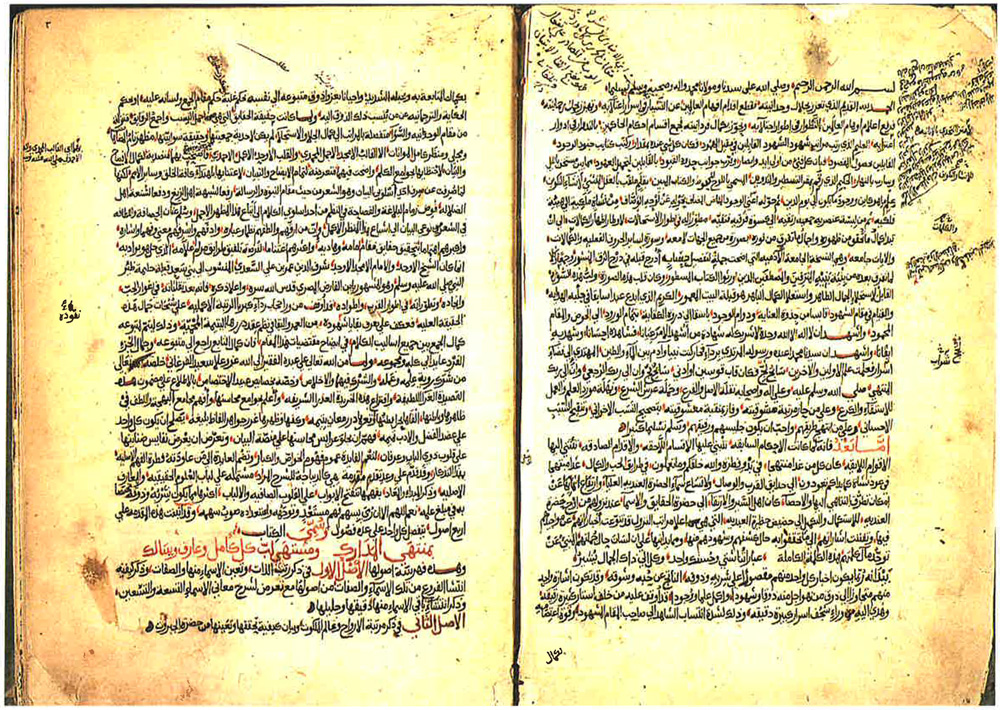
Many occult prayer manuscripts feature exceptionally beautiful handwriting.
The appearance of the text itself was considered important.
Certain manuscripts employed:
- Elaborate headings
- Geometric designs
- Gold illumination
- Colored inks
- Decorative borders
These artistic features transformed books into works of visual beauty.
For some readers, opening a manuscript was an aesthetic experience as well as an intellectual one.
Sacred Geometry and Visual Symbolism
Many Shii mystical manuscripts include diagrams.
These diagrams may appear unusual to modern readers.
Examples include:
- Geometric figures
- Grids
- Letter arrangements
- Numerical charts
- Symbolic circles
Researchers study these illustrations carefully because they reveal how historical scholars organized knowledge.
Rather than random decoration, many diagrams served specific explanatory purposes.
They helped readers visualize relationships between concepts.
In some cases, they functioned almost like modern infographics.
The difference is that today’s infographics usually appear on social media, while historical versions were drawn by hand with extraordinary patience.
The Journey of a Manuscript Across Continents
One remarkable aspect of Islamic manuscript history is mobility.
Books traveled.
A lot.
A manuscript copied in Iran might later appear in:
- Iraq
- Syria
- India
- Central Asia
- Anatolia
- North Africa
- Europe
Trade routes, scholarly networks, diplomatic exchanges, and personal collections all contributed to manuscript circulation.
Researchers frequently discover ownership notes indicating multiple generations of readers in different regions.
Each owner added another chapter to the manuscript’s story.
Libraries and Centers of Learning
Islamic civilization developed some of the most influential libraries in world history.
Major centers included:
Baghdad
A leading center of scholarship for centuries.
Cairo
Home to extensive manuscript collections and educational institutions.
Isfahan
An important intellectual center during the Safavid period.
Najaf
A major center of Shii learning.
Qom
A significant location for religious scholarship.
These cities became hubs where manuscripts were copied, studied, exchanged, and preserved.
Without such institutions, many texts would have disappeared entirely.
How Rare Are Islamic Manuscripts Today?
Estimating the total number of surviving Islamic manuscripts is challenging.
Scholars generally believe that millions once existed across the Islamic world.
Today, hundreds of thousands survive in:
- Libraries
- Museums
- Universities
- Religious institutions
- Private collections
Large collections exist in Europe, the Middle East, North America, and Asia.
Digitization projects continue uncovering previously unknown materials.
In some cases, manuscripts remain uncatalogued, meaning important discoveries are still possible.
This is one reason manuscript studies remain such an exciting field.
Researchers never know what they might find next.
Modern Technology Meets Ancient Manuscripts
One of the most exciting developments in recent years is the application of scientific technology to manuscript research.
Historians are no longer limited to what they can see with the naked eye.
Modern methods include:
Multispectral Imaging
This technique helps reveal faded writing.
Text thought to be lost can sometimes become visible again.
Digital Reconstruction
Damaged pages can be reconstructed virtually.
Ink Analysis
Scientists study chemical composition to learn more about production methods.
Material Identification
Researchers examine paper, pigments, and bindings to determine origin and age.
These techniques have transformed manuscript studies.
A faded manuscript page that appeared unreadable fifty years ago may now yield valuable information.
Paper: The Silent Revolution Behind Manuscript Culture
When discussing Islamic manuscripts, one often overlooked topic is paper itself.
Paper changed everything.
Before paper became widely available, writing materials were more expensive and less practical.
The spread of paper technology dramatically increased book production.
As paper became more accessible:
- More books were copied
- Libraries expanded
- Scholarship flourished
- Knowledge spread more rapidly
Without paper, many manuscript traditions—including occult prayer literature—would have developed very differently.
The history of Islamic manuscripts is therefore also a history of paper.
Why the Study of Occult Prayer Manuscripts Matters Today
Some readers may wonder:
Why should we study these texts now?
The answer extends beyond religion.
These manuscripts provide insight into:
- Intellectual history
- Cultural exchange
- Artistic traditions
- Book production
- Human spirituality
- Historical worldviews
Whether one approaches them as a believer, historian, collector, or curious reader, they offer valuable perspectives on the past.
Studying manuscripts helps us understand not only what people believed but also how they organized knowledge and sought meaning in their lives.
Manuscripts Leiden and Access to Manuscript Heritage
The growing interest in Islamic manuscript studies has increased demand for reliable resources and scholarly access.
Platforms such as Manuscripts Leiden contribute to this effort by promoting manuscript heritage and supporting engagement with historical texts.
Website:
https://manuscriptsleiden.com/
As more collections become accessible through digital technologies, researchers and enthusiasts gain new opportunities to explore rare manuscripts and deepen their understanding of Islamic intellectual history.
Famous Shii Mystical Manuscripts and the Legacy of Hidden Knowledge
If there is one thing manuscript researchers quickly learn, it is this:
Not every manuscript became famous.
In fact, many of the most fascinating texts spent centuries quietly resting on library shelves, hidden in private collections, or tucked away inside family archives.
Some survived wars.
Some survived fires.
Some survived humidity, insects, careless owners, and the occasional overenthusiastic candle placed far too close to a page.
Yet somehow, they endured.
Today, these manuscripts offer extraordinary insight into the spiritual and intellectual traditions of the Islamic world.
Among them, manuscripts dealing with mystical prayer, sacred invocations, and esoteric teachings continue to attract significant scholarly attention.
What Were “Hidden Gems and Treasured Pearls”?
One recurring theme in manuscript literature is the idea of hidden wisdom.
Titles often included expressions such as:
- Hidden treasures
- Precious secrets
- Pearls of wisdom
- Keys to knowledge
- Treasures of the righteous
These phrases were not chosen by accident.
Authors wanted readers to feel they were embarking on a meaningful intellectual journey.
The image of a hidden pearl appears frequently throughout Islamic literature.
A pearl is valuable.
A pearl is difficult to obtain.
A pearl requires effort.
Likewise, wisdom was often presented as something that required dedication and study.
This symbolic language became especially common in mystical writings.
Why Mystical Texts Were So Popular
Modern readers sometimes assume that mystical literature belonged only to small groups of specialists.
The reality was more complex.
Many mystical texts attracted broad audiences because they addressed universal human questions:
- How do we find meaning?
- How do we deal with uncertainty?
- How do we seek spiritual growth?
- How can prayer transform daily life?
- What is the relationship between the visible and invisible worlds?
These questions remain relevant today.
The technology may have changed.
Human curiosity has not.
The Role of the Imams in Shii Devotional Literature
Many Shii manuscripts place strong emphasis on teachings associated with the Imams.
The Imams occupy a central place within Shii religious thought and devotional practice.
Over centuries, scholars compiled collections of:
- Sermons
- Supplications
- Ethical teachings
- Spiritual reflections
- Prayers
These collections became foundational sources for later mystical literature.
Many manuscript traditions concerning occult prayer emerged within broader devotional contexts.
Their primary purpose was often spiritual guidance rather than speculation.
This distinction is important for understanding the historical setting of these works.
Sacred Names and Their Symbolic Importance
One of the most fascinating subjects found in mystical manuscripts is the study of sacred names.
Across many religious traditions, names are viewed as more than labels.
They carry symbolic significance.
Within certain Shii mystical traditions, scholars explored:
- Divine names
- Prophetic names
- Symbolic correspondences
- Numerical relationships
- Spiritual meanings
Entire manuscripts were sometimes devoted to discussing these topics.
To modern readers, these discussions can appear highly specialized.
To historical readers, they represented serious attempts to understand the relationship between language, spirituality, and divine reality.
Numerical Symbolism in Manuscripts
Numbers appear frequently in mystical literature.
This does not mean historical scholars approached numbers in the same way modern numerology enthusiasts might.
Rather, many intellectual traditions used numbers as symbolic tools.
Examples include:
- Patterns within scripture
- Symbolic repetition
- Cosmological structures
- The organization of prayers
Researchers studying manuscripts often encounter carefully designed numerical arrangements.
These patterns reveal how historical scholars attempted to organize knowledge.
Sometimes these systems appear incredibly sophisticated.
Other times they remind us that human beings have always enjoyed finding patterns in the world around them.
The Beauty of Islamic Manuscript Art
One reason Islamic manuscripts continue captivating audiences is their artistic beauty.
A manuscript was rarely just text.
It was often a visual masterpiece.
Features frequently included:
Illuminated Opening Pages
Many manuscripts begin with elaborate decorative designs.
Gold Detailing
Gold leaf was often used for important sections.
Geometric Ornamentation
Complex geometric patterns reflected mathematical precision and artistic creativity.
Floral Motifs
Nature-inspired designs appeared throughout many manuscript traditions.
Elegant Calligraphy
The script itself often served as decoration.
Looking at some manuscripts today, it is easy to forget they were created entirely by hand.
The level of craftsmanship remains astonishing.
How Manuscripts Were Produced
Creating a manuscript required collaboration.
A finished book might involve:
Papermakers
Producing writing material.
Calligraphers
Writing the text.
Illuminators
Adding artistic decoration.
Bookbinders
Constructing protective covers.
Scholars
Reviewing and correcting content.
The process could take weeks, months, or even years.
For large works, manuscript production represented a major investment of time and resources.
This explains why books were often treated as valuable possessions.
The Economics of Manuscript Culture
Books were expensive.
Very expensive.
Before printing technology became widespread, every page required manual labor.
As a result:
- Scholars often shared books.
- Students copied texts by hand.
- Libraries became essential institutions.
- Wealthy patrons sponsored manuscript production.
Historical records indicate that some rare manuscripts commanded substantial prices.
Owning a significant library was considered both prestigious and intellectually valuable.
In a sense, manuscripts functioned as the luxury technology of their era.
Preservation Challenges Through the Centuries
The survival of any manuscript is something of a miracle.
Books face numerous threats:
Environmental Damage
Humidity and temperature fluctuations can destroy paper.
Fire
Countless historical collections disappeared due to fire.
Insects
Bookworms earned their name honestly.
Political Upheaval
Wars often led to the destruction or displacement of libraries.
Neglect
Sometimes manuscripts simply deteriorated because nobody cared for them properly.
Given these risks, the survival of thousands of manuscripts is remarkable.
Modern Conservation Efforts
Fortunately, preservation techniques have improved dramatically.
Today’s conservators use advanced methods to protect fragile manuscripts.
These include:
- Climate-controlled storage
- Specialized archival materials
- Digital scanning
- Non-invasive imaging
- Conservation treatments
Many institutions now prioritize digitization.
Digital copies reduce handling while increasing accessibility.
Researchers can study rare manuscripts without exposing originals to unnecessary wear.
New Discoveries Continue to Surprise Scholars
One of the most exciting aspects of manuscript studies is that discoveries continue happening.
Even today, previously unknown manuscripts occasionally emerge from:
- Private collections
- Family libraries
- Religious institutions
- Estate sales
- Forgotten archives
Every discovery has the potential to reshape scholarly understanding.
Sometimes a single manuscript preserves a text thought to be lost.
Other times it reveals new information about an author’s life or intellectual network.
For researchers, this possibility creates constant excitement.
History still has secrets left to reveal.
Global Interest in Islamic Manuscripts
Interest in Islamic manuscript heritage has expanded significantly during the past two decades.
Researchers from around the world study these materials.
Fields involved include:
- History
- Religious studies
- Art history
- Linguistics
- Conservation science
- Digital humanities
Major universities increasingly support manuscript-related research projects.
International collaboration has become common.
A manuscript produced centuries ago in Persia might now be studied simultaneously by scholars in Europe, North America, the Middle East, and Asia.
This global perspective enriches understanding.
Manuscripts and Cultural Heritage
Islamic manuscripts represent far more than historical documents.
They are part of humanity’s shared cultural heritage.
They demonstrate:
- Intellectual achievement
- Artistic excellence
- Religious devotion
- Scientific curiosity
- Cross-cultural exchange
Their significance extends beyond any single community or nation.
Every preserved manuscript contributes another piece to the story of human civilization.
Manuscripts Leiden and the Continuing Preservation Mission
The preservation and study of Islamic manuscripts require ongoing support from institutions, scholars, collectors, and specialized organizations.
Resources such as Manuscripts Leiden help increase awareness of manuscript heritage and facilitate engagement with historical materials.
Website:
https://manuscriptsleiden.com/
As interest in manuscript culture grows worldwide, access to reliable information becomes increasingly important.
Projects dedicated to preservation and research play a vital role in ensuring these remarkable documents remain available for future generations.
Looking Ahead: The Future of Manuscript Studies
The future of manuscript research looks brighter than ever.
Emerging technologies include:
- Artificial intelligence-assisted transcription
- Machine learning analysis
- Advanced imaging systems
- Virtual manuscript reconstruction
- Global digital archives
Researchers may soon be able to analyze thousands of manuscripts simultaneously using computational methods.
At the same time, traditional scholarship remains essential.
Technology can help reveal patterns.
Human expertise is still required to interpret meaning.
The partnership between technology and scholarship will likely define the next generation of manuscript studies.
Recent Discoveries and Scientific Advances in Islamic Manuscript Research
For a long time, manuscript research was associated with quiet reading rooms, magnifying glasses, and shelves full of fragile books.
While those images are still part of the story, modern manuscript studies have entered a new era.
Today, researchers use technologies that would have seemed like science fiction to scholars of previous generations.
Ironically, some of the world’s oldest books are now being studied with some of the world’s newest tools.
Artificial Intelligence and Manuscript Analysis
Artificial intelligence has become an important tool in manuscript studies.
Researchers increasingly use machine learning systems to:
- Identify handwriting styles
- Compare manuscript copies
- Detect scribal patterns
- Reconstruct damaged text
- Assist with cataloguing
AI does not replace scholars.
Instead, it helps scholars process large quantities of information more efficiently.
Imagine comparing thousands of manuscript pages manually.
Now imagine a computer helping identify similarities in minutes.
That kind of assistance can dramatically accelerate research.
Multispectral Imaging: Revealing the Invisible
One of the most exciting developments in manuscript preservation is multispectral imaging.
This technique captures images using different wavelengths of light.
As a result, researchers can sometimes reveal:
- Erased writing
- Faded ink
- Hidden notes
- Damaged sections
Texts once considered unreadable may suddenly become visible again.
In some cases, entire passages have been recovered using this technology.
For historians, it feels a bit like discovering a message hidden inside time itself.
Digital Libraries and Global Access
Historically, studying a rare manuscript often required international travel.
Today, digitization projects have transformed accessibility.
Major institutions now provide online access to manuscript collections.
Researchers, students, and enthusiasts can examine historical documents from virtually anywhere in the world.
This democratization of knowledge is one of the most significant developments in manuscript studies.
A graduate student in Canada can examine the same manuscript that a professor in Europe is studying.
The manuscript world has become more connected than ever.
Statistics: How Large Is the Islamic Manuscript Heritage?
Providing exact numbers is difficult because many manuscripts remain uncatalogued.
However, scholars generally estimate that:
- Hundreds of thousands of Islamic manuscripts survive worldwide.
- Major libraries collectively hold well over one million manuscript items.
- Thousands of manuscripts continue to be digitized every year.
- New manuscript collections are regularly identified and catalogued.
Large collections exist across:
- The Netherlands
- Germany
- France
- Turkey
- Iran
- Iraq
- Egypt
- India
- The United Kingdom
- The United States
This vast geographical distribution reflects centuries of intellectual exchange and historical movement.
Why Islamic Manuscripts Matter in the Twenty-First Century
Some people wonder whether manuscript studies remain relevant in the digital age.
The answer is a clear yes.
Islamic manuscripts continue to matter because they help us understand:
Human History
Manuscripts preserve firsthand evidence of past societies.
Religious Traditions
They document how beliefs and practices developed over time.
Scientific Knowledge
Many manuscripts contain important contributions to medicine, astronomy, mathematics, and philosophy.
Artistic Achievement
Manuscripts represent some of the most sophisticated examples of calligraphy and book arts ever produced.
Cultural Exchange
They demonstrate how ideas traveled across regions and civilizations.
Far from being relics of the past, manuscripts remain active sources of knowledge.
Occult Prayer and Historical Understanding
The study of occult prayer texts provides valuable insight into how people historically understood spirituality.
Rather than viewing religious practice solely through formal theology, these manuscripts reveal:
- Personal devotion
- Spiritual aspirations
- Symbolic thinking
- Cultural traditions
- Intellectual experimentation
Whether one agrees with particular beliefs or not, these texts help historians better understand the diversity of human religious experience.
That is what makes them so valuable.
Frequently Asked Questions (FAQ)
What is an Islamic manuscript?
An Islamic manuscript is a handwritten text produced within Islamic civilizations before the widespread adoption of printing technology.
These manuscripts cover subjects such as religion, science, literature, medicine, philosophy, and mysticism.
What is Shii mystical literature?
Shii mystical literature includes writings that explore spirituality, inner religious understanding, devotional practices, symbolism, and metaphysical concepts within Shii traditions.
What does “occult prayer” mean in historical manuscripts?
Historically, the term often referred to specialized spiritual practices, symbolic invocations, sacred names, and hidden dimensions of religious knowledge rather than the modern popular meaning associated with fantasy or entertainment.
Why are Islamic manuscripts important?
They preserve historical knowledge, artistic traditions, religious thought, and cultural heritage that might otherwise have been lost.
Are new Islamic manuscripts still being discovered?
Yes.
Previously unknown manuscripts continue to emerge from private collections, archives, libraries, and religious institutions.
How are manuscripts preserved today?
Modern preservation methods include:
- Climate-controlled storage
- Conservation treatment
- High-resolution digitization
- Scientific imaging
- Digital archiving
Can anyone study Islamic manuscripts?
Increasingly, yes.
Digitization projects and online collections have made many manuscripts accessible to researchers and interested readers worldwide.
The Future of Manuscript Preservation
The next decade may prove transformative for manuscript studies.
Emerging developments include:
Global Digital Repositories
Researchers are working toward interconnected manuscript databases.
AI-Assisted Transcription
Software may soon assist in reading difficult handwriting with greater accuracy.
Enhanced Public Access
Digital collections continue expanding.
Preservation Science
New conservation methods help extend the lifespan of fragile materials.
International Collaboration
Institutions increasingly share expertise and resources.
These developments ensure that manuscript heritage remains accessible for future generations.
Why Hidden Gems Still Matter
The phrase “Hidden Gems and Treasured Pearls” captures something essential about manuscript studies.
Many historical treasures remain overlooked.
Some manuscripts sit quietly in archives.
Others remain uncatalogued.
Some are waiting for researchers to recognize their significance.
The search for knowledge is ongoing.
Each manuscript has the potential to reveal something unexpected.
That sense of discovery continues inspiring scholars around the world.
Final Reflections
The story of the Islamic manuscript is ultimately a story about people.
People who wrote.
People who copied.
People who studied.
People who preserved.
And people who believed that knowledge was worth protecting.
The tradition of occult prayer within Shii mystical literature represents one fascinating chapter in this broader history.
Through manuscripts, we gain access not only to texts but also to centuries of intellectual curiosity, artistic creativity, and spiritual exploration.
As preservation technologies continue advancing, these remarkable documents will remain valuable sources of insight for generations to come.
For readers interested in manuscript heritage, rare texts, and the continuing study of Islamic manuscript traditions, resources such as Manuscripts Leiden provide an important gateway to this fascinating world:
https://manuscriptsleiden.com/
The manuscripts may be old, but the questions they raise about knowledge, faith, culture, and human experience remain surprisingly modern.
References
- https://www.islamicmanuscripts.info/
- https://www.bl.uk/collection-guides/islamic-manuscripts
- https://www.loc.gov/collections/islamic-manuscripts/
- https://www.qdl.qa/en
- https://www.wdl.org
- https://www.unesco.org
- https://www.metmuseum.org
- https://www.bodleian.ox.ac.uk
- https://www.cam.ac.uk
- https://www.ias.edu
- https://gallica.bnf.fr
- https://www.manuscriptsleiden.com/